Condor Trail Part 6: Cone Peak Road to Big Sur Station
Day 25 | June 8, 2025
By 8 a.m., it’s already hot.
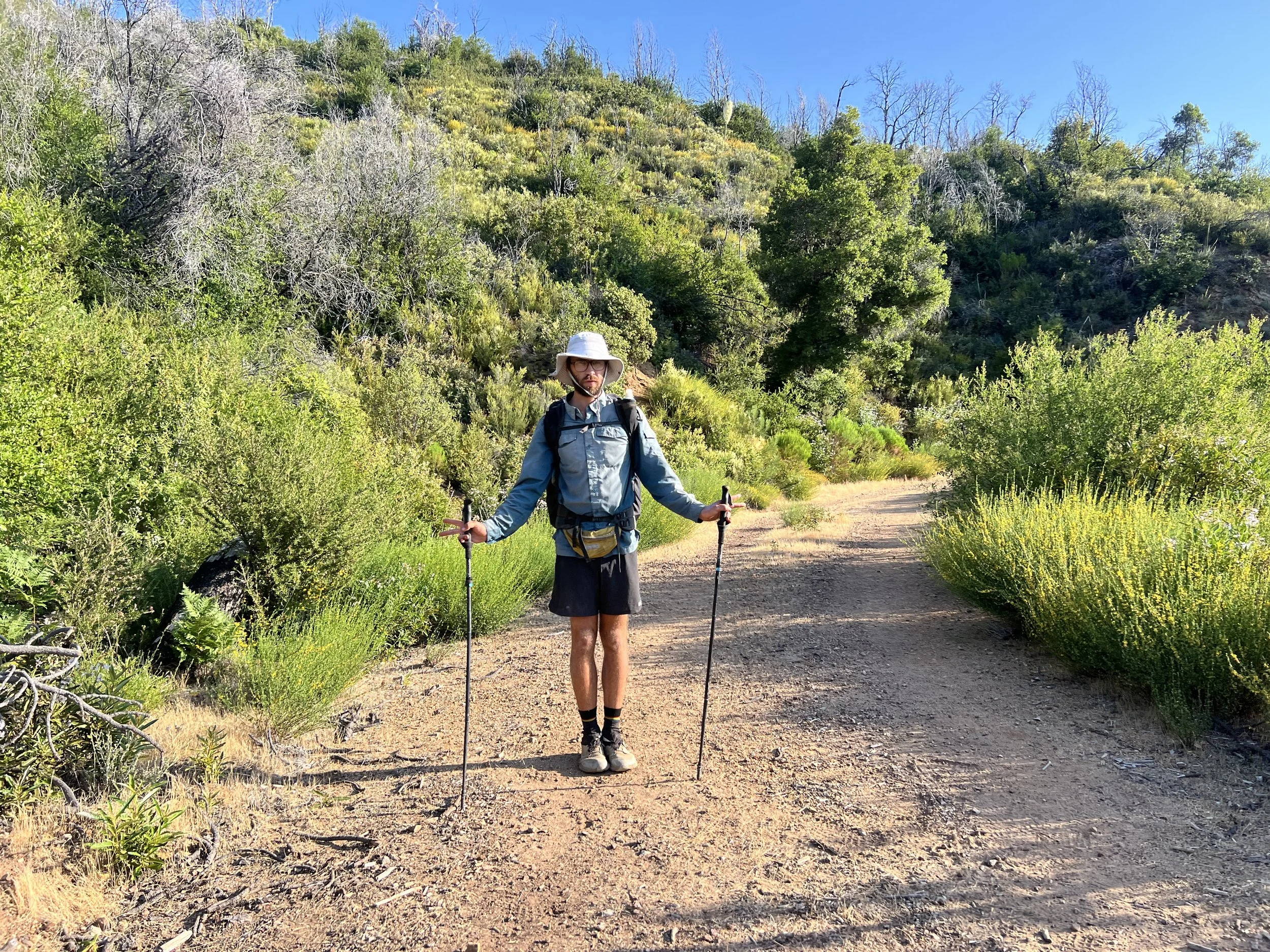
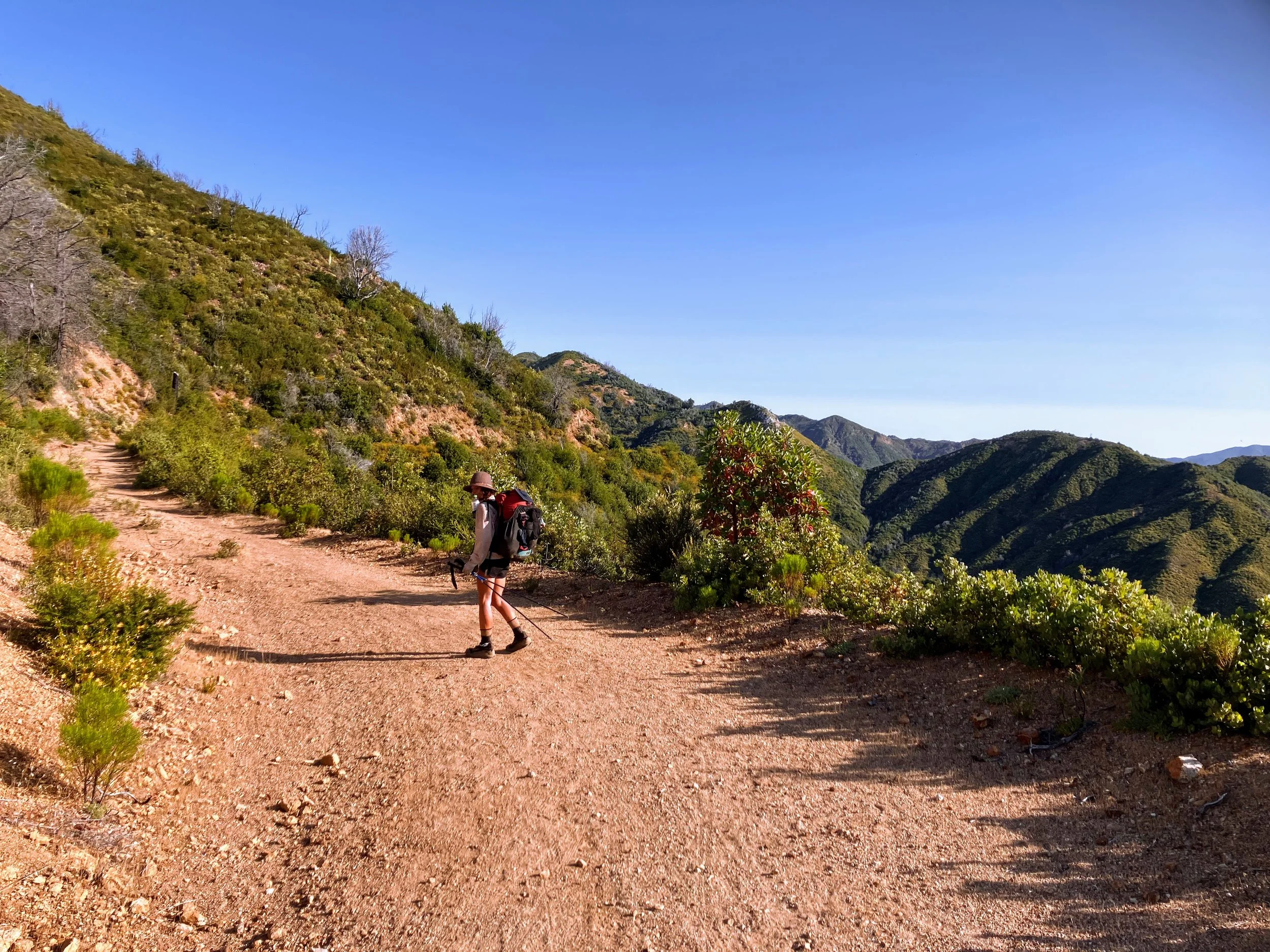
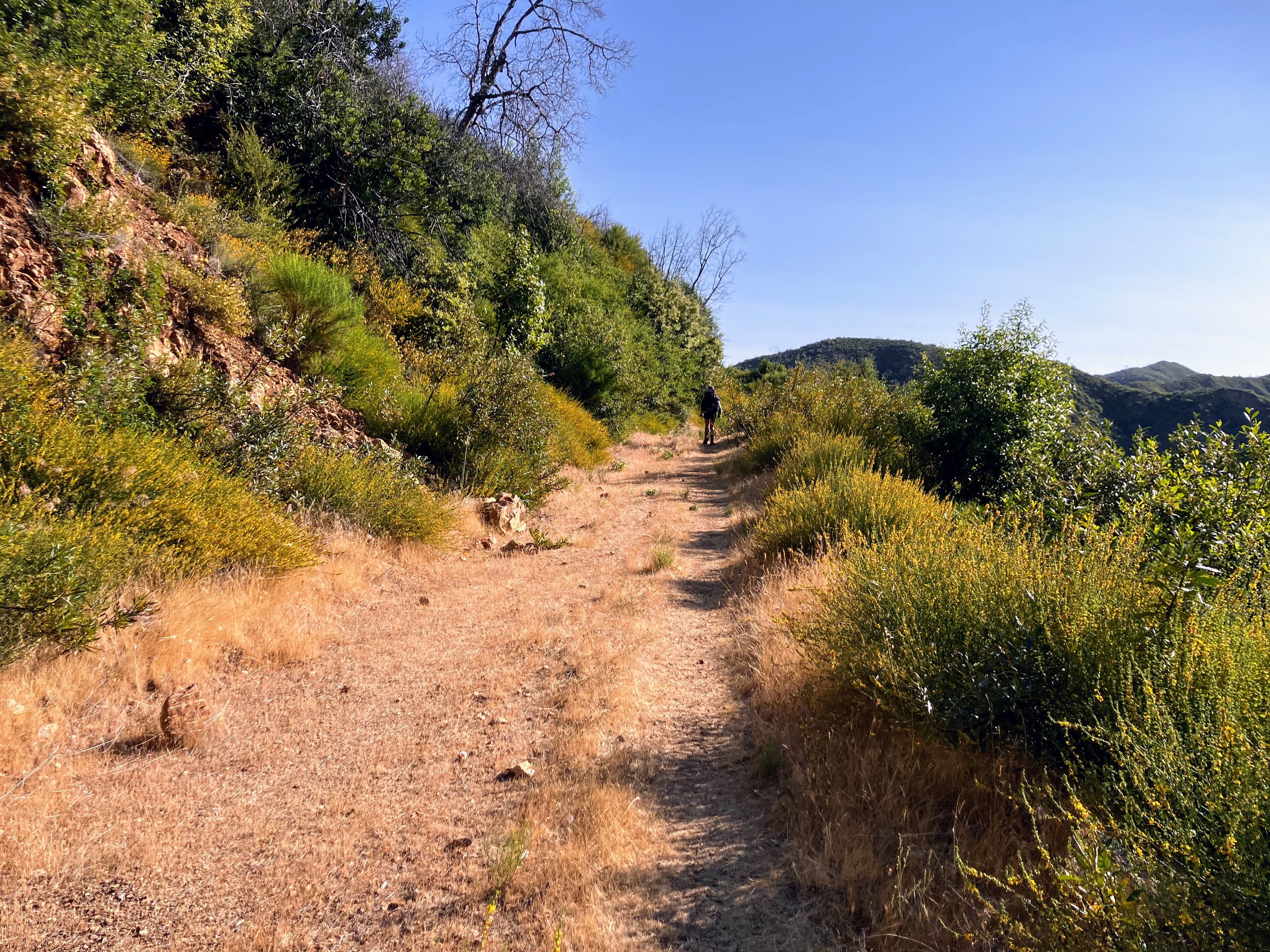
The gnats are up early, relentless despite a full coat of Picaridin all over my skin.
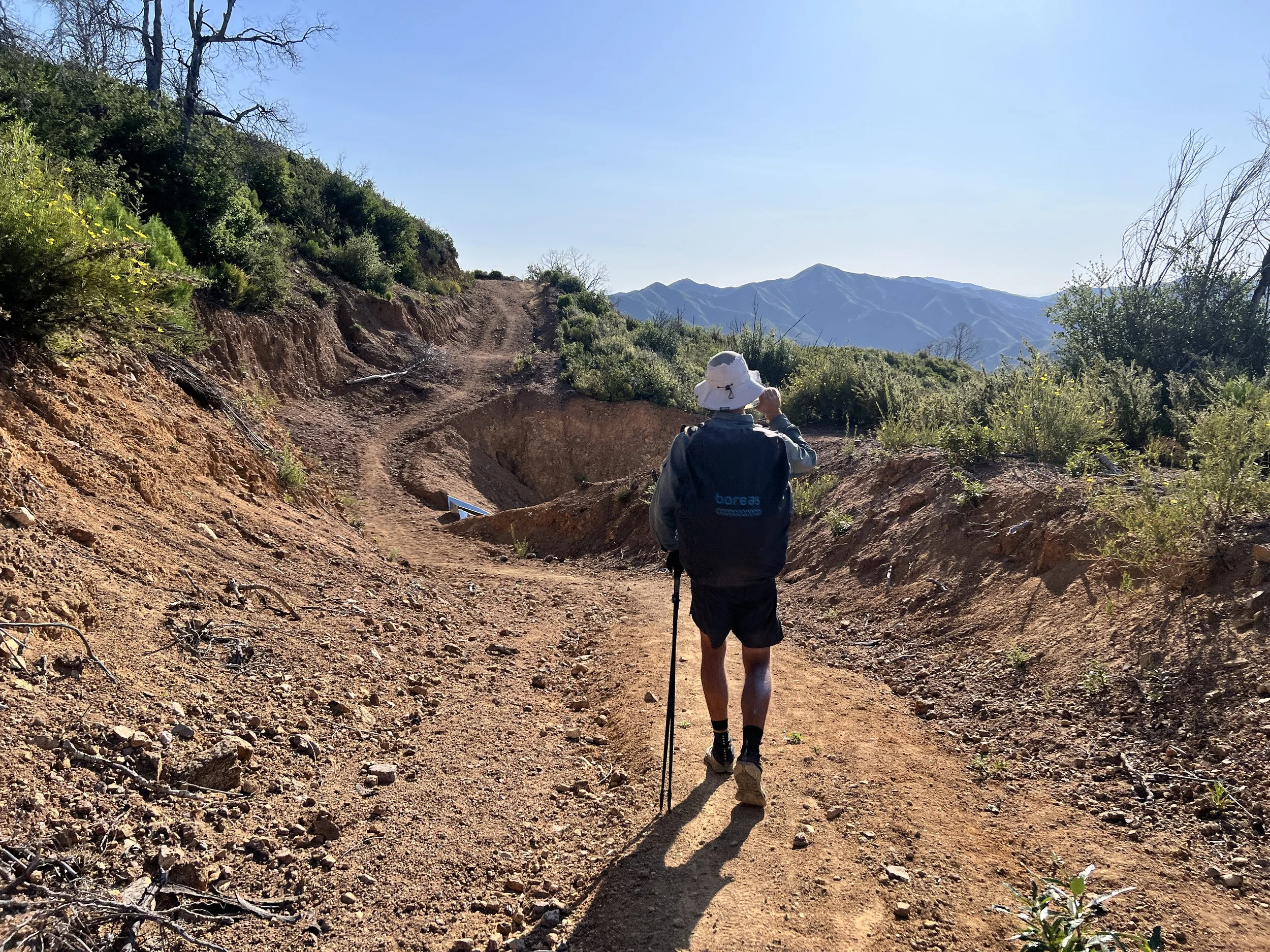
We hike along Cone Peak Road and pass an abandoned backpack and a scattered water cache, maybe trail crew leftovers, maybe trash.
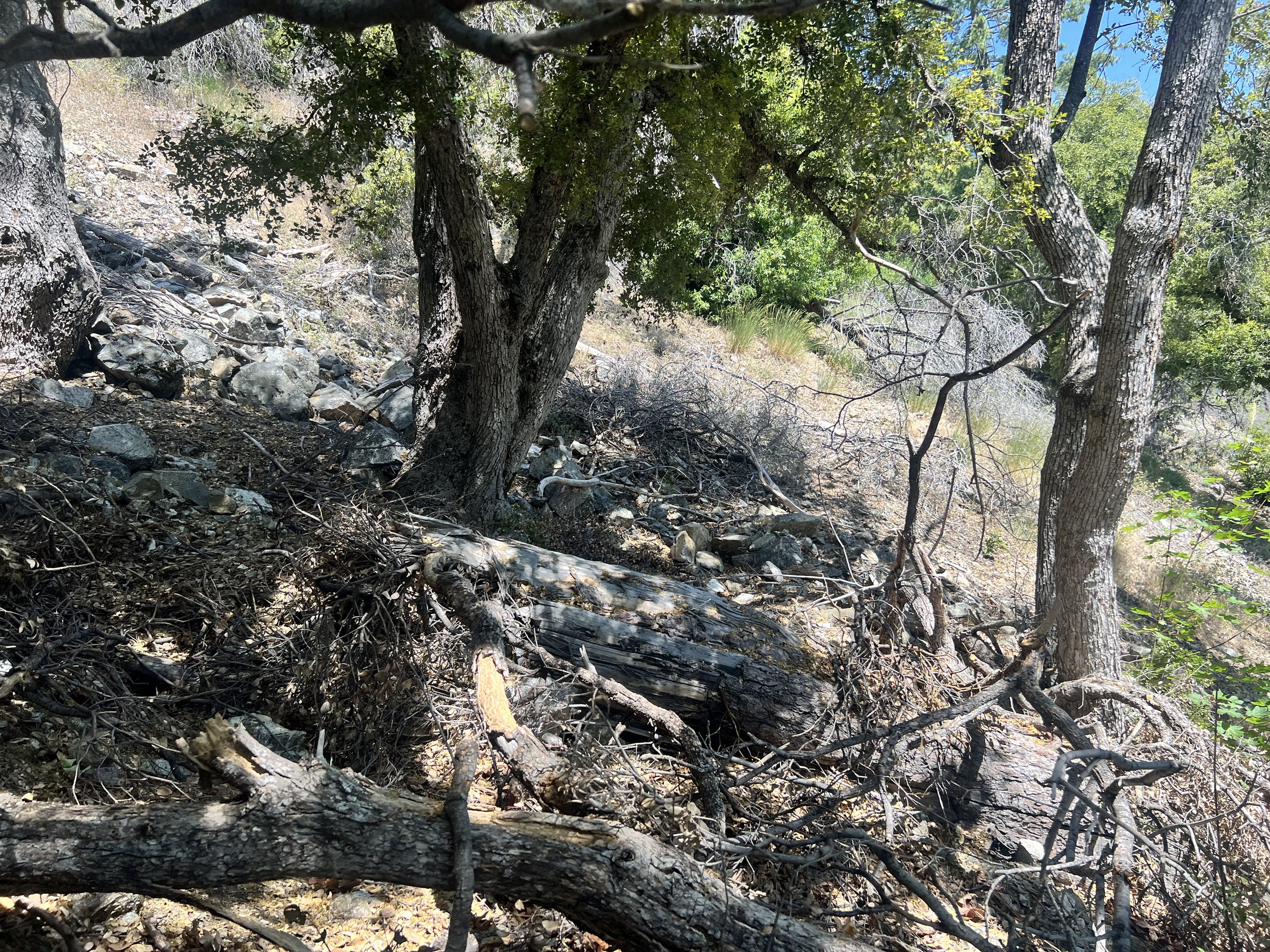
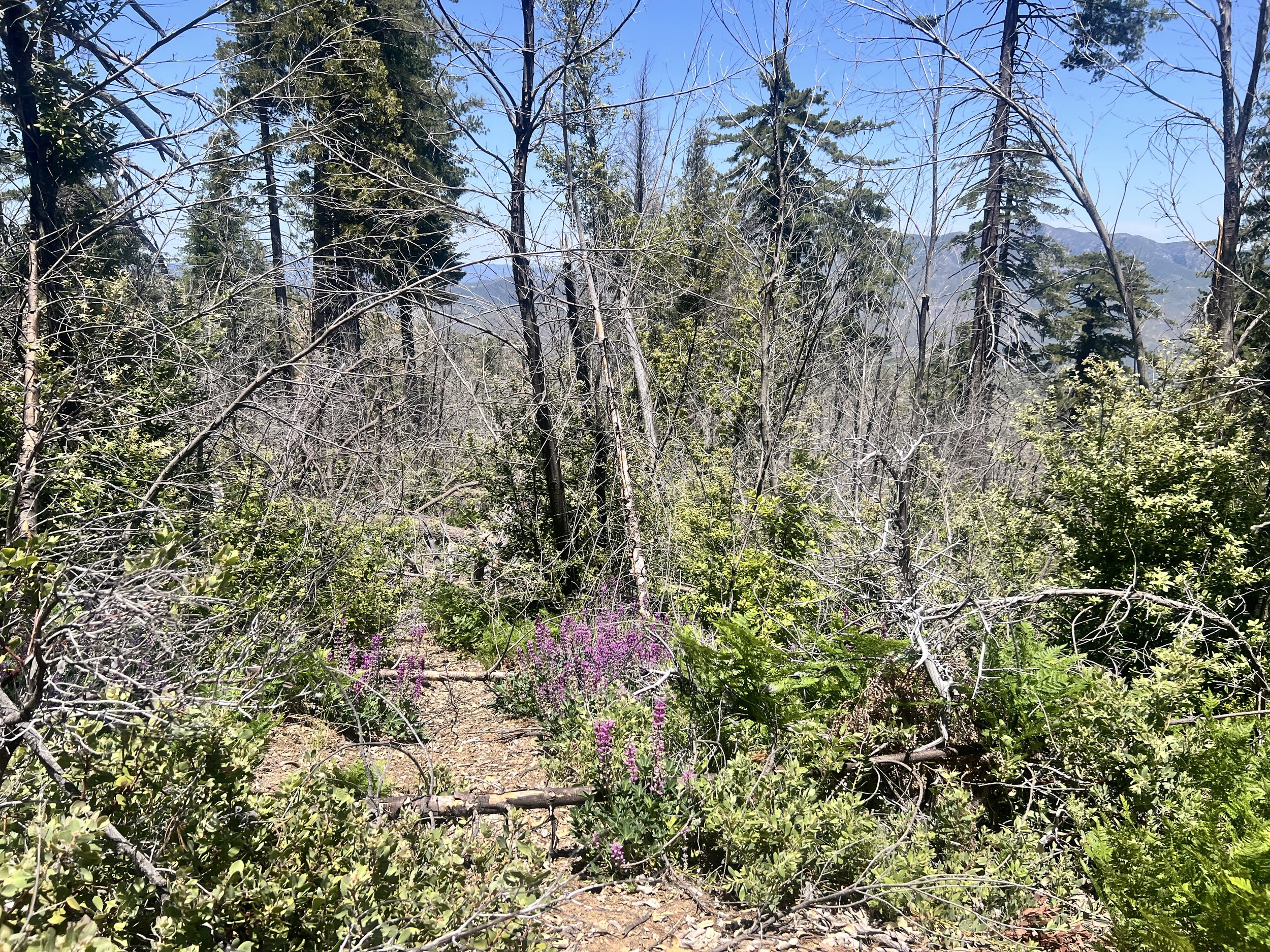
On the southeast side of Cone Peak the road ends. The North Coast Trail begins and the terrain turns brutal: steep slopes, scorched trees, loose rock, searing heat.
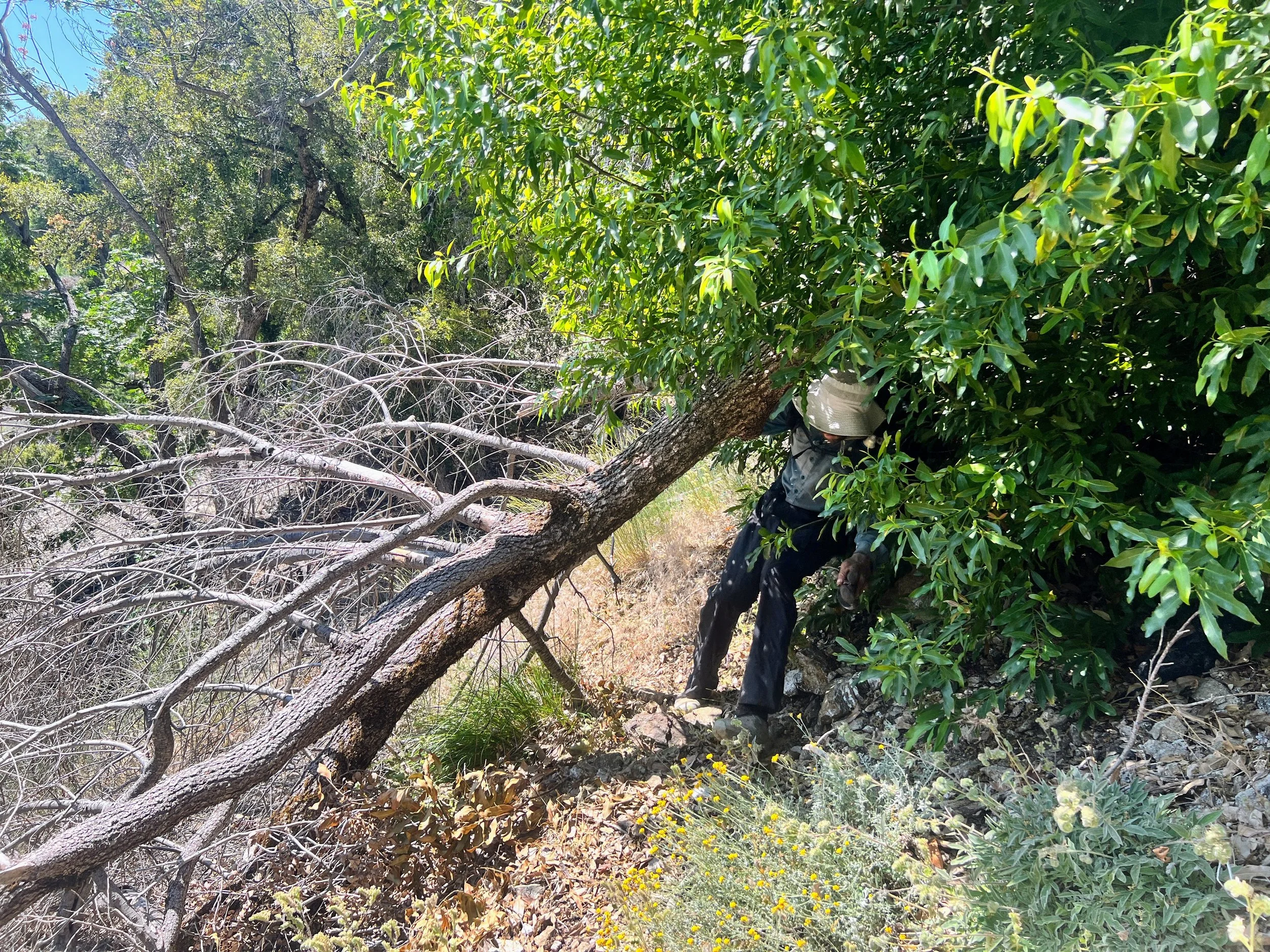
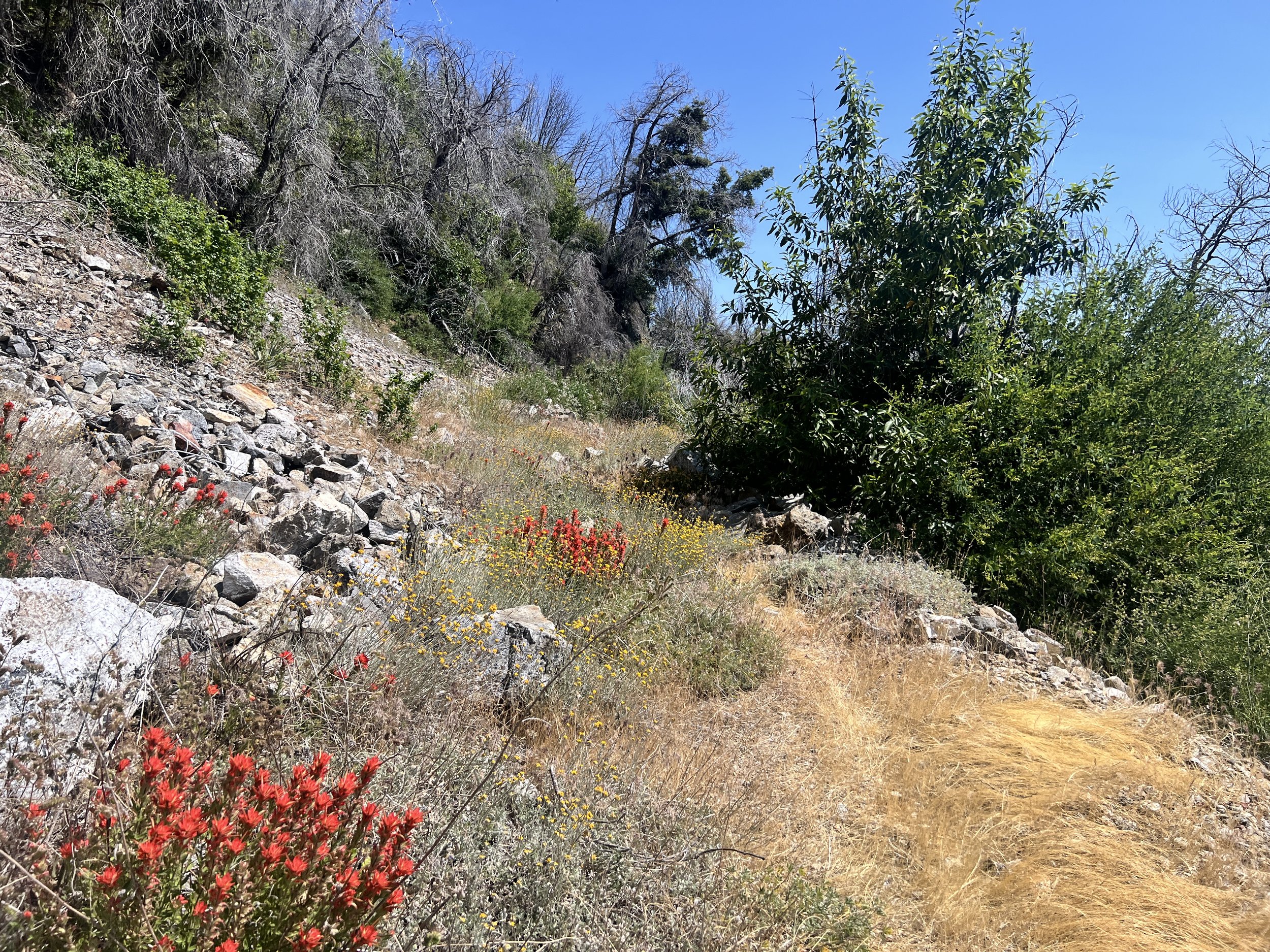
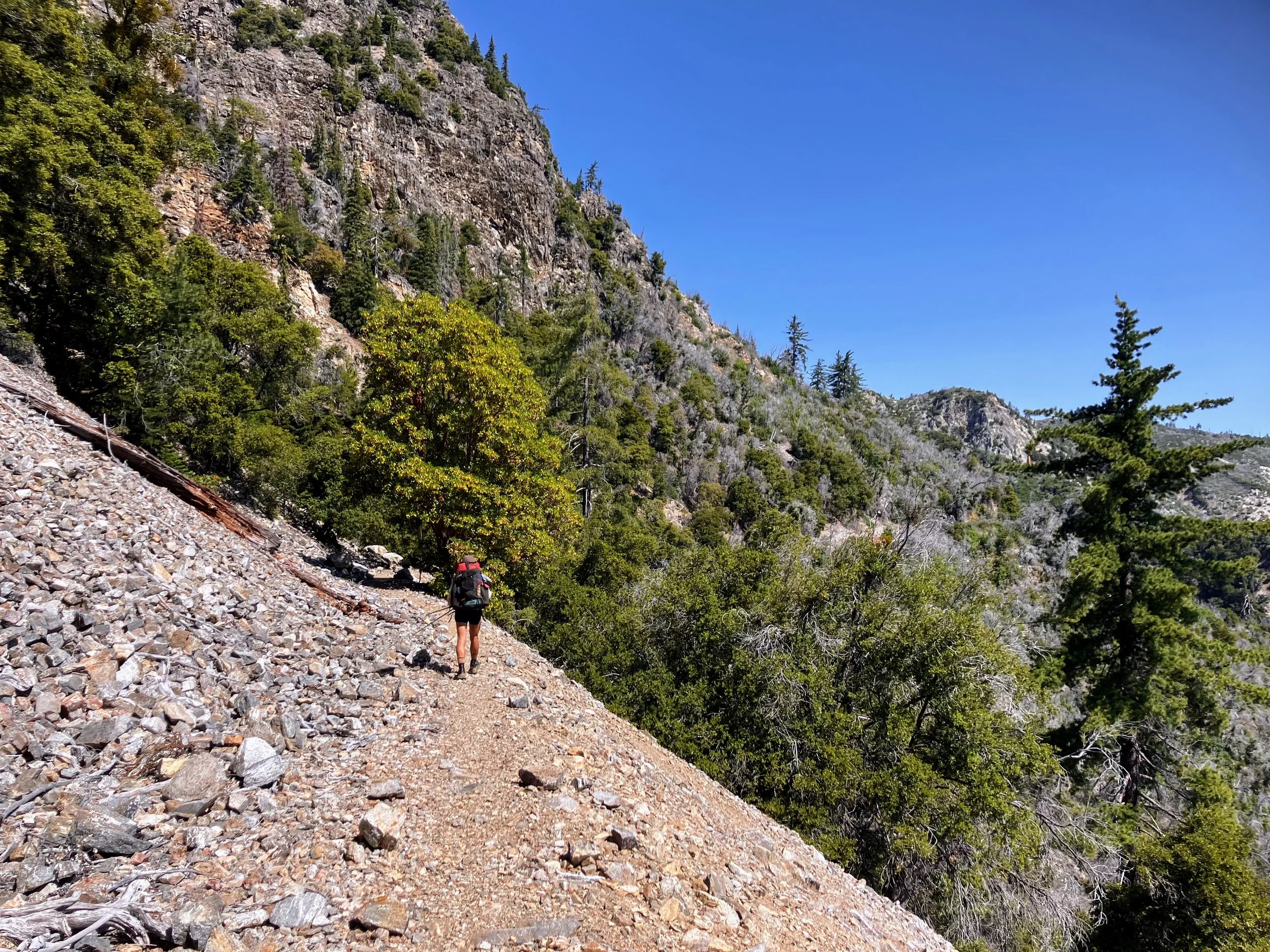
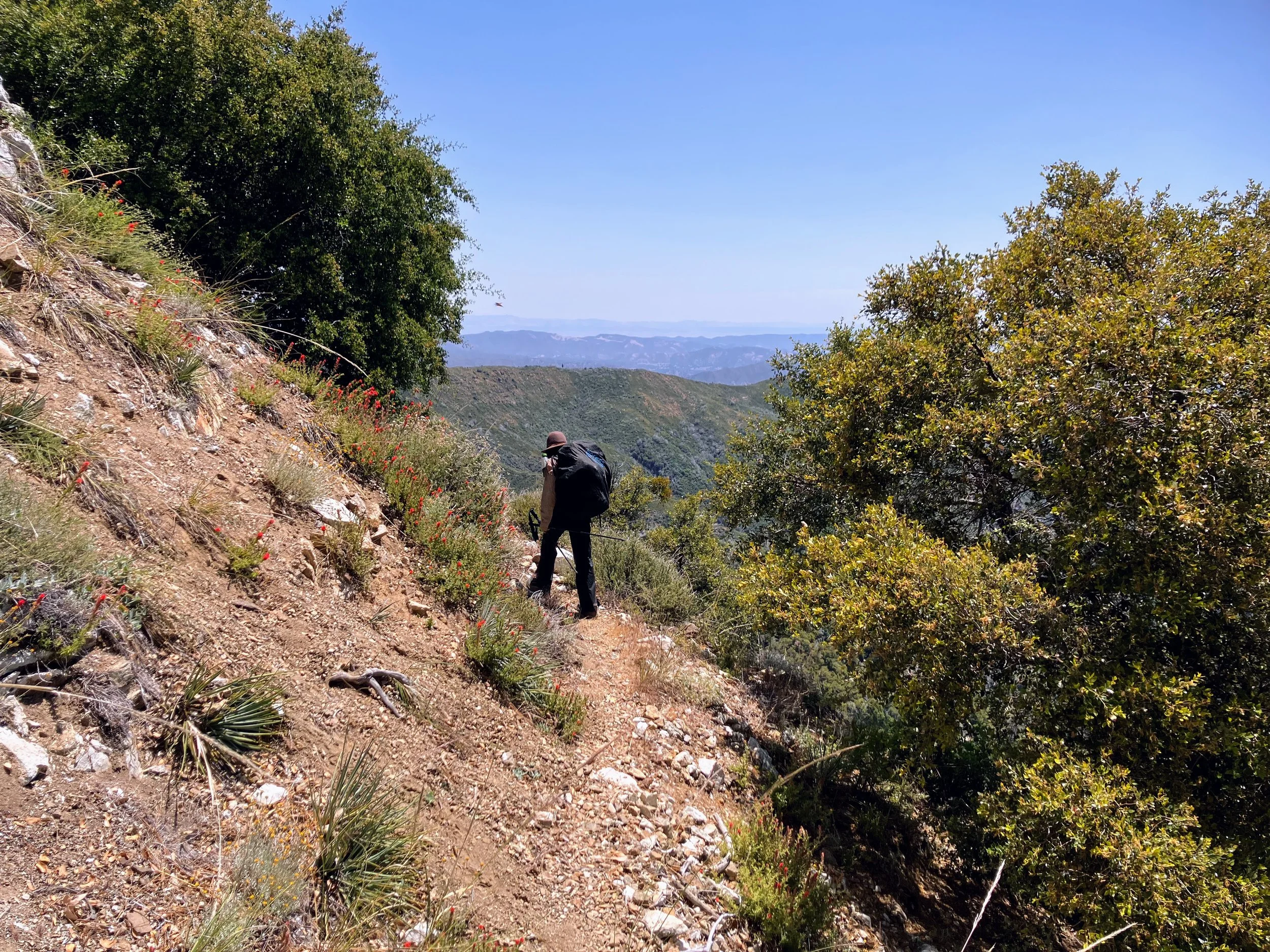
The gnats make it impossible to stop and navigate.
Poison oak hides throughout the hillside like a trap. Every move, placing a hand, shifting balance, has consequences.
I pull out my phone to check the map. The second I stop, gnats swarm my thighs and calves. I swat at them, wobbling. I try not to lose my footing. Sweat rolls off my chin and lands on the front of my phone. The touchscreen stutters and freezes, useless under the droplet.
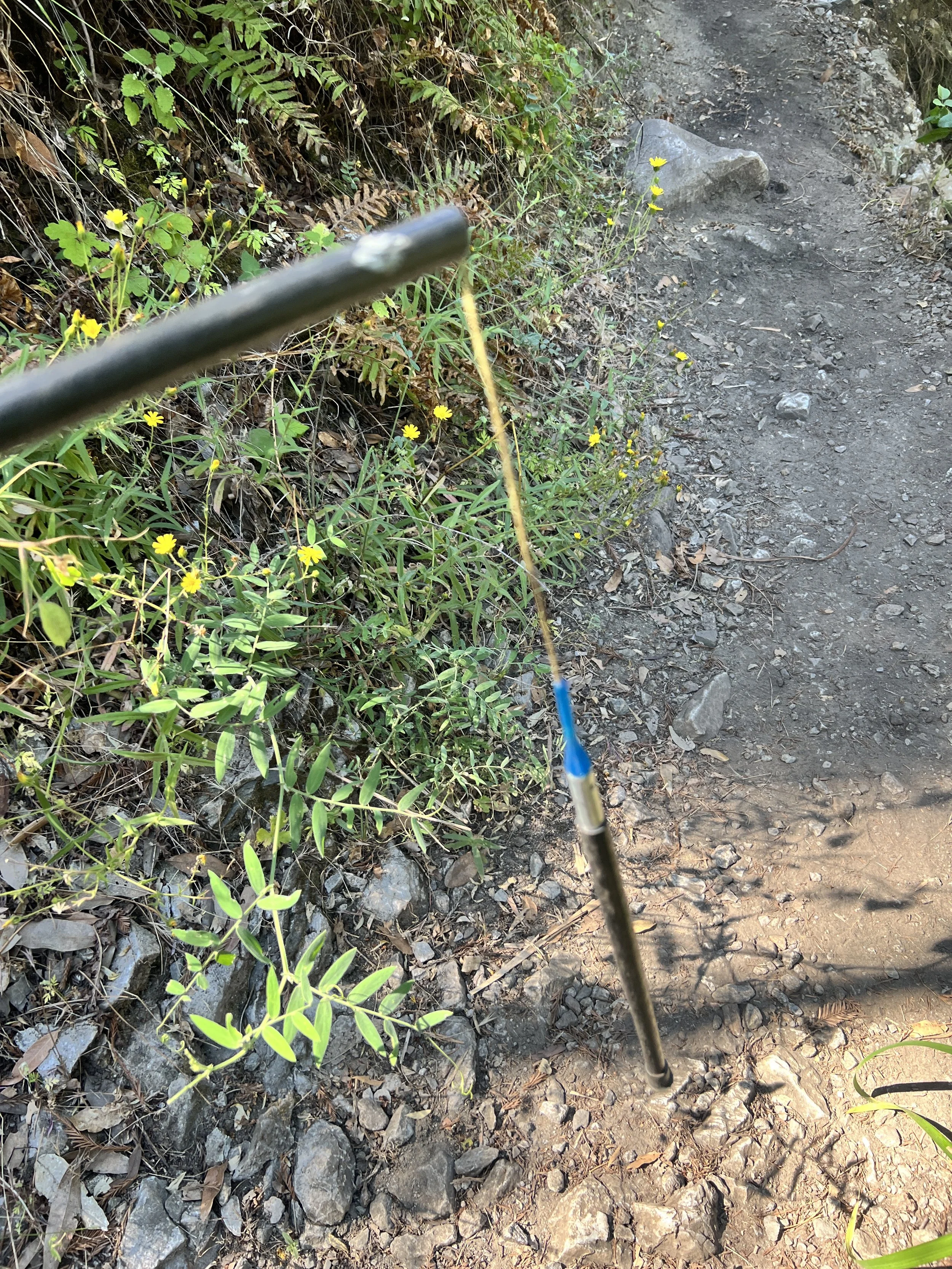
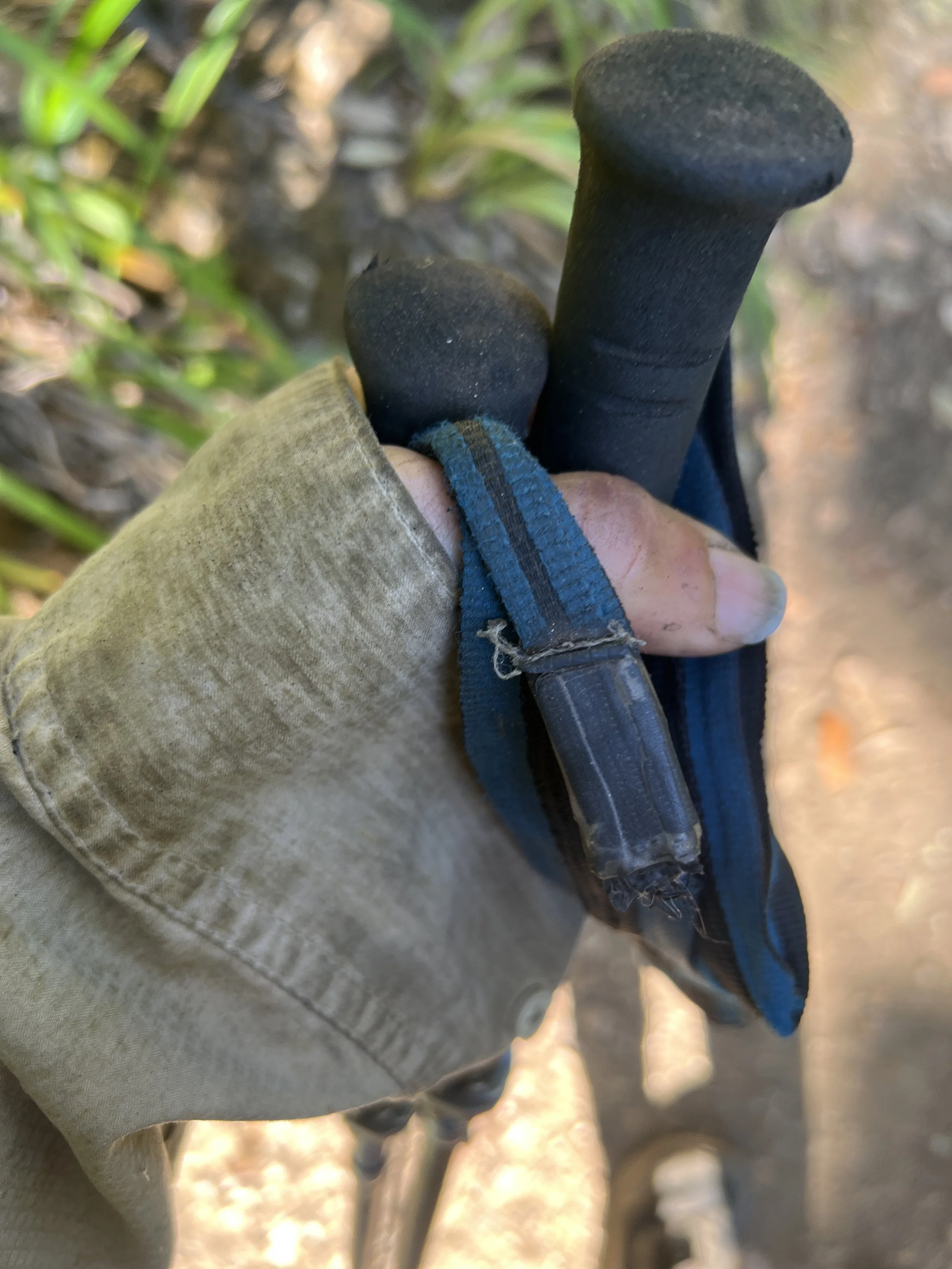
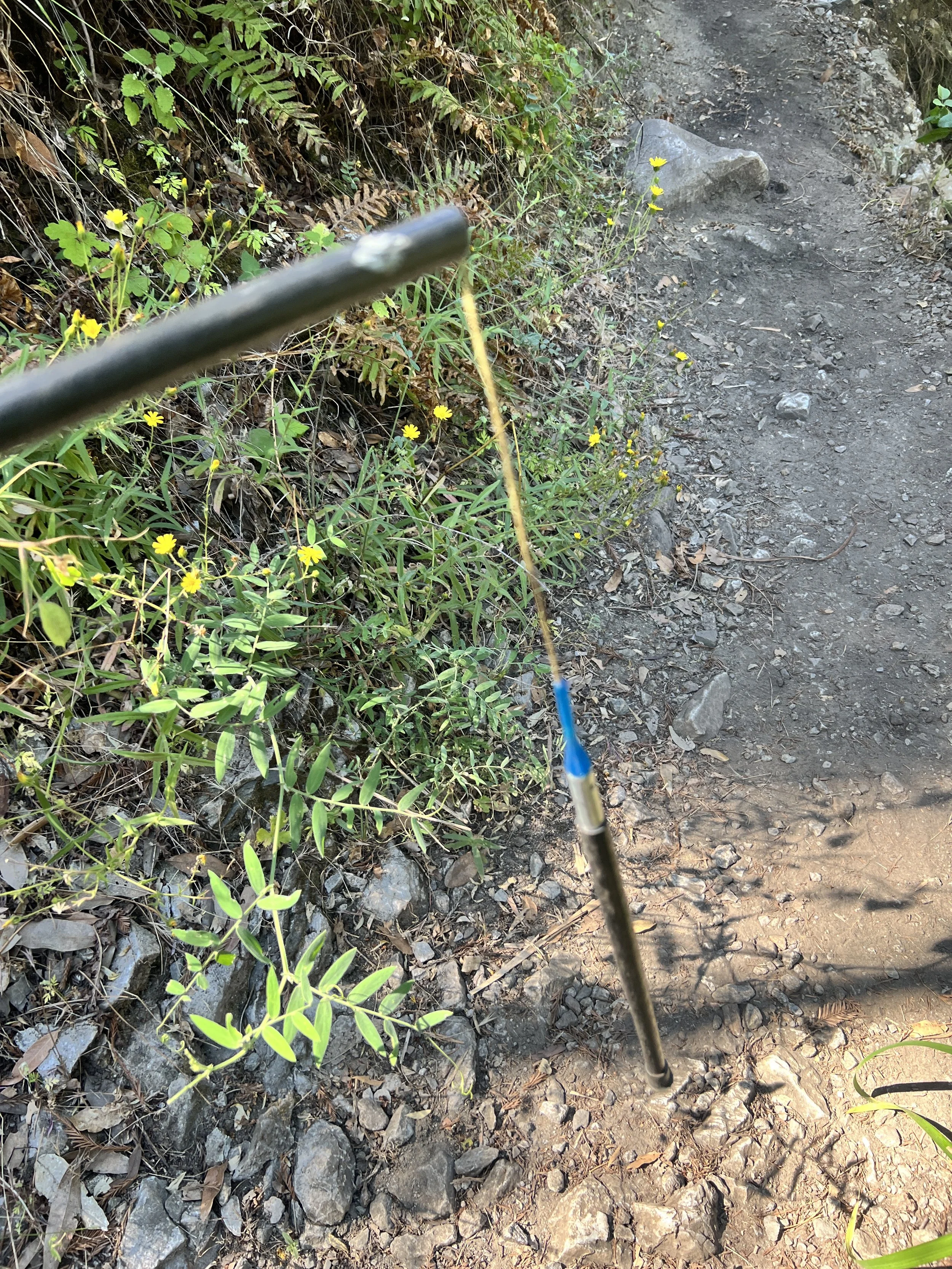
The trail fades even more, dropping into a steep, loose, rocky scramble. We move slowly, but gnats and bees swirl around our heads, thick in the heat, making it hard to breathe calmly. I need my poles for balance, but one is broken and keeps pulling apart. Every so often, the middle section slips loose and dangles like a dislocated limb swinging from the strap. I stand there wobbling, off-balance on the slope, swatting at gnats while I fumble to shove the pole pieces back together.
After bushwhacking upslope, we reach a ridge, which soon leads to a semblance of a trail. The terrain seems more manageable, maybe more maintained.
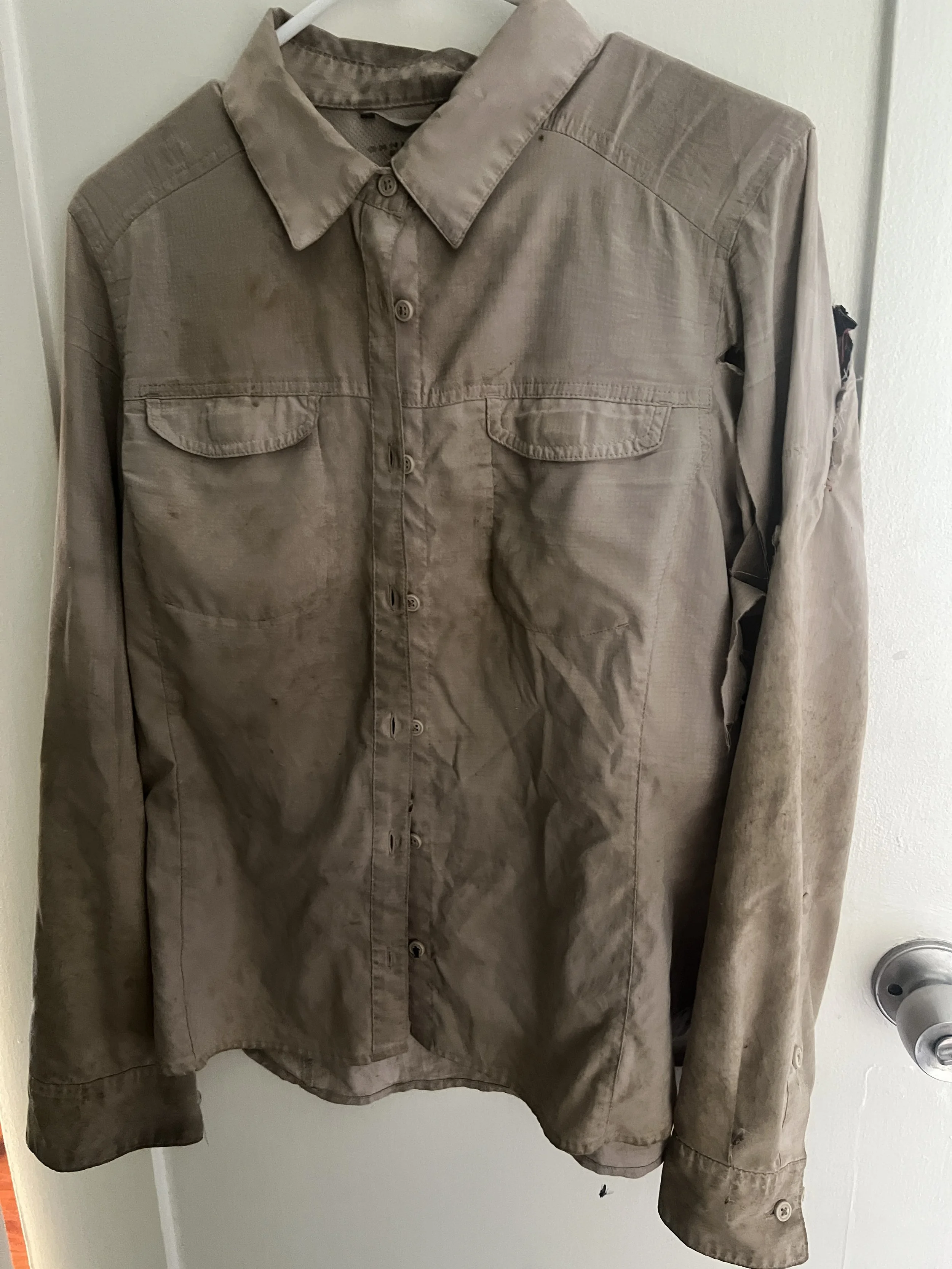
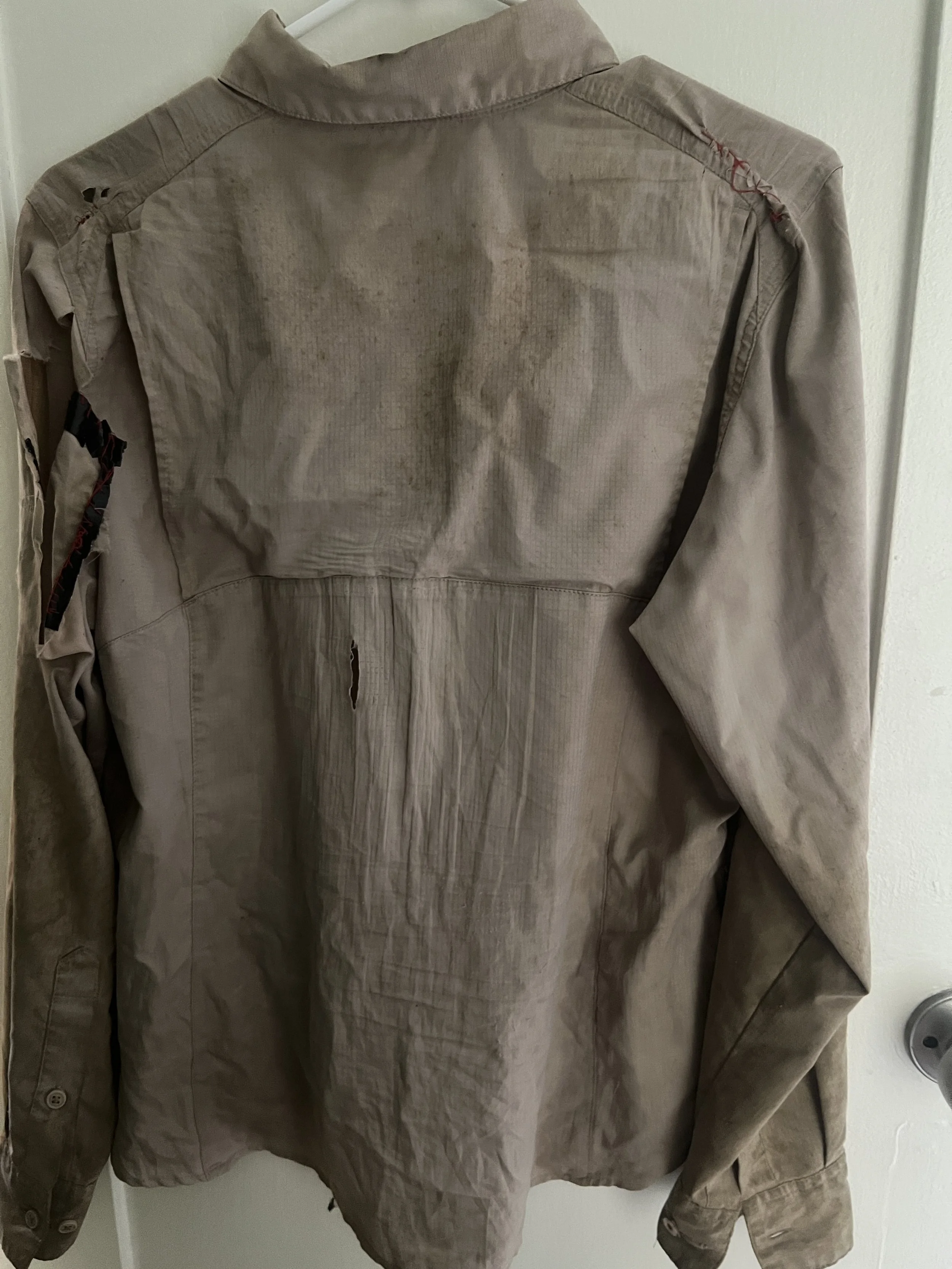
The sun beats down, cooking the skin that shows through the big rips in my shirt, bright red, hot to the touch.
Cook Spring is our best bet for water, but it requires dropping nearly a mile down a steep side trail that cuts off from the North Coast Trail.
My ears keep popping and re-plugging, like that pressure-change feeling on an airplane, probably from the elevation shifts and dry air out here.The uneven hearing is distracting. I keep trying to yawn and swallow to clear it, but nothing changes.
What looked like a better trail doesn’t last. The North Coast Trail keeps dissolving into overgrowth, biting insects, and frustration. It’s draining.
At the junction to Cook Spring, I look down at a tangle of scrub and slope. The “trail” is barely a trail, steep and loose, with half-fallen trees, scorched trunks, poison oak in every shady patch, and thick, scratchy brush. I don’t want to descend. I really don’t. But we need water, so down we go.
The trail is hard to follow. Cosmo hikes ahead, he’s faster. I try to keep an eye on where he goes, but the terrain forces my focus to the ground. Each step demands attention. Reaching the spring means another battle through branches that tear at my legs and grab at my pack.
I try to picture the Cook Spring campsite as I want it to be, a quiet, shady spot to take a break, maybe even worth the bonus miles. A place to rest, refill, reset. I imagine a flat clearing, a trickle of water, a peaceful lunch in the trees.
What I find is the opposite. The site feels forgotten, uncared for. A dilapidated picnic table slumps unevenly in the dirt, half-buried in leaves. It's crooked, splintered, like it’s been sinking into the hillside for years.
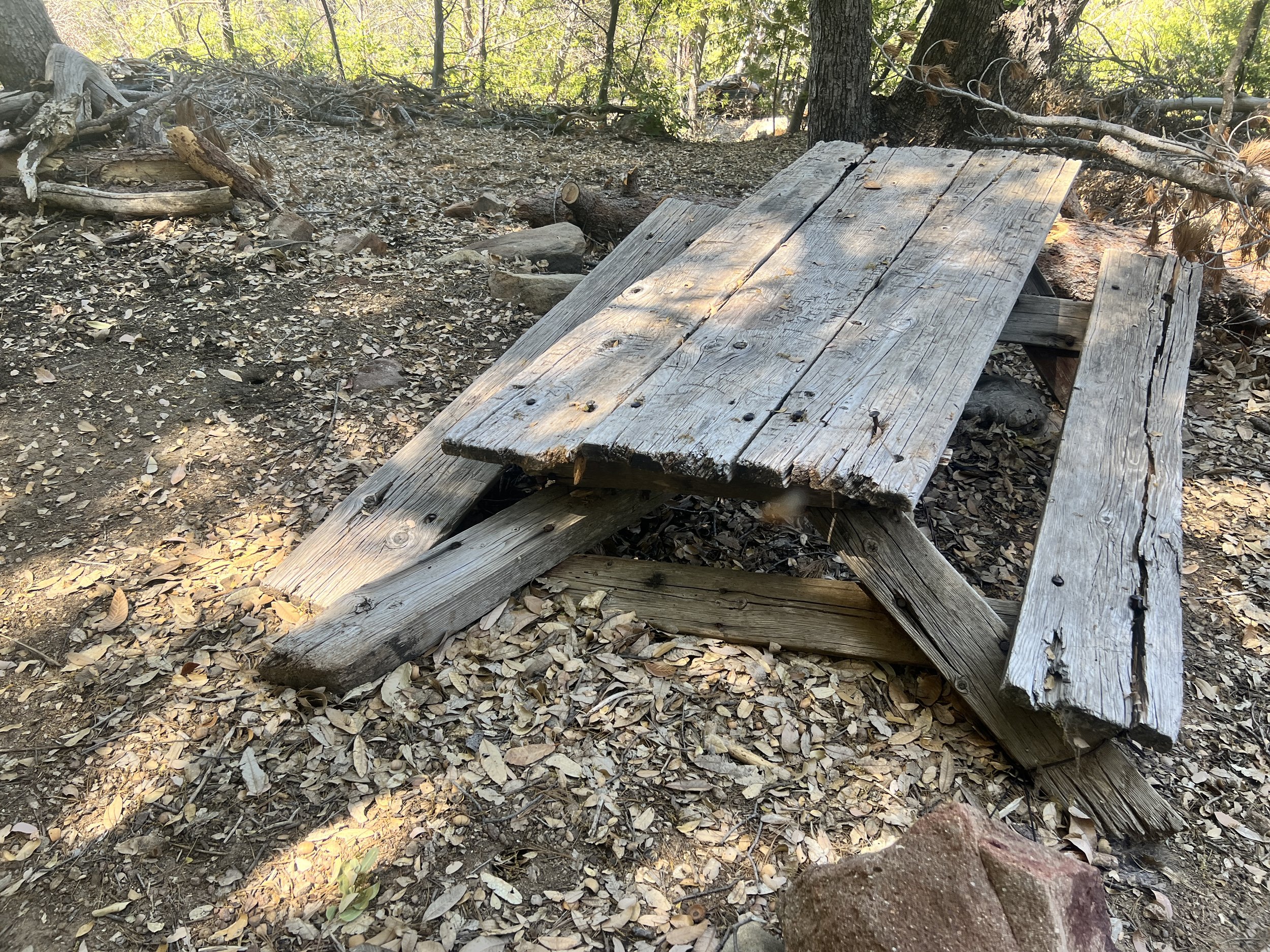
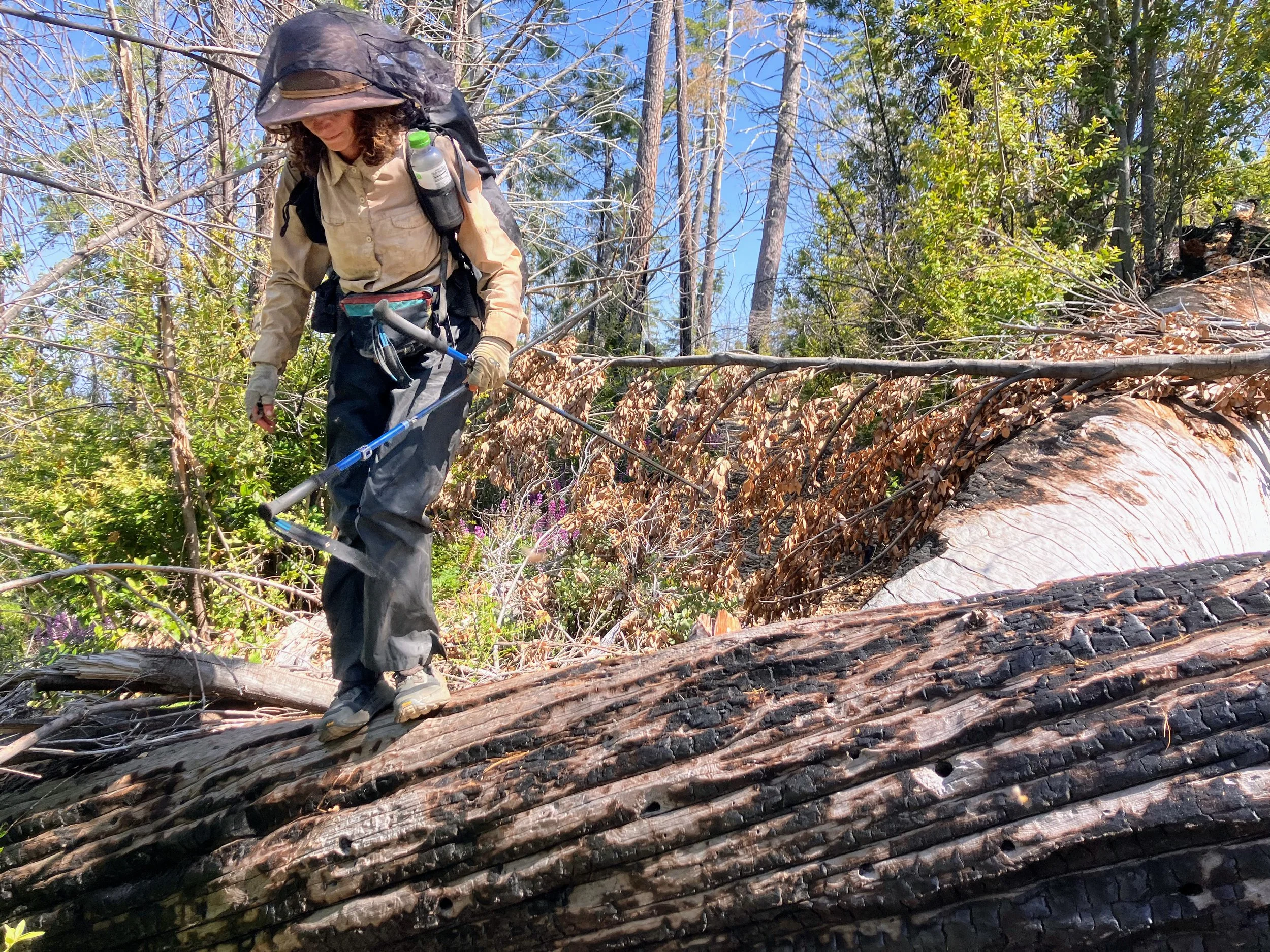
No flat ground, no clean place to sit. The air pulses with flying insects, bees, gnats, flies, all competing for a place on my skin. I pull my bug net over my face, but the mesh makes it hard to breathe. I lift it for one breath, and the gnats dive in immediately, coating my neck, my cheeks, crawling near my eyes.
Just past the campsite, the spring barely trickles.
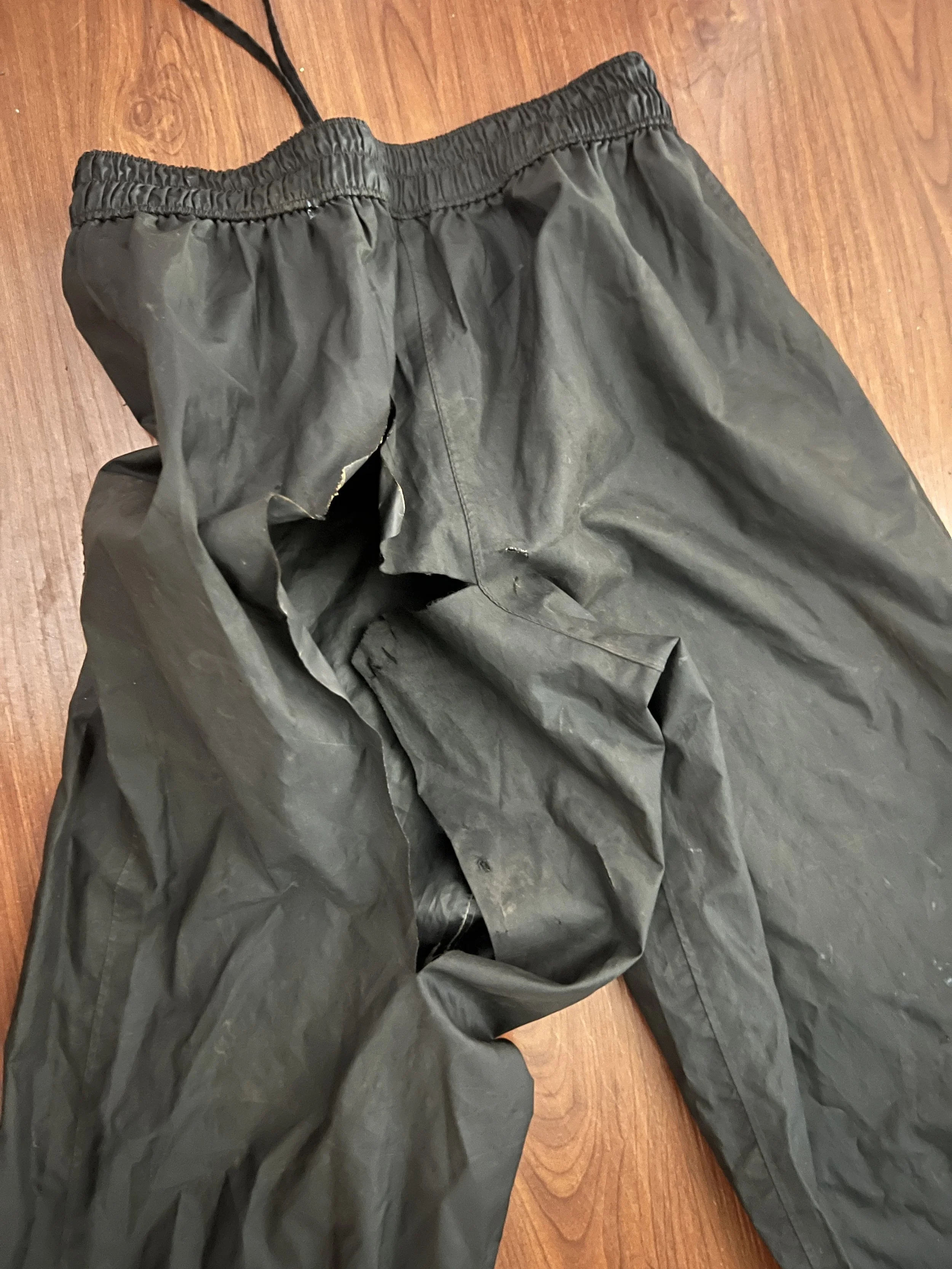
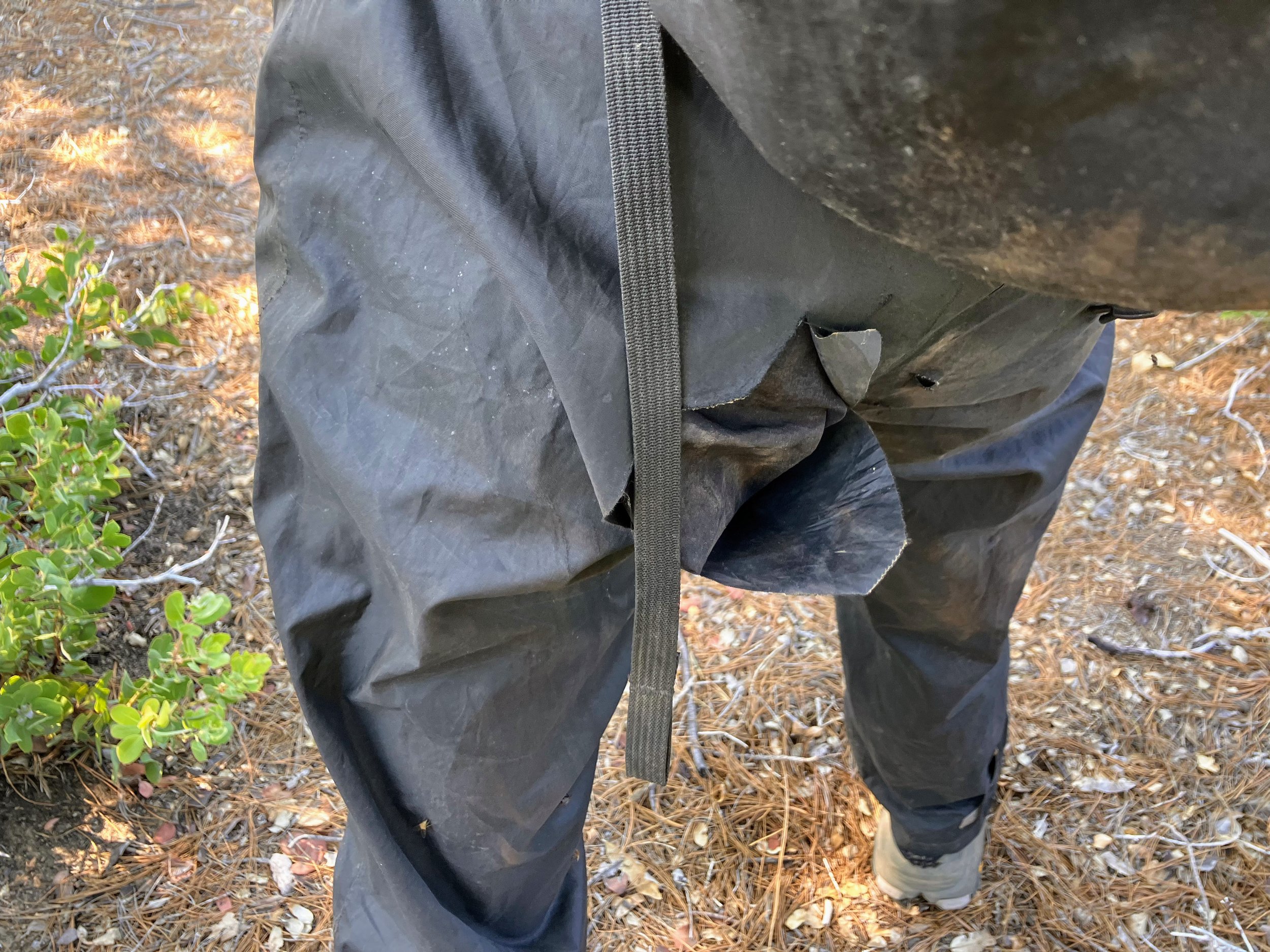
My pants are ripped. My shirt’s barely holding together. I’m hot, I’m spent, I’m done.
I try to make a drink, dig out a snack, anything, but I can’t stop long enough. The moment I sit still, the bugs swarm harder. Stingers, biters, all of them. I can’t even collect water properly, the trickle is so slow, and I can’t stay still long enough without flinching or jerking away from something biting me. I pace around the spring, trying to find an angle where I won’t slide down the sharp slope or get eaten alive.
I use every piece of clothing I have to cover my skin, especially the back of my neck, but my shirt is ripped in so many places that it is impossible to protect everything.
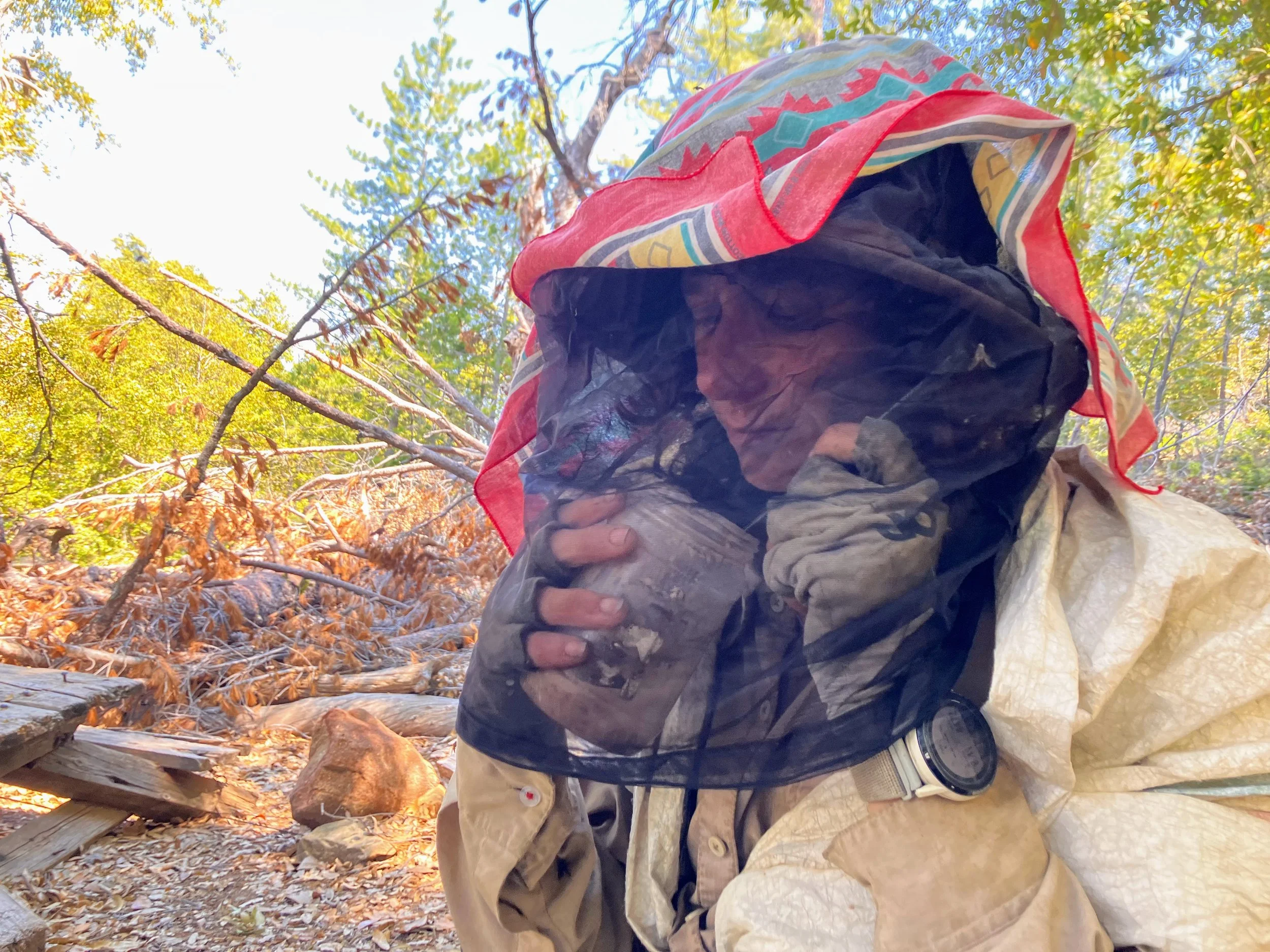
I sit in the dirt, legs curled up tight, trying to stay small, arms twitching to swat .The bugs don’t just land. They peck, they crawl, they startle and tickle, moving across my skin with stingers, jaws, and jittery legs. The noise alone is enough to wear me down: the frantic fluttering, the high-pitched whine.
I try to surrender, but my body won't. The swatting, the twitching, it’s all reflex now.
Eventually, we push back uphill toward the North Coast Ridge Trail.
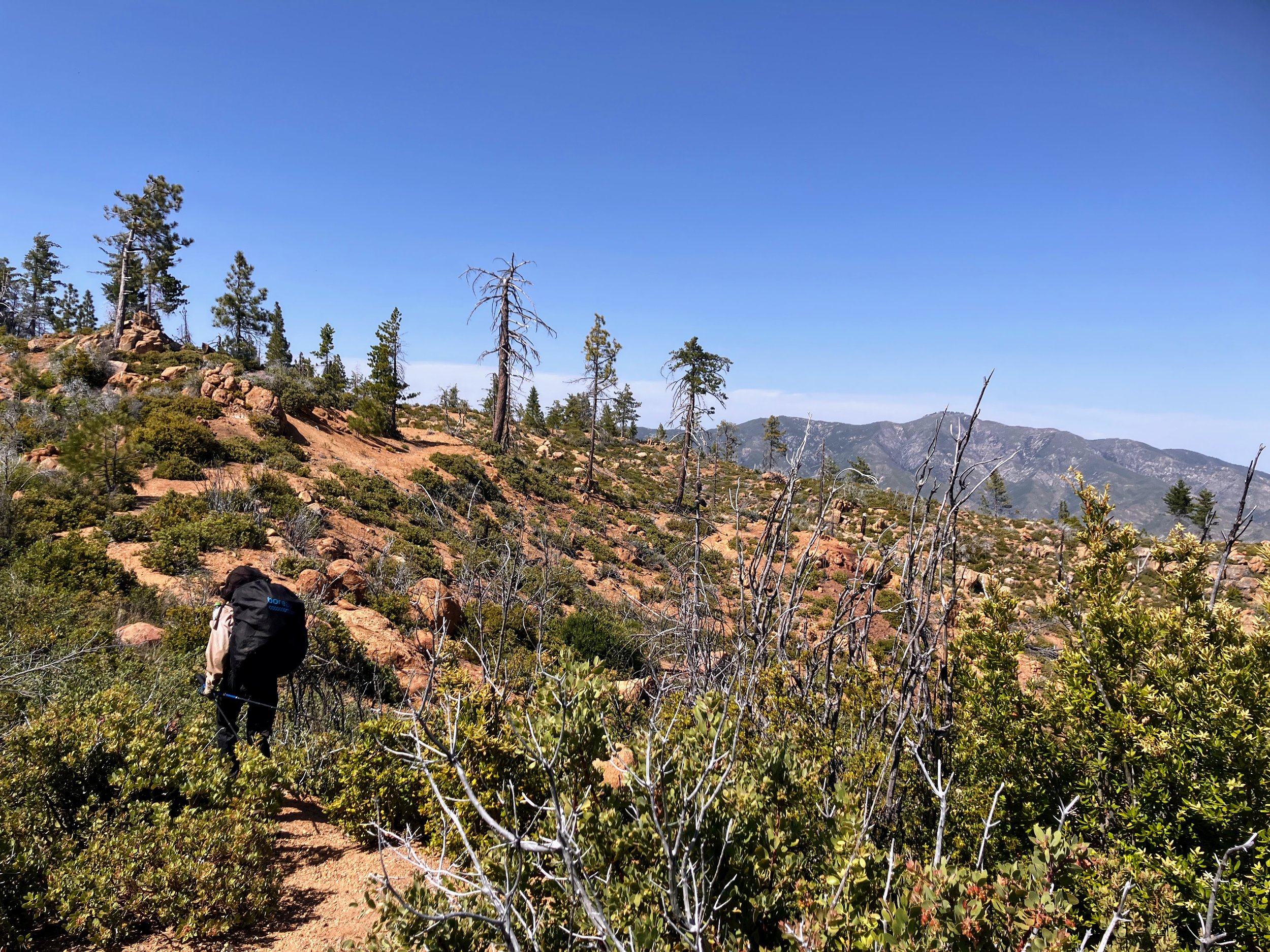
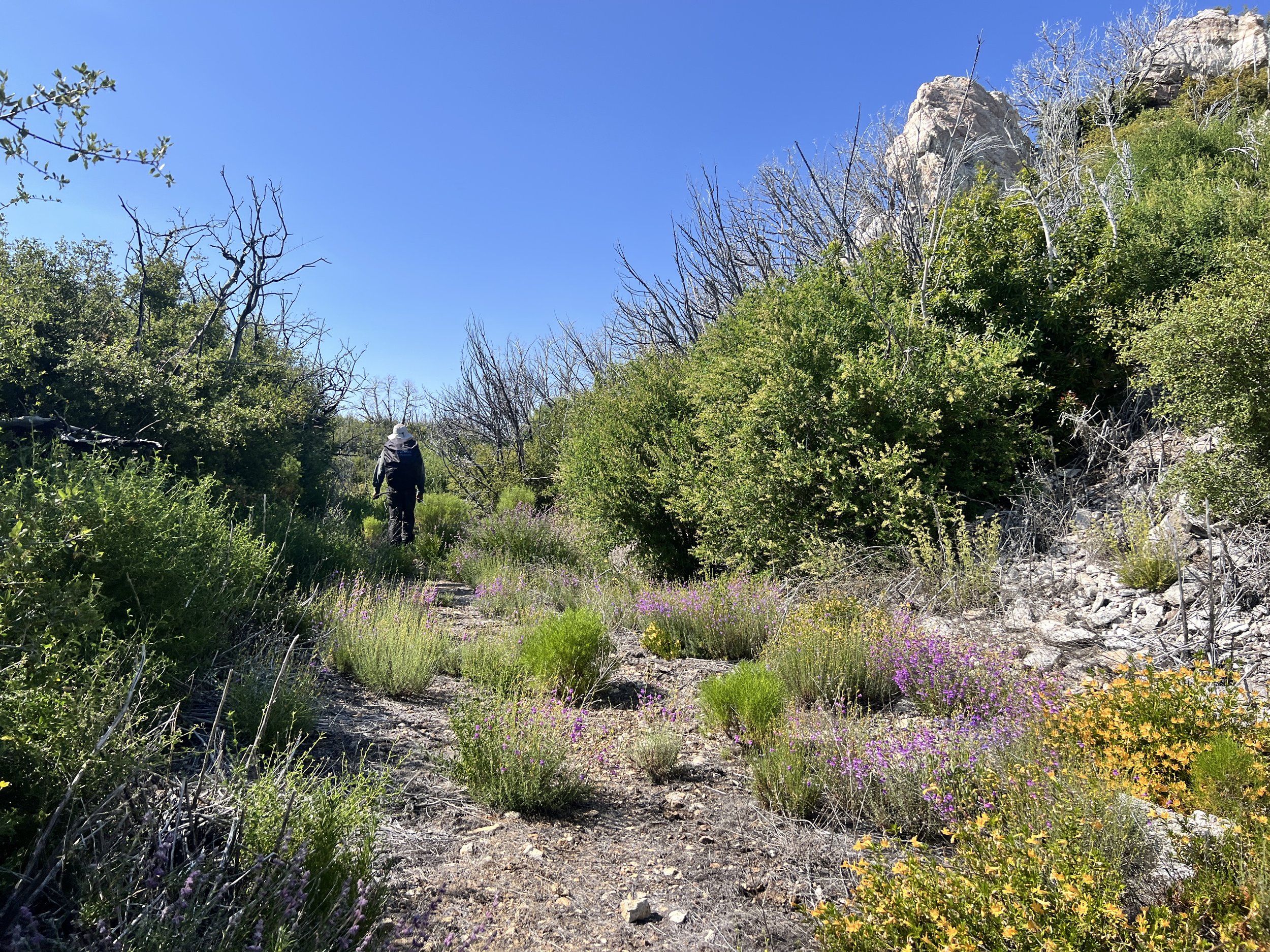
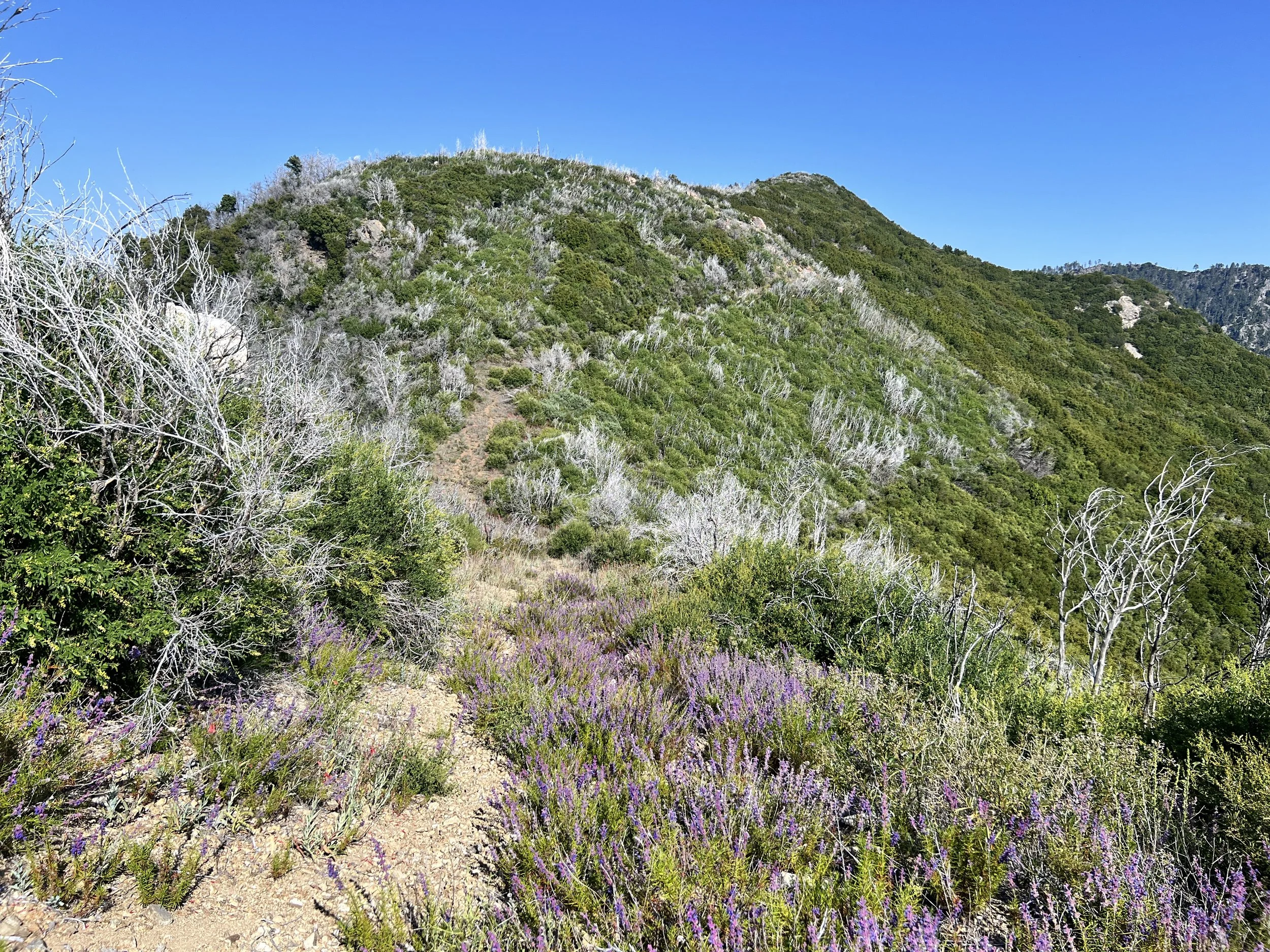
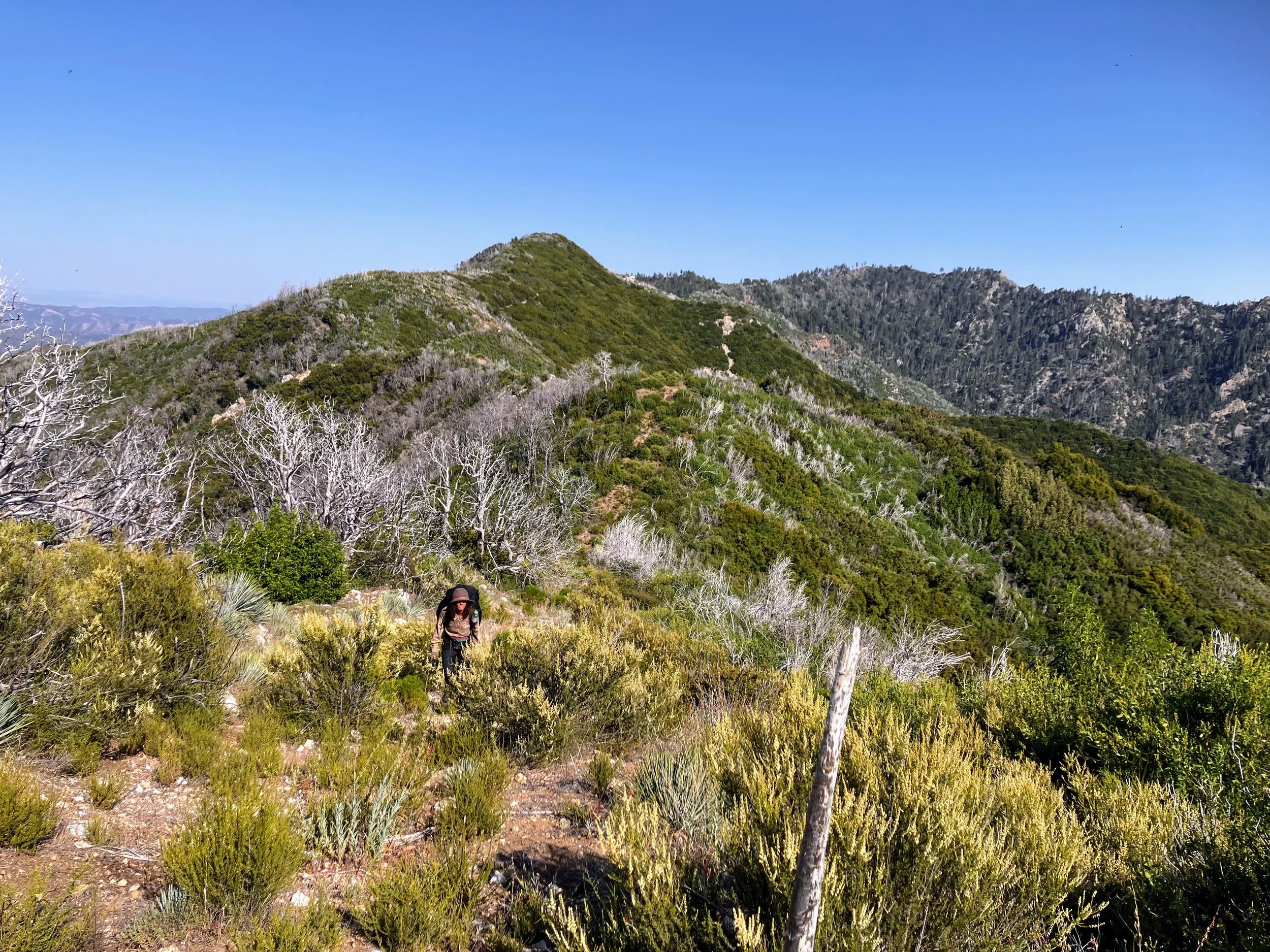
The views are getting better, pale and rust-red rock jutting like shark fins across the ridge, but they barely register. I’m too worn out to take them in. I’m moving through the scene like I’m not quite awake.
At times I think I can see where the trail is heading. The old road seems to straighten, seems passable. I tell myself: just get through this patch of brush, then you’ll be able to hike. But I know better. The brush never ends. Up close, it’s always the same: thick Yerba Santa, Ceanothus buzzing with bees, oak branches grabbing at my arms, coastal sage scratching my legs.
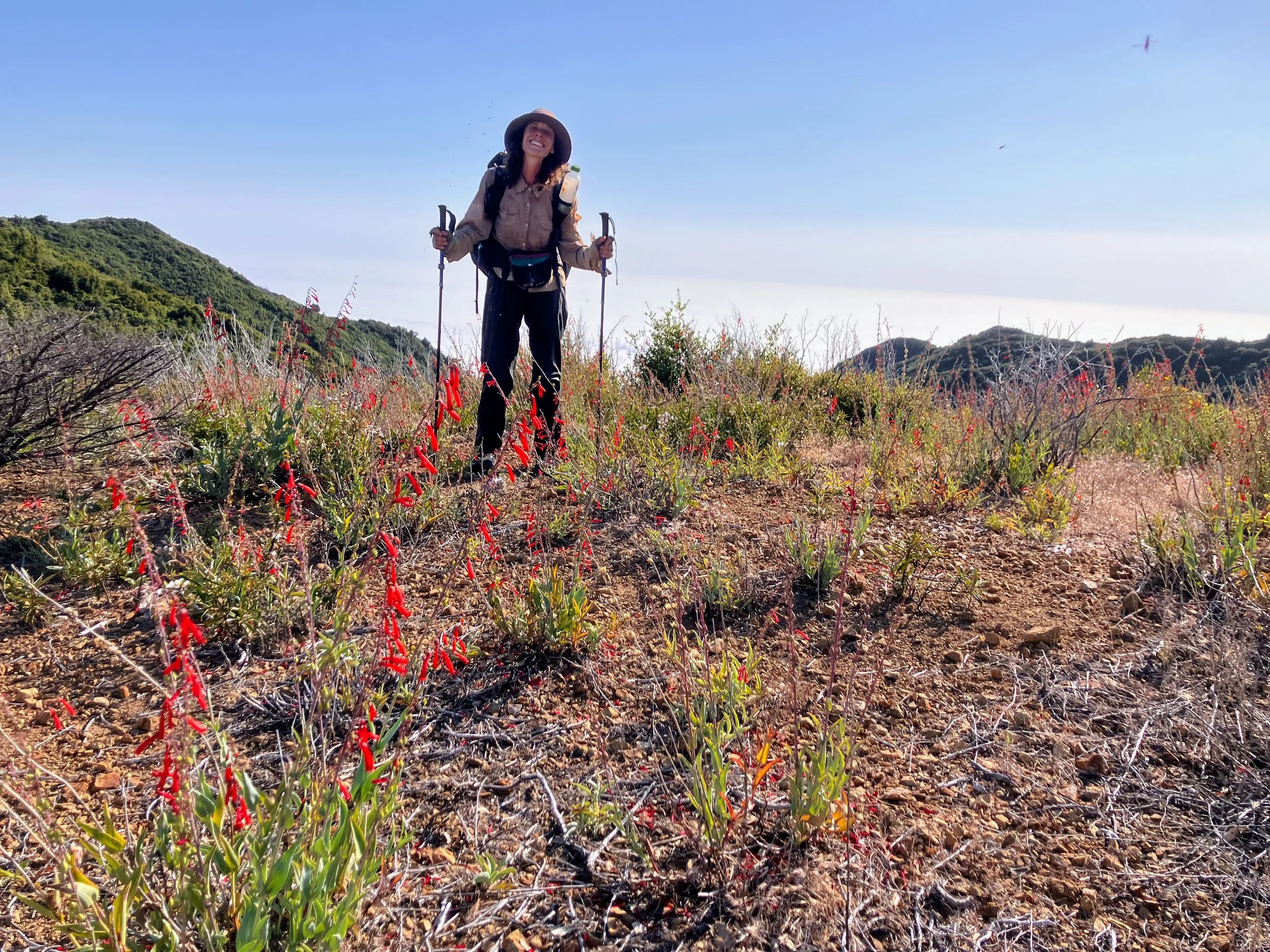
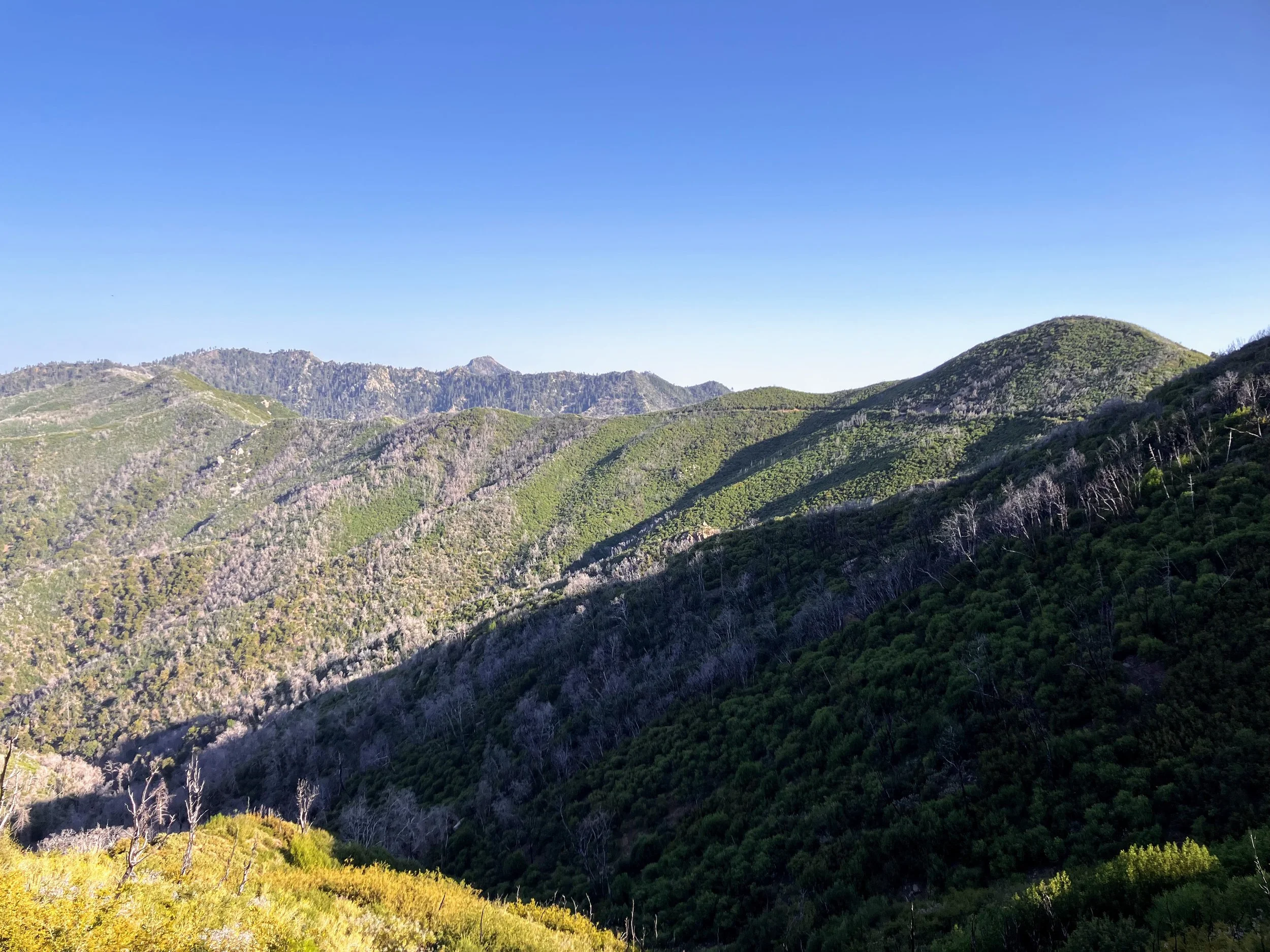
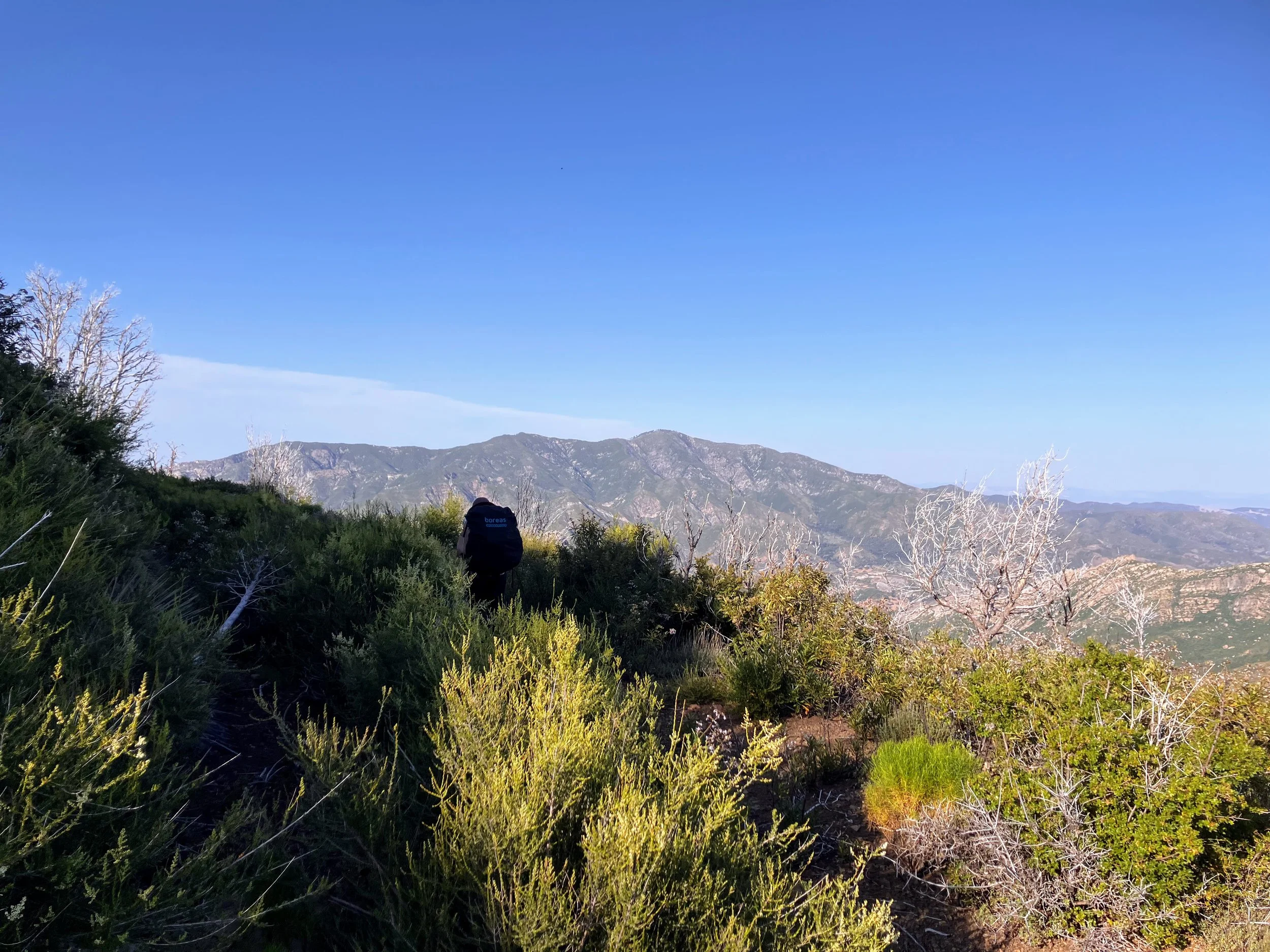
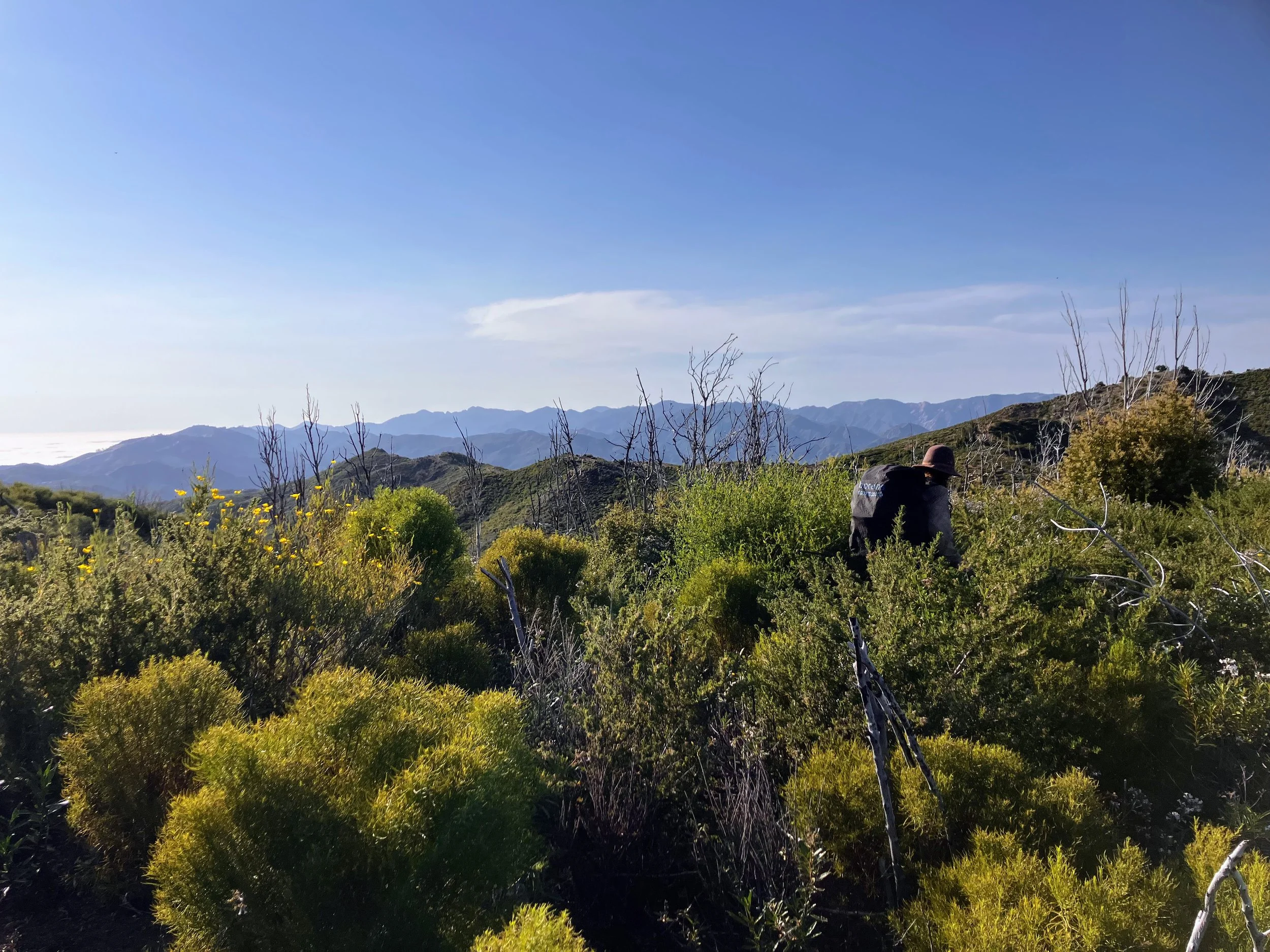
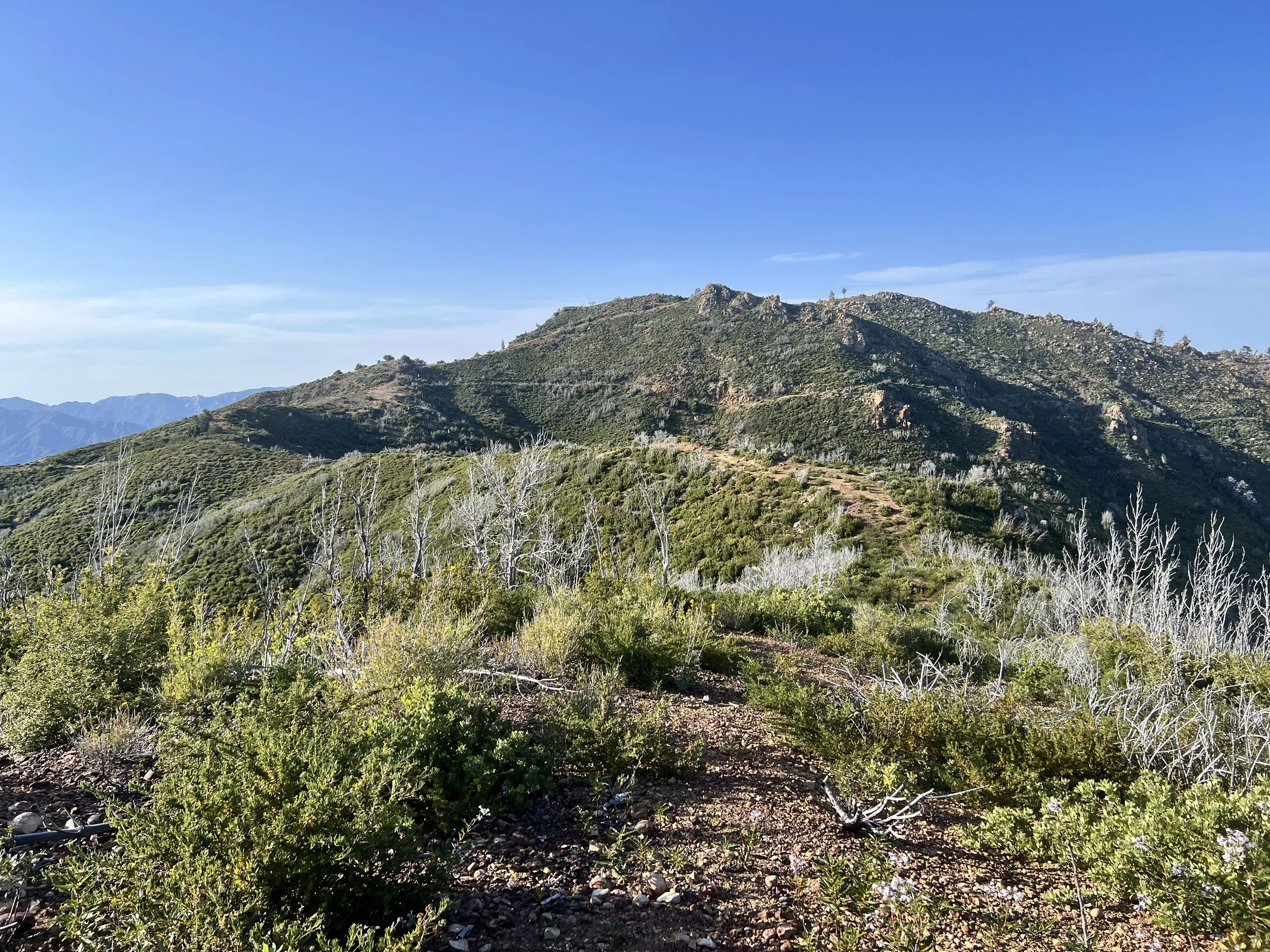
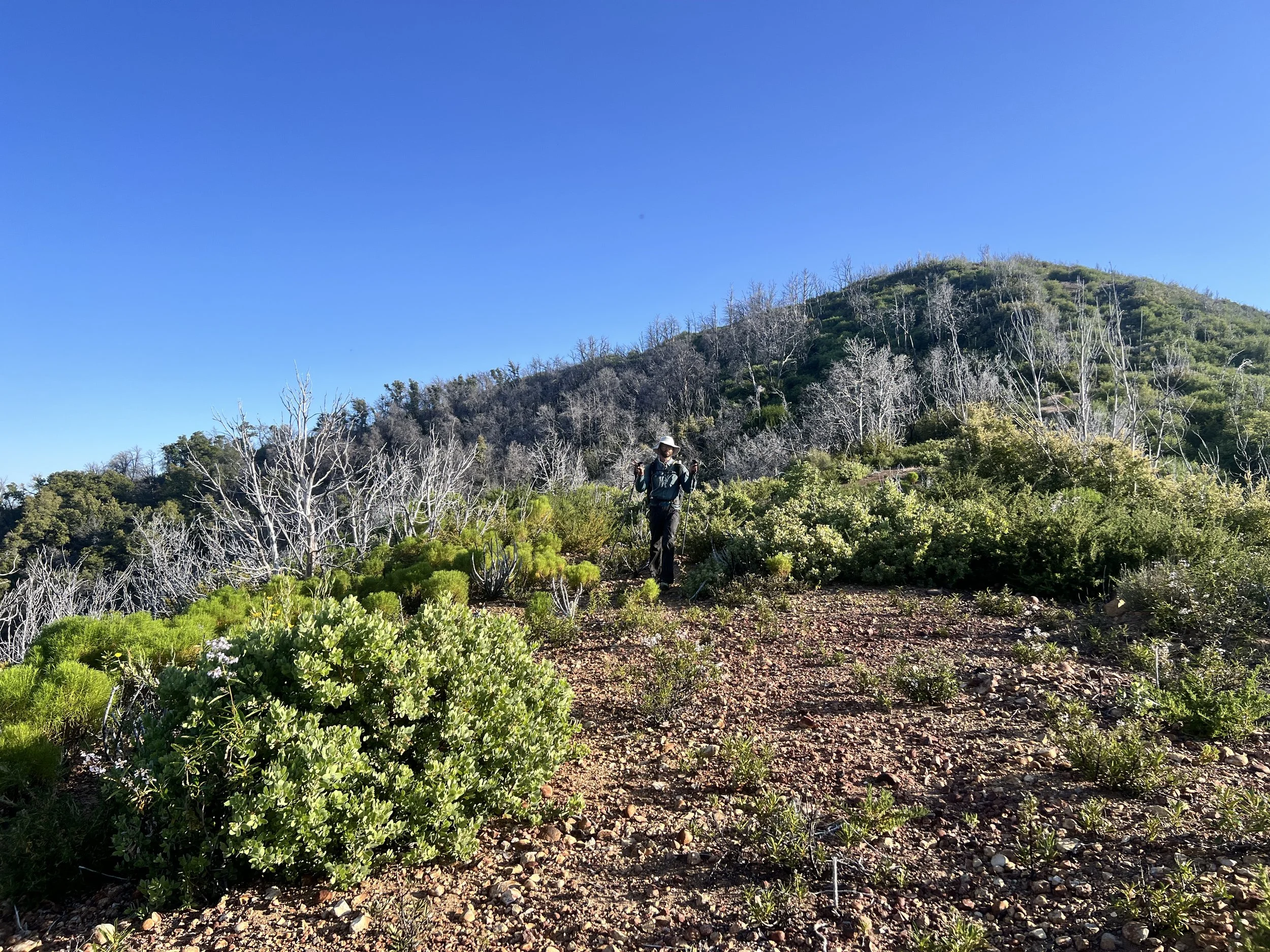
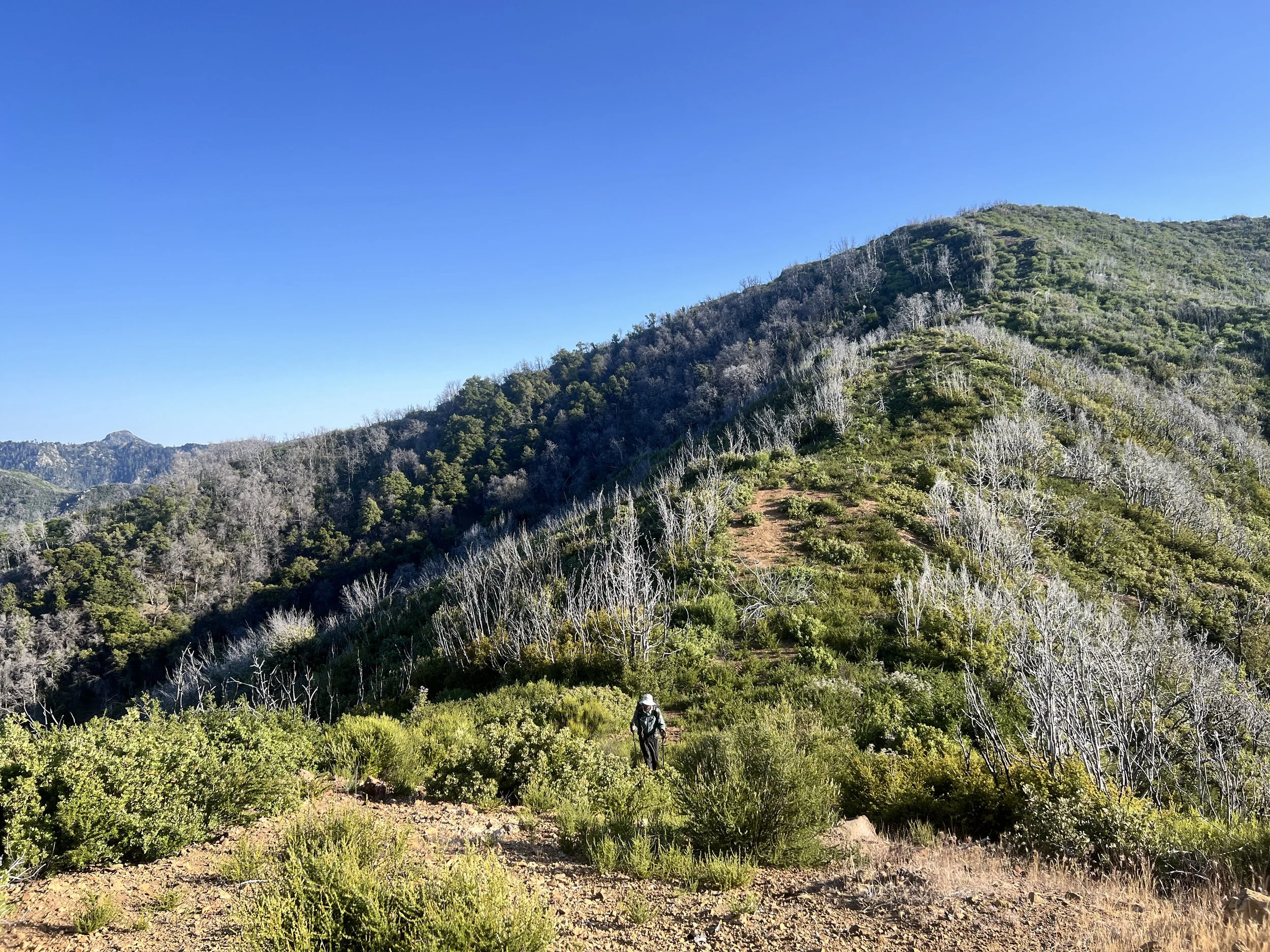
We keep stopping and starting. Each pause is forced, navigation, repair, swatting bugs, untangling from branches. I can’t find a rhythm. Every time I build momentum, I get yanked out of it.
We’re on what should be an overgrown scenic road, but it feels like a test. Ridge views flash through the gaps, promising, unreachable.
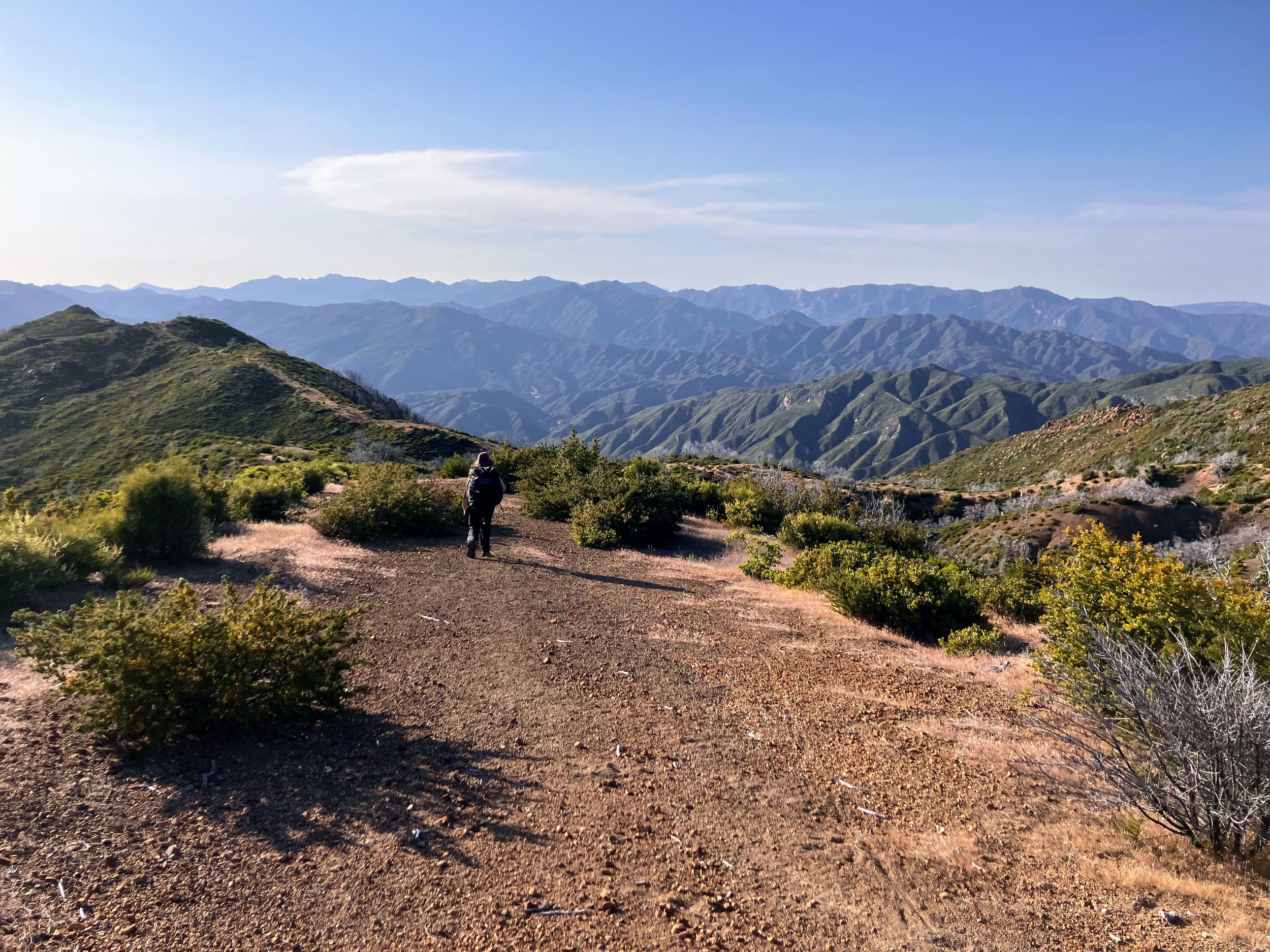
We finally leave the orange section of the trail (on the Big Sur interactive map that means “Difficult - Passable”) and enter yellow (“Passable - Clear”). The difference is immediate. Instead of shoulder-high brush, it’s low shrubs, the kind you can step around. My legs move more freely, I feel less confined. Fog blankets the ocean to the west, and I can feel the horizon stretching out behind it.
The dirt road widens. The plants shrink. For the first time all day, hiking feels…almost good. My body’s dry, stretched thin, but the fight is gone from the trail.
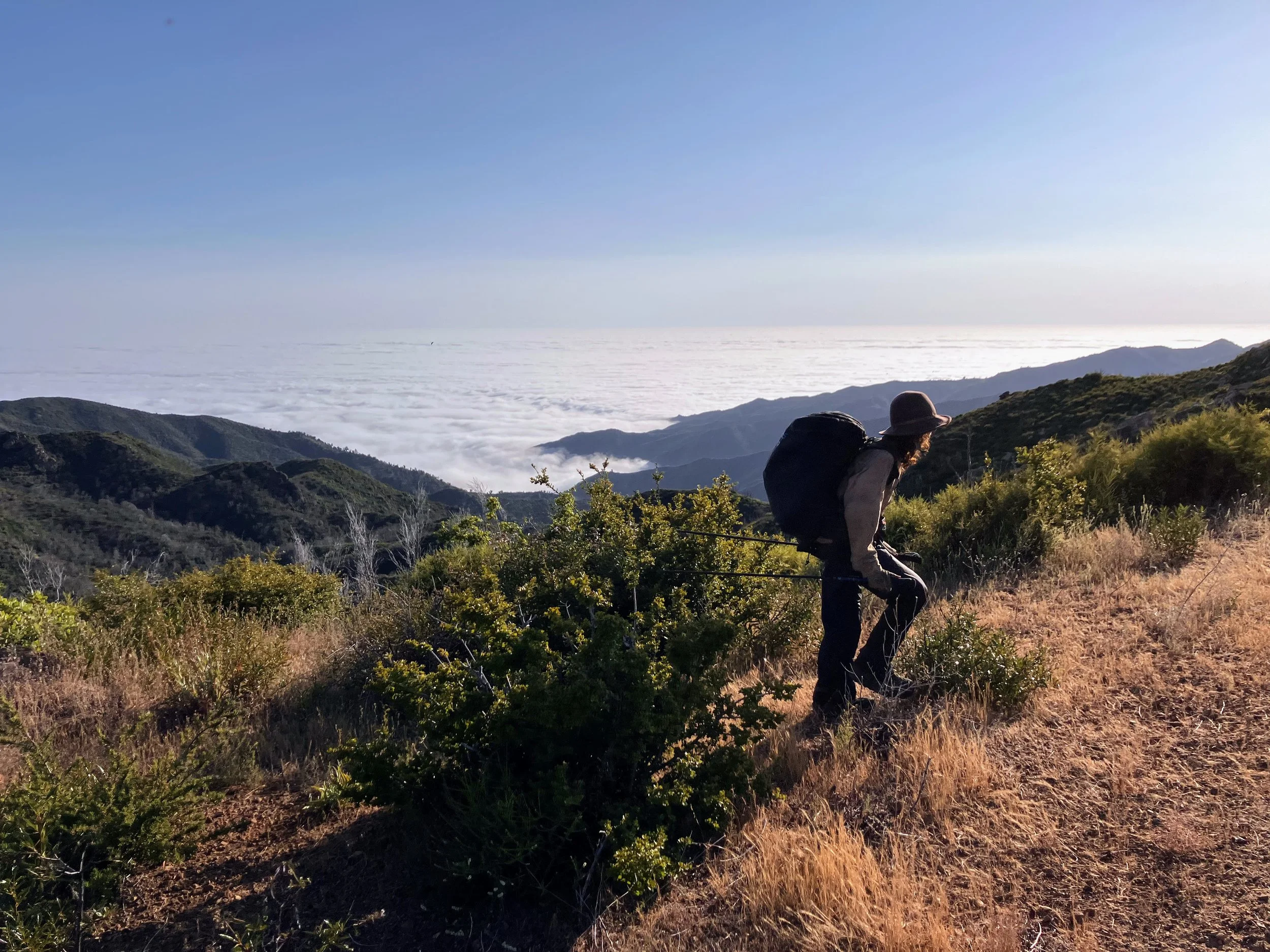
I hope for water at Redondo Spring. It’s dust. Empty. We make do with what little we’ve got left. We’re too tired to go further, and this camp spot is too perfect to pass up.
It ends up being the best site on the route. Open dirt spot, scattered boulders, and ocean views.
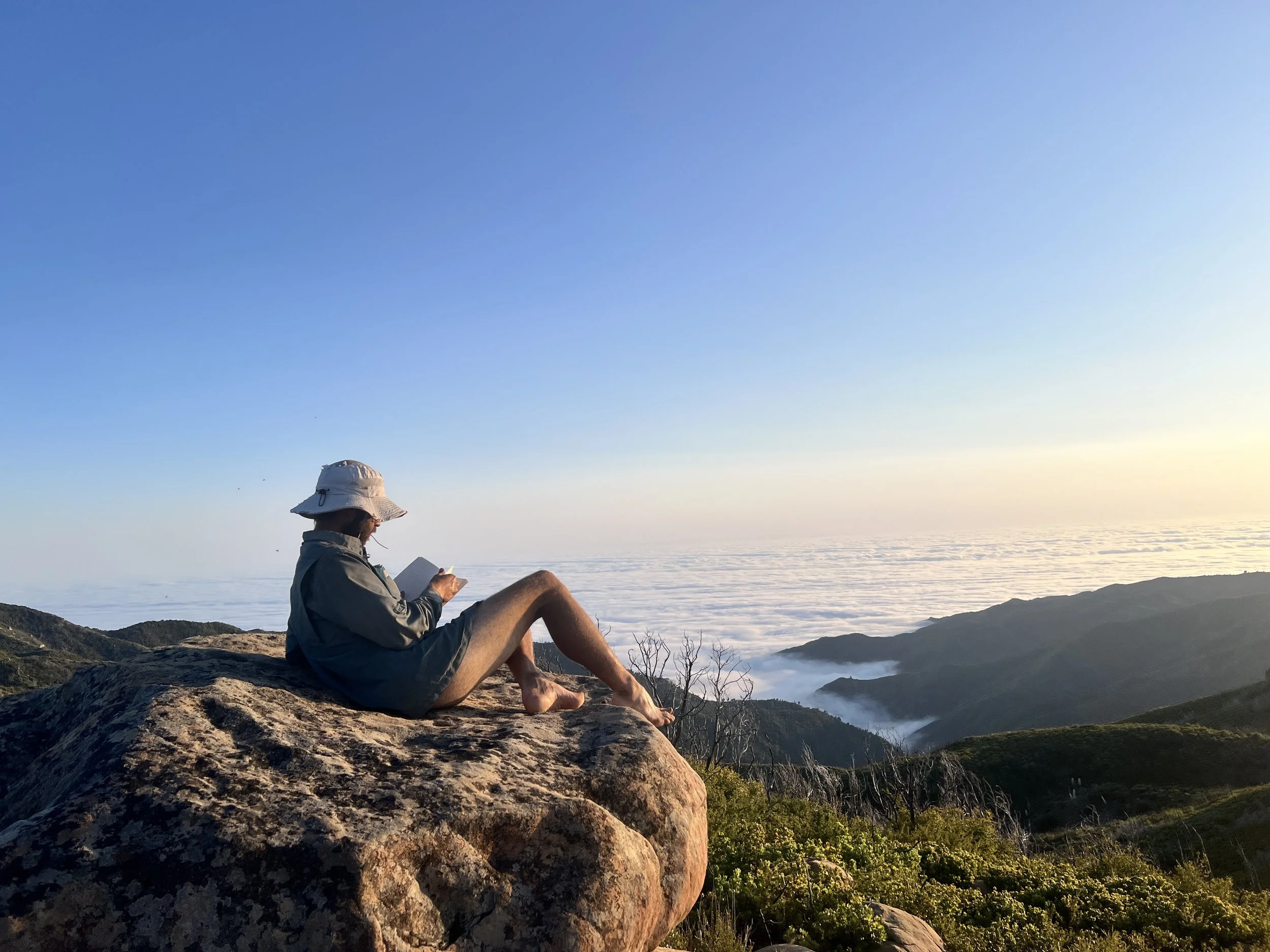
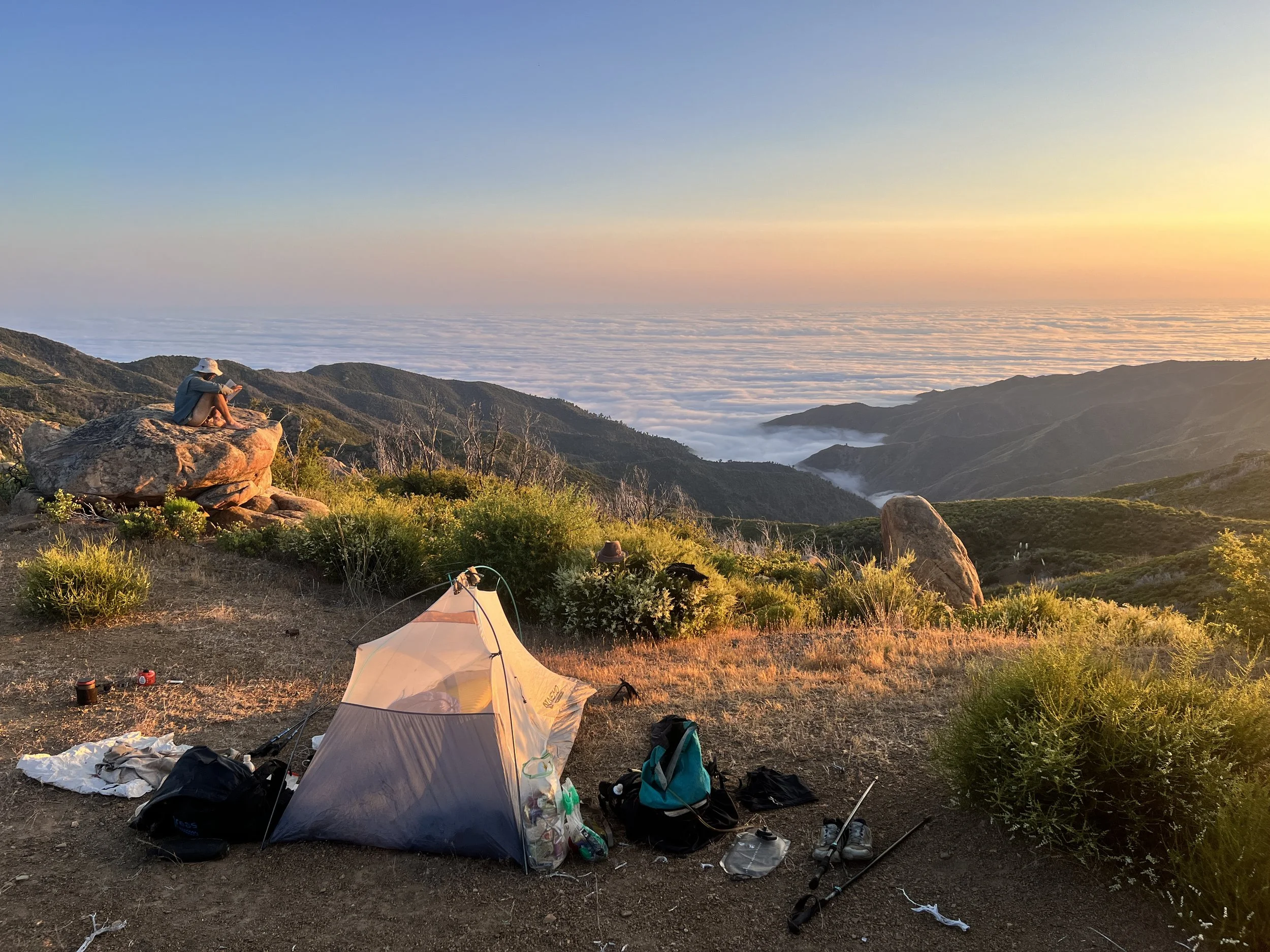
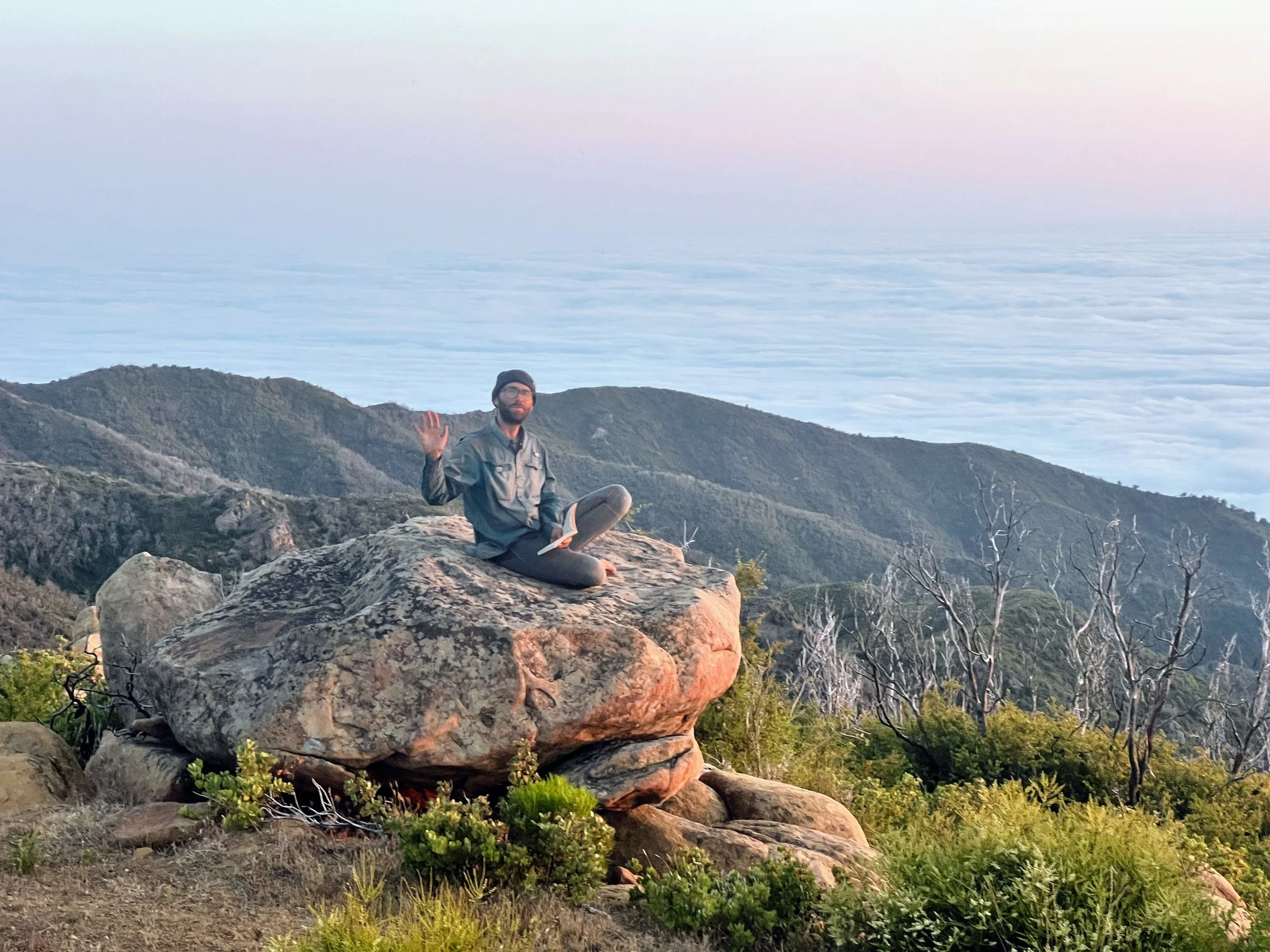
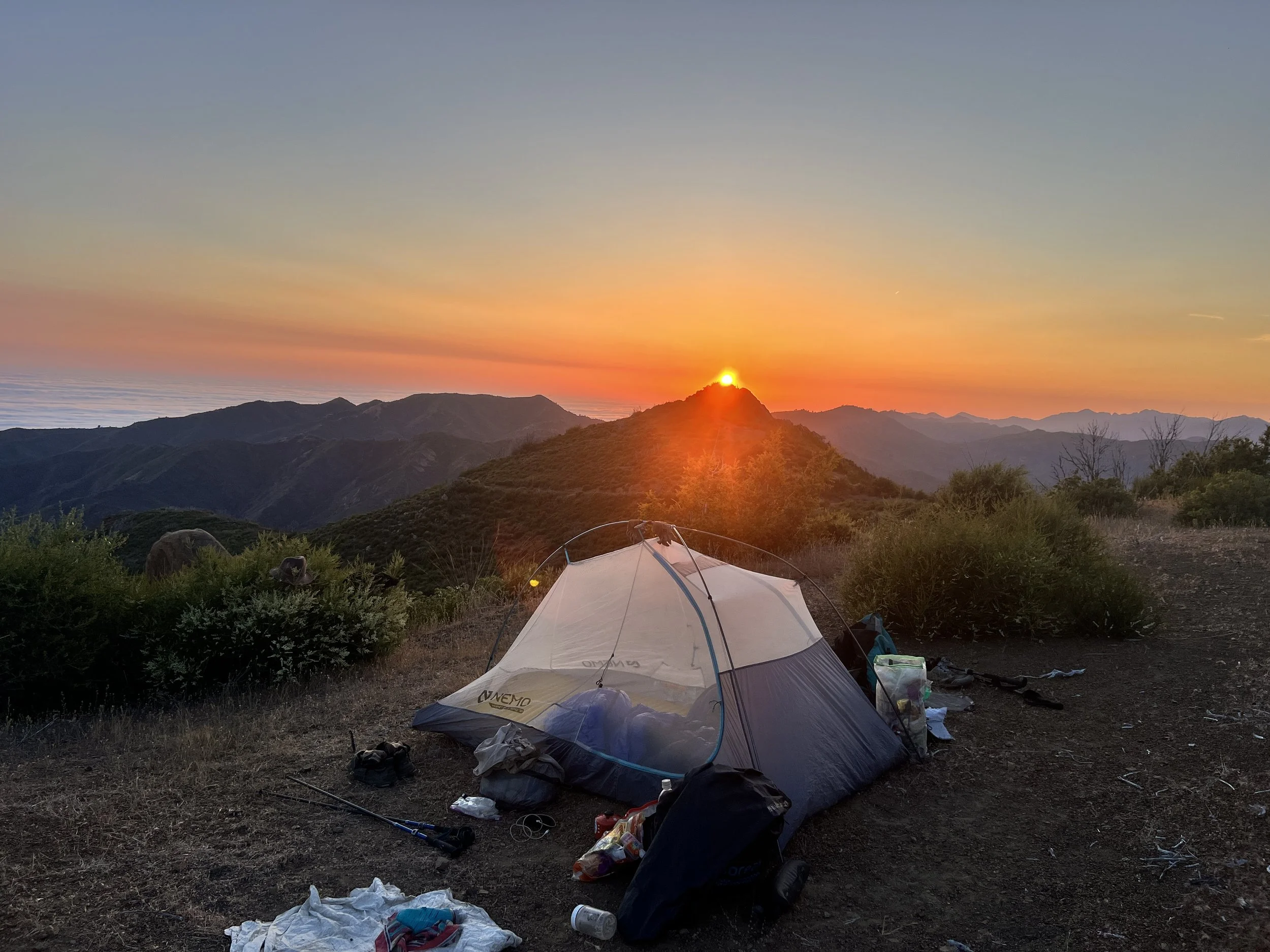
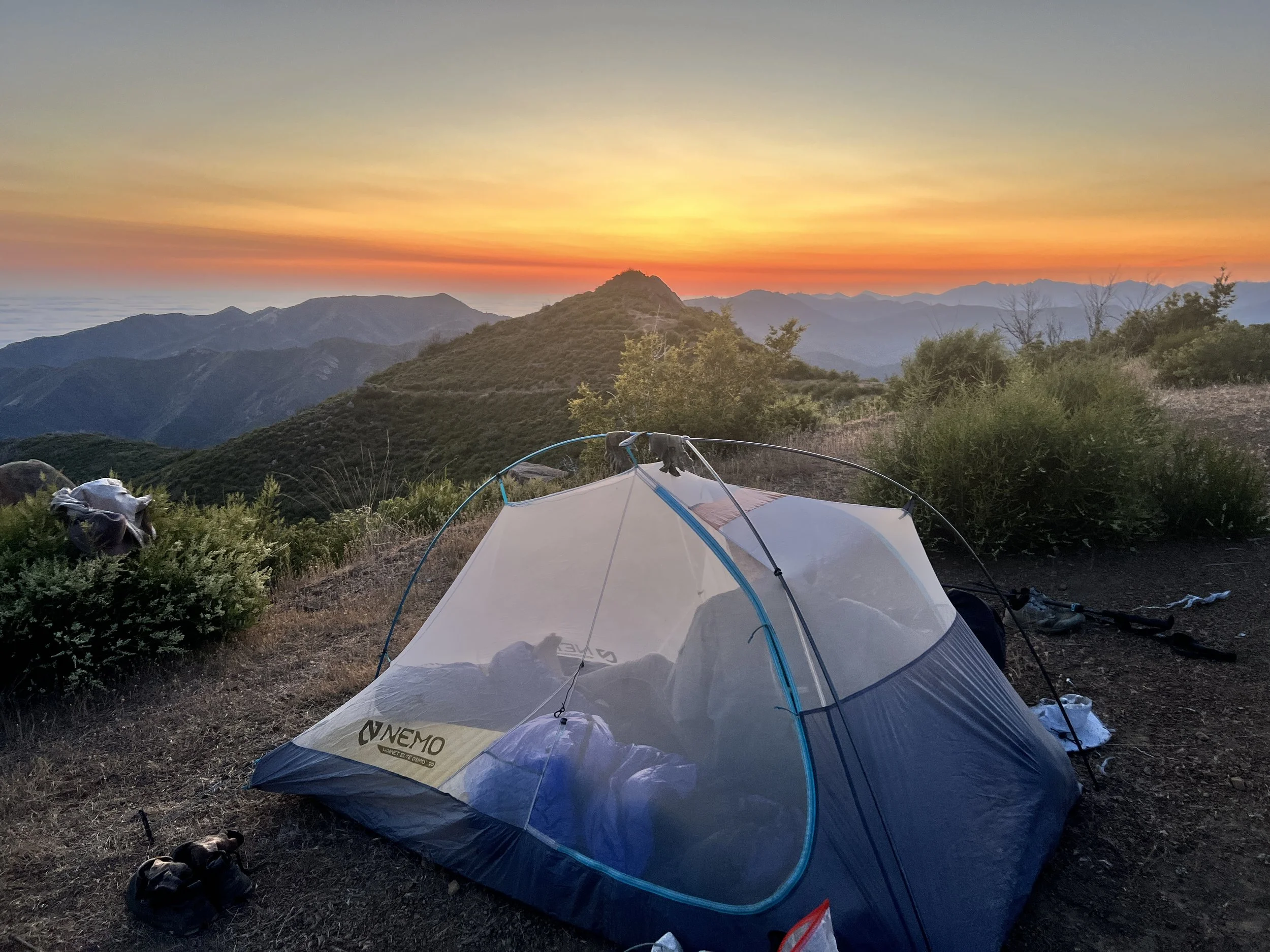
Cosmo reads on a rock above the Pacific. I sit on my Tyvek sheet and sew the holes in my shirt.
At 1 a.m., I’m still awake. Crickets chirp in the silence. The moon hangs massive and bright, almost full. I think I can hear the ocean crashing far below, steady, powerful. Somewhere in the distance, a great horned owl calls out:
who-who, whoo-whooo.
Day 26 | June 9, 2025
I wake up just in time to see the ocean before the fog rolls in. It spreads like a fluffy veil over the water.
At first, it’s quiet. Peaceful. But as soon as the sun rises, the heat kicks in and the biting gnats and flies wake up too. They define the morning with their constant, stinging presence, turning even the act of packing up into a battle. No amount of Picaridin or DEET seems to keep them off my skin or clothes.
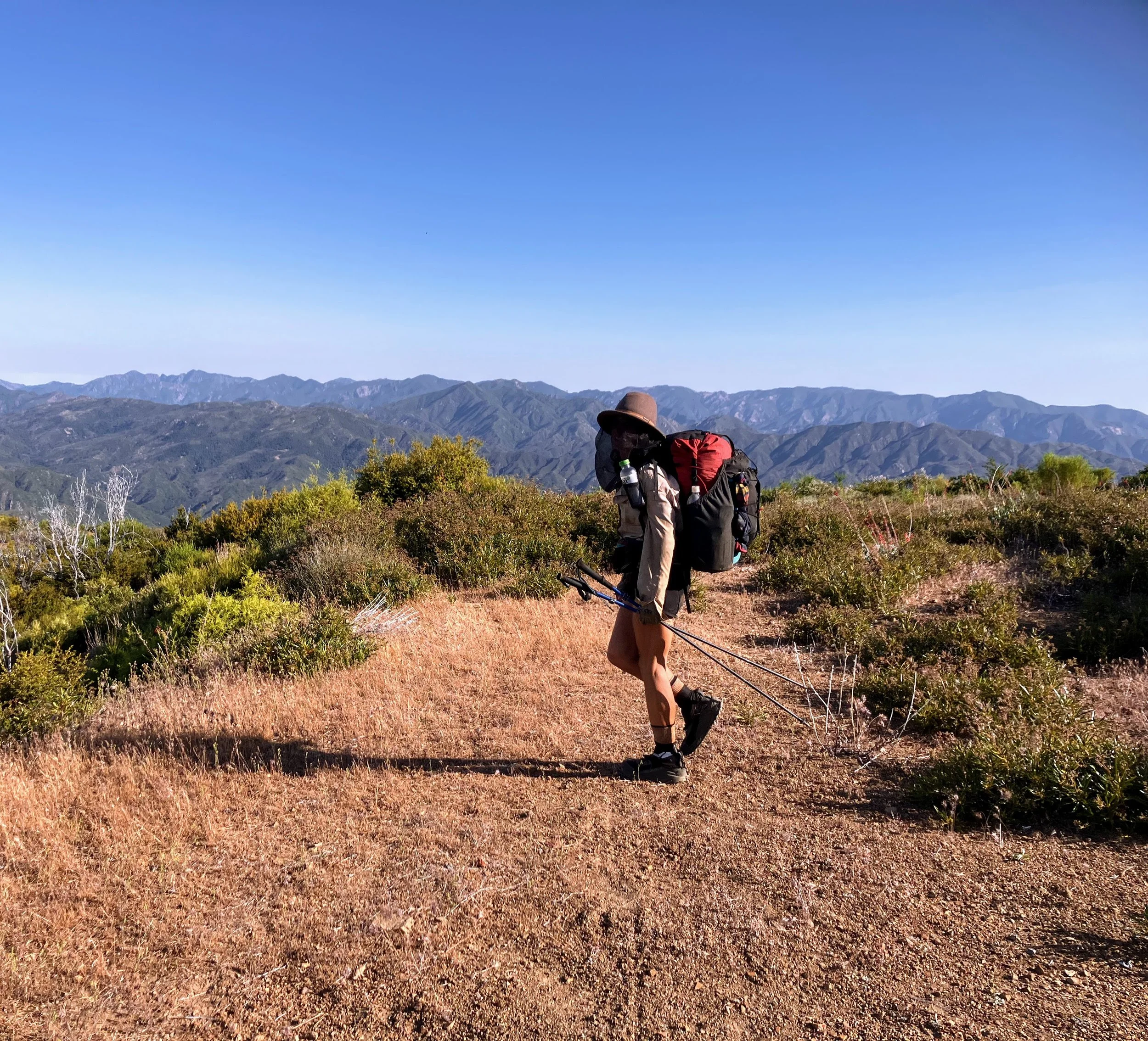
We continue along the North Coast Ridge Trail, moving through open chaparral and low shrubs, with expansive ocean views to the west and mountain peaks to the east.
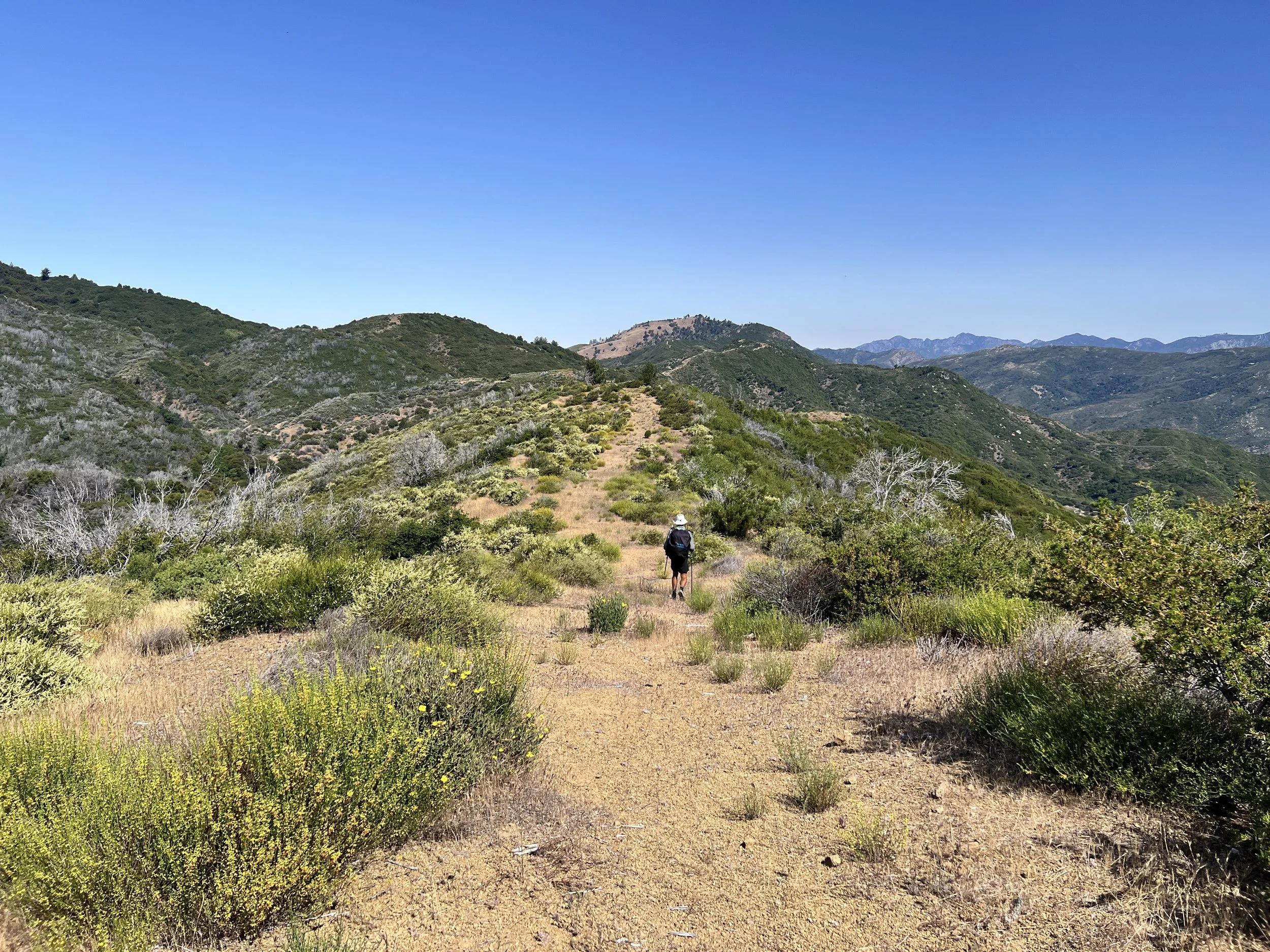
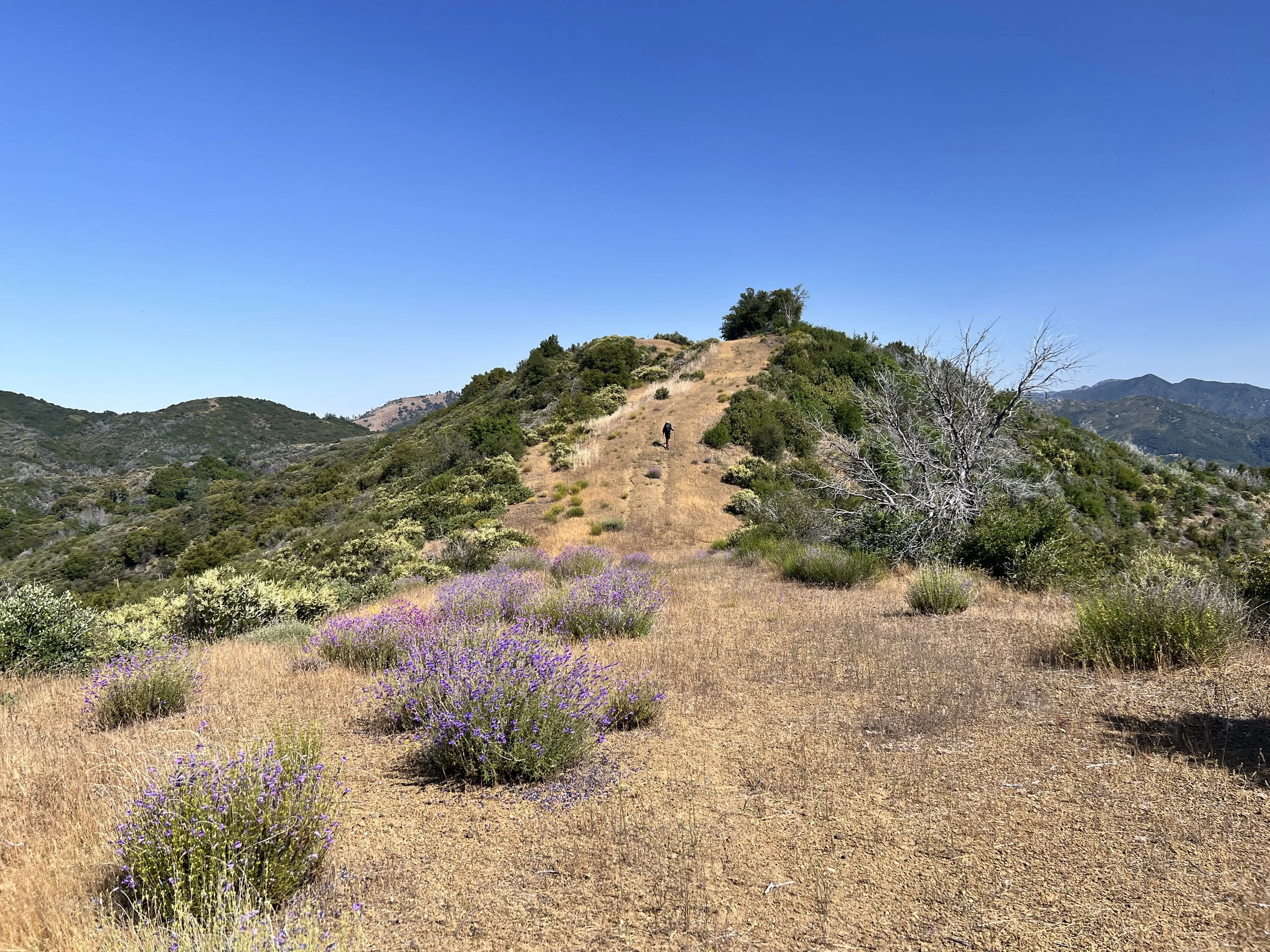
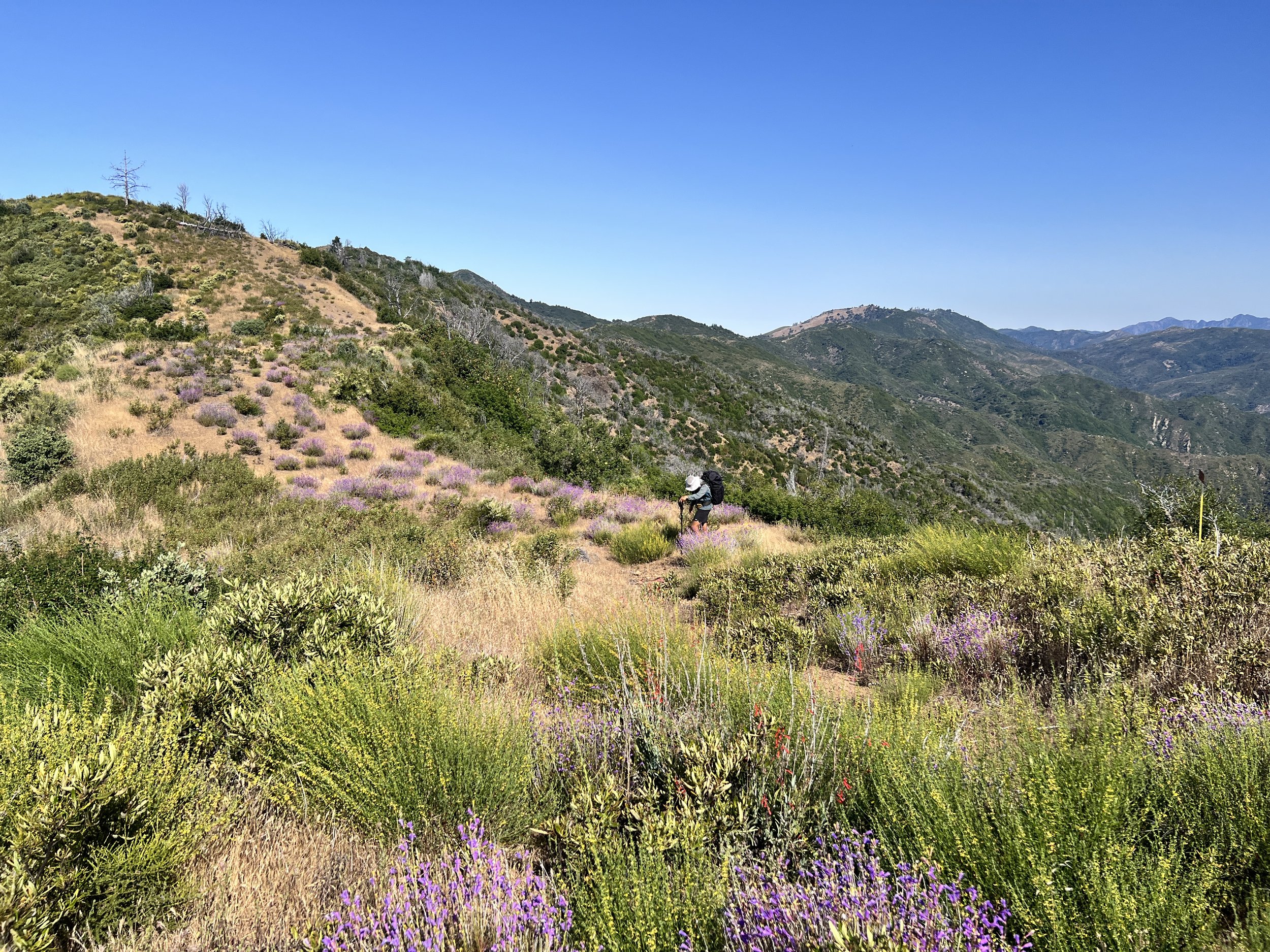
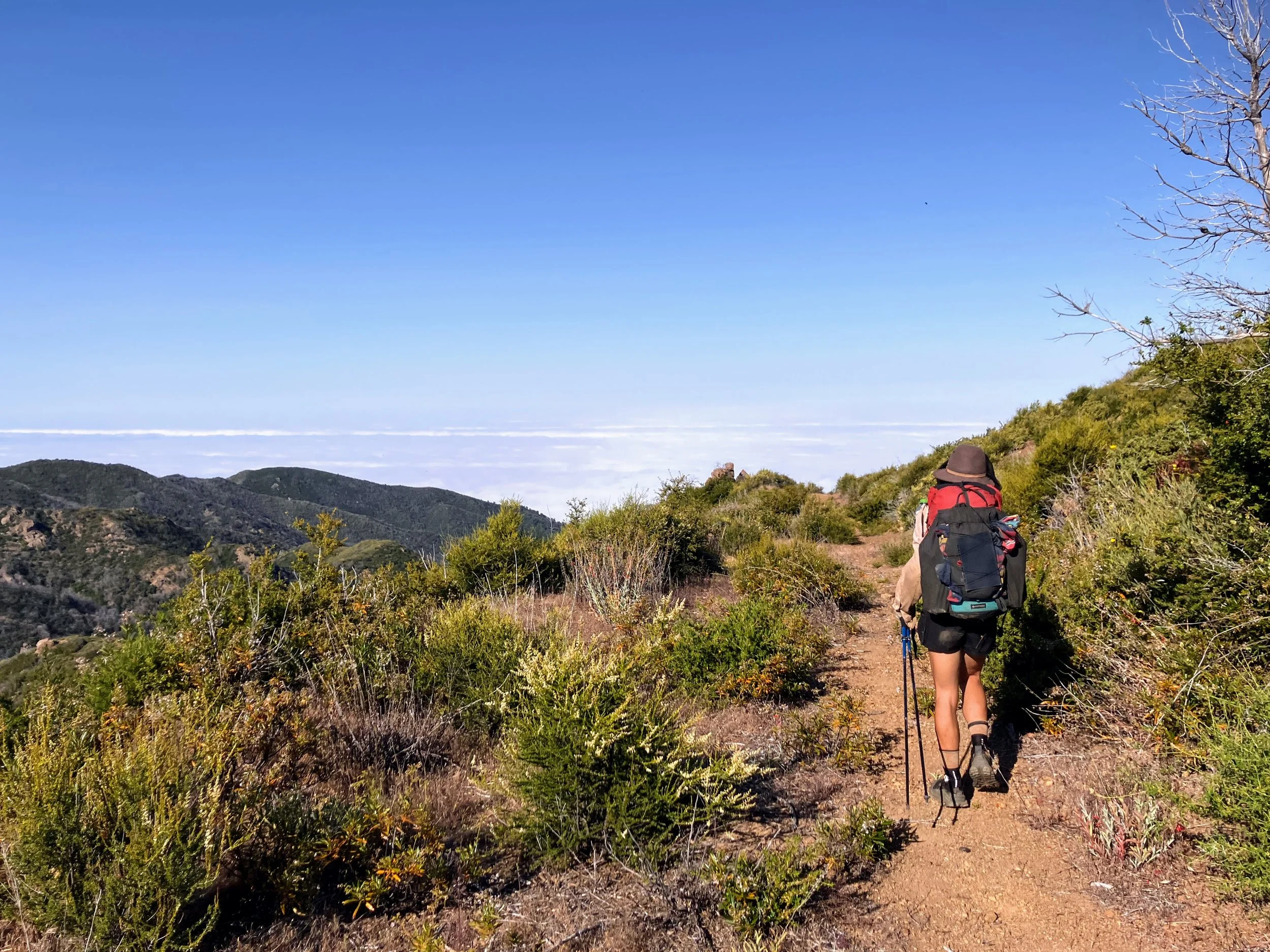
We take a short detour on the Bee Camp Trail to look for water. The guidebook warns it’s a bushwhack, but someone’s clearly done some clearing. A faint track drops off the ridge. We still push through some brush, but the way is mostly open. We’re hot, a little tired, and definitely thirsty.
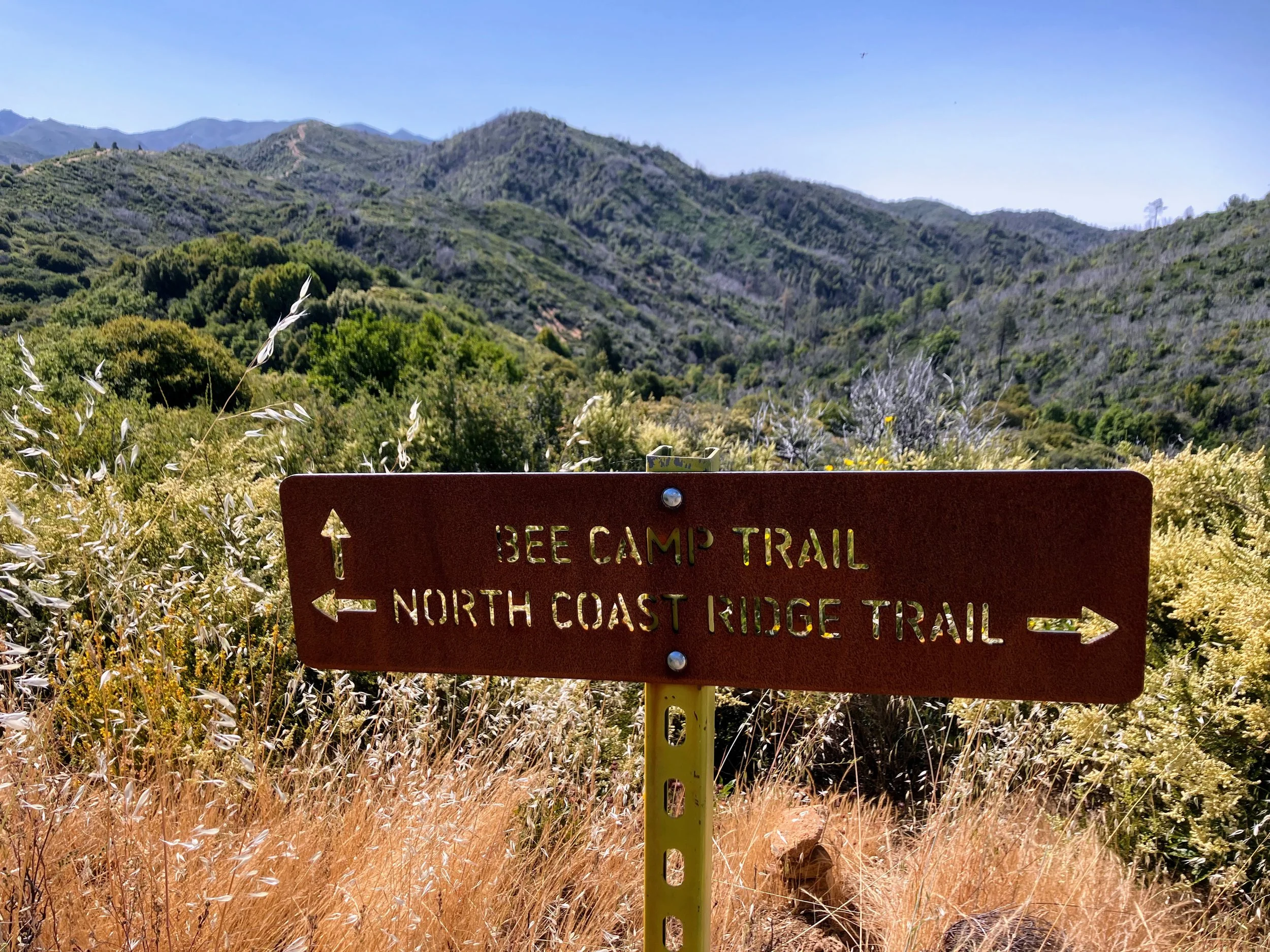
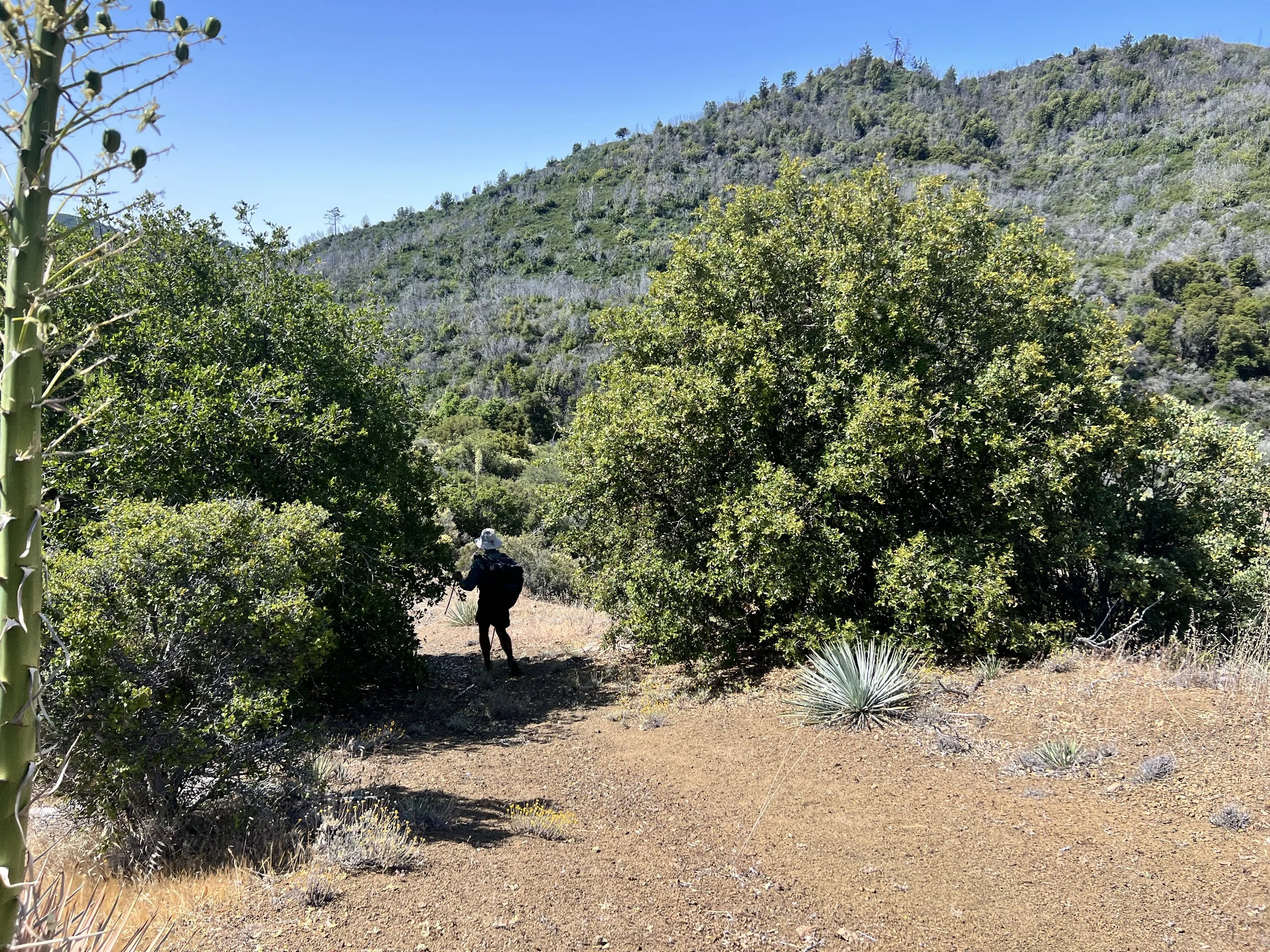
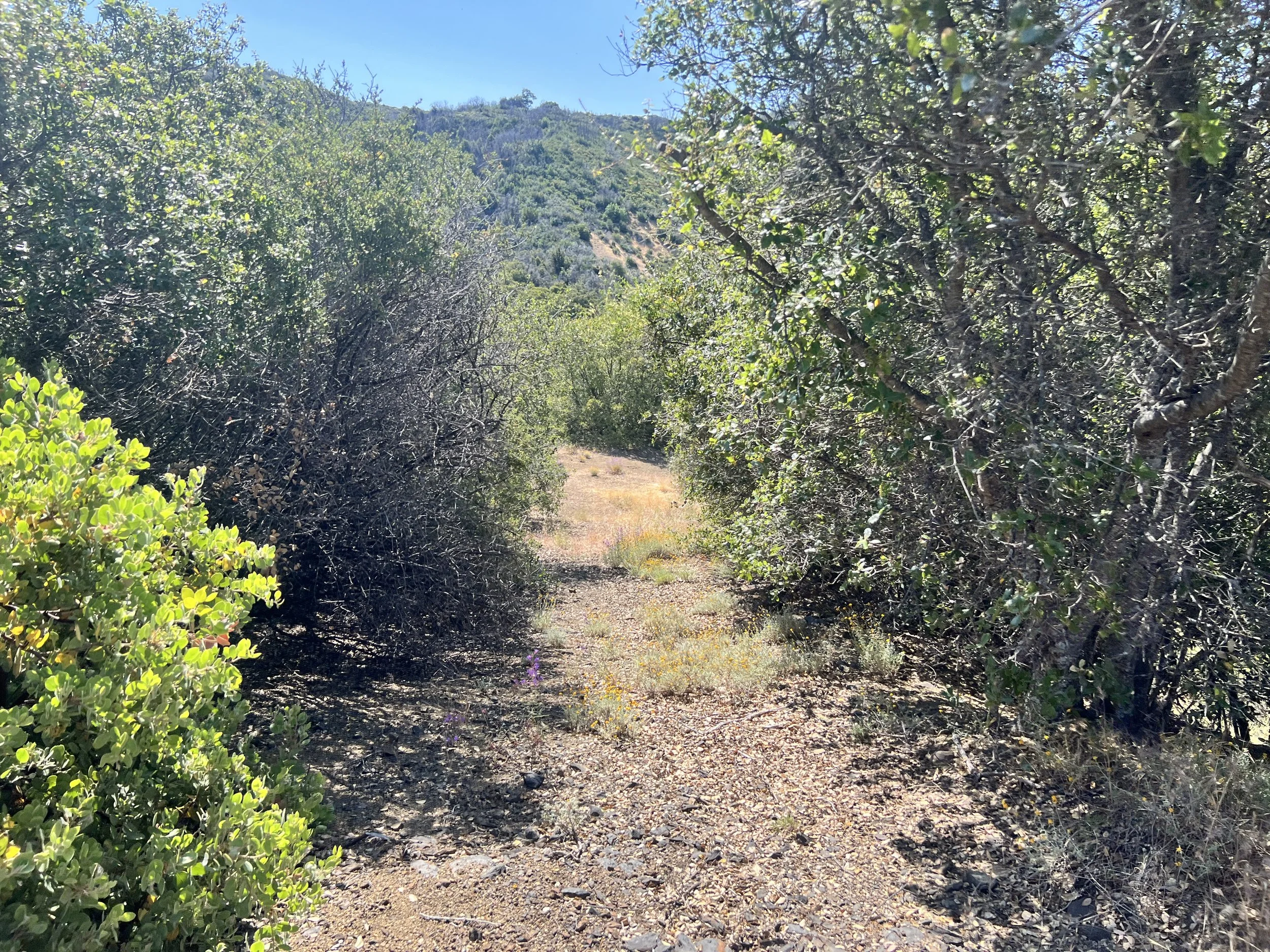
We reach the spot marked as Bee Camp but see no signs of a campsite. We keep descending, hoping to find water. The riverbed is dry.
Frustrated, we backtrack. I push through a patch of shrubs, collecting scratches and pokes, hoping to stumble on a hidden spring. Still nothing.
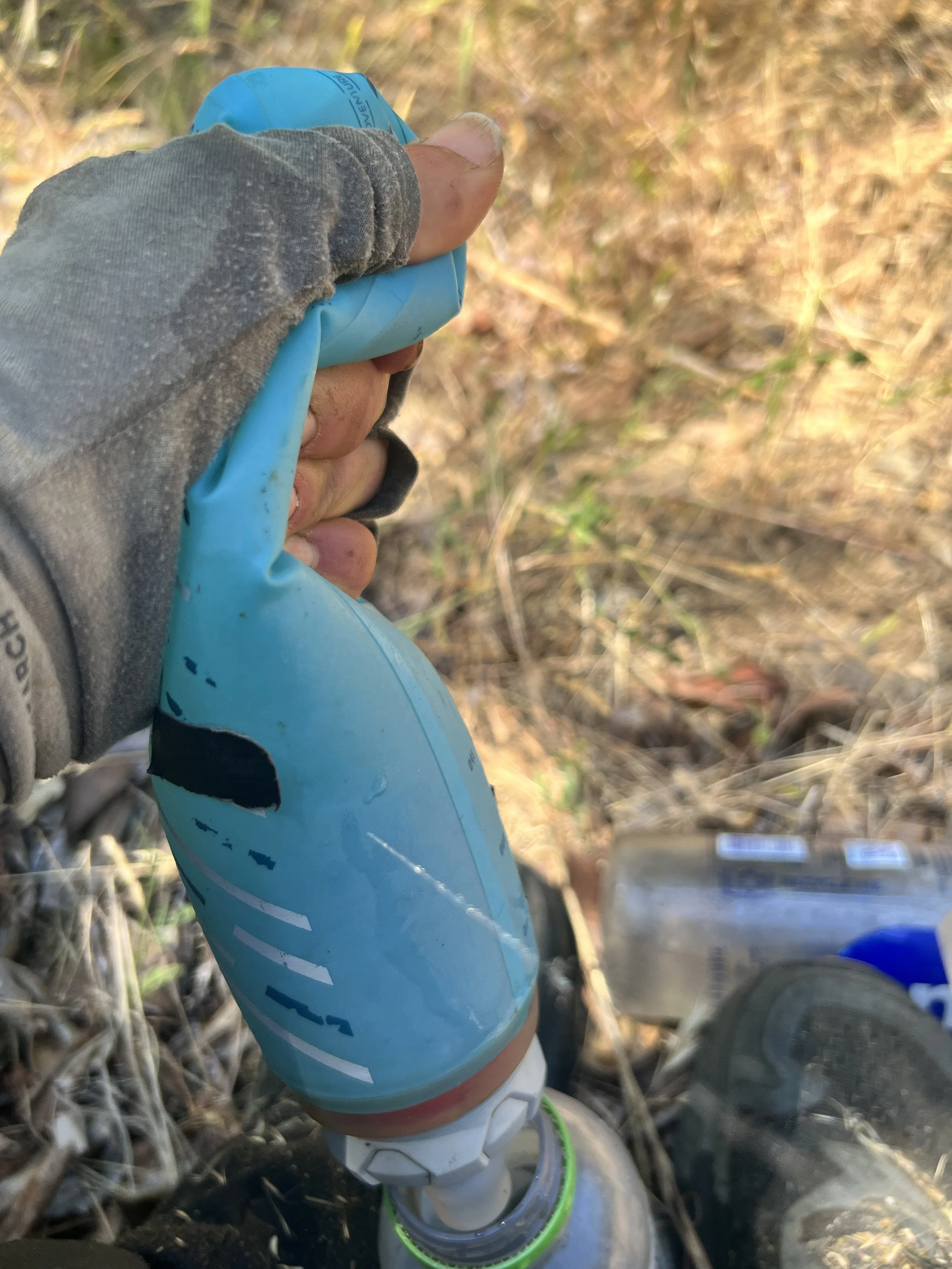
We drop farther into the canyon to keep searching. Eventually, we reach a flowing section of North Fork Big Creek. Relief. We fill our bottles and sit in a patch of shade to filter while the flies and gnats swarm in. My soft flask has several small holes, so every squeeze sends water spraying in different directions and slows the whole process down.
Back on the North Coast Ridge Trail, we hike above the clouds. Mountain views to the east, a vast sheet of fog covering the Pacific to the west. Up here, it’s full sun and angry gnats, another world entirely.
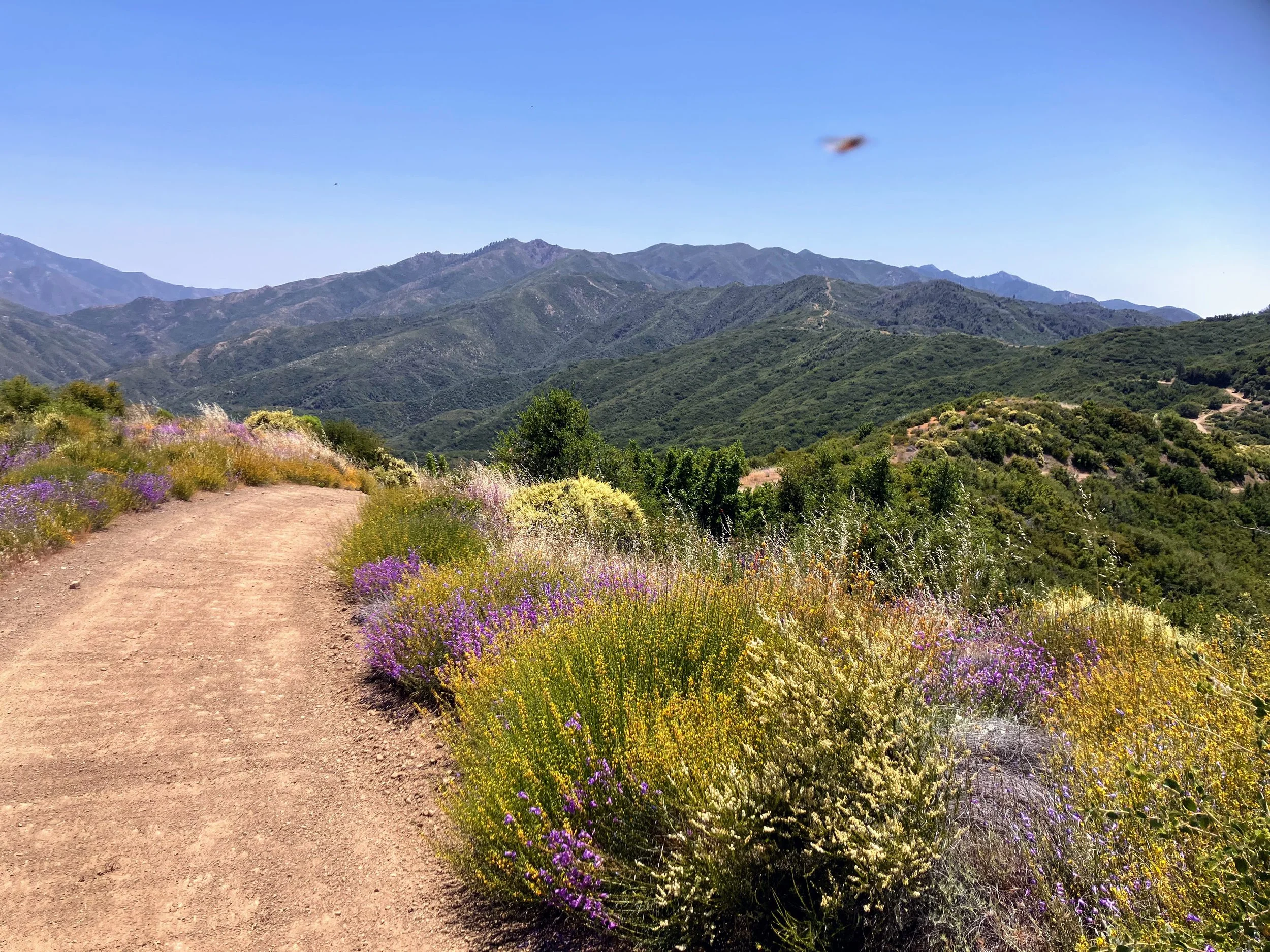
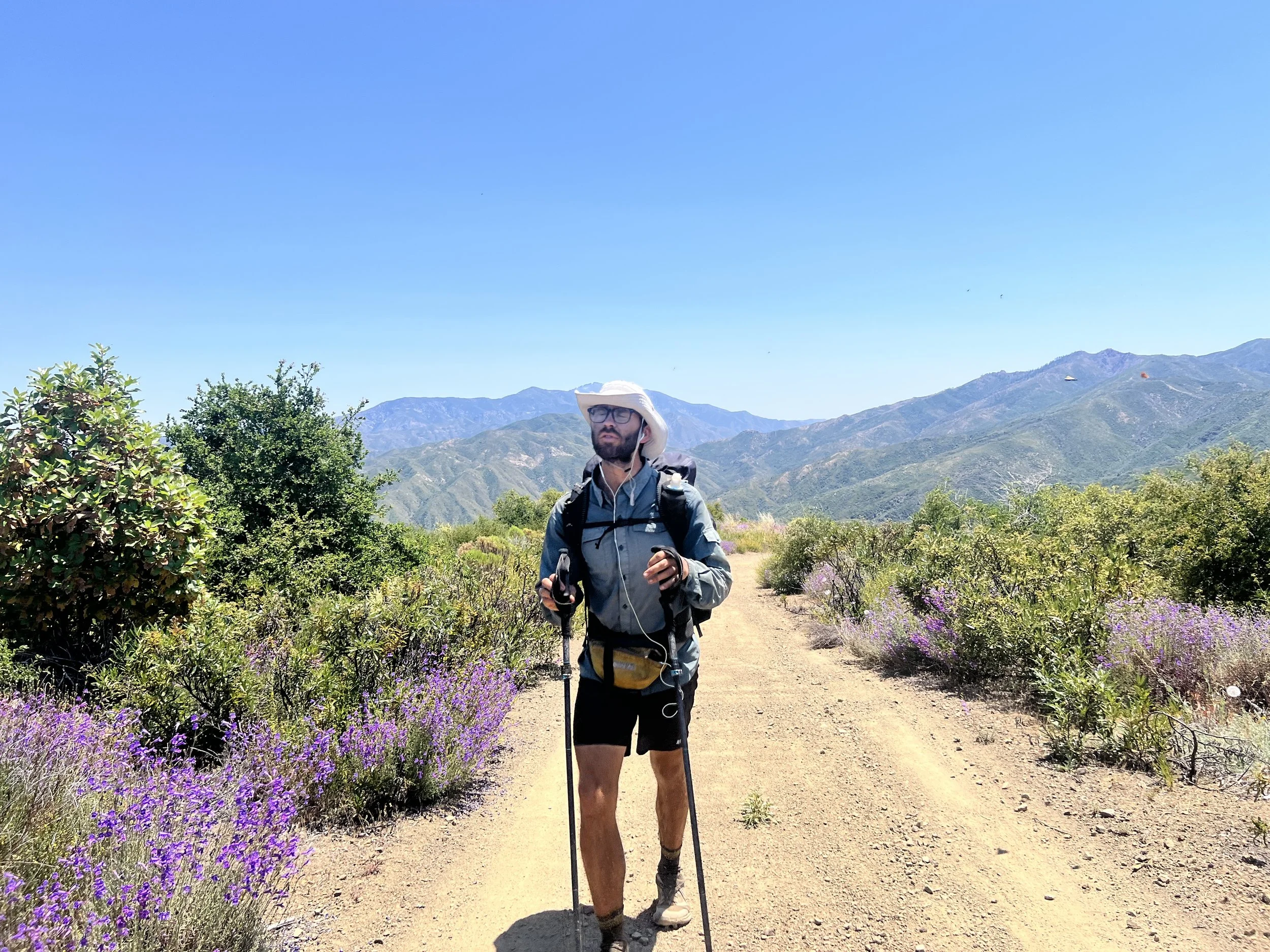
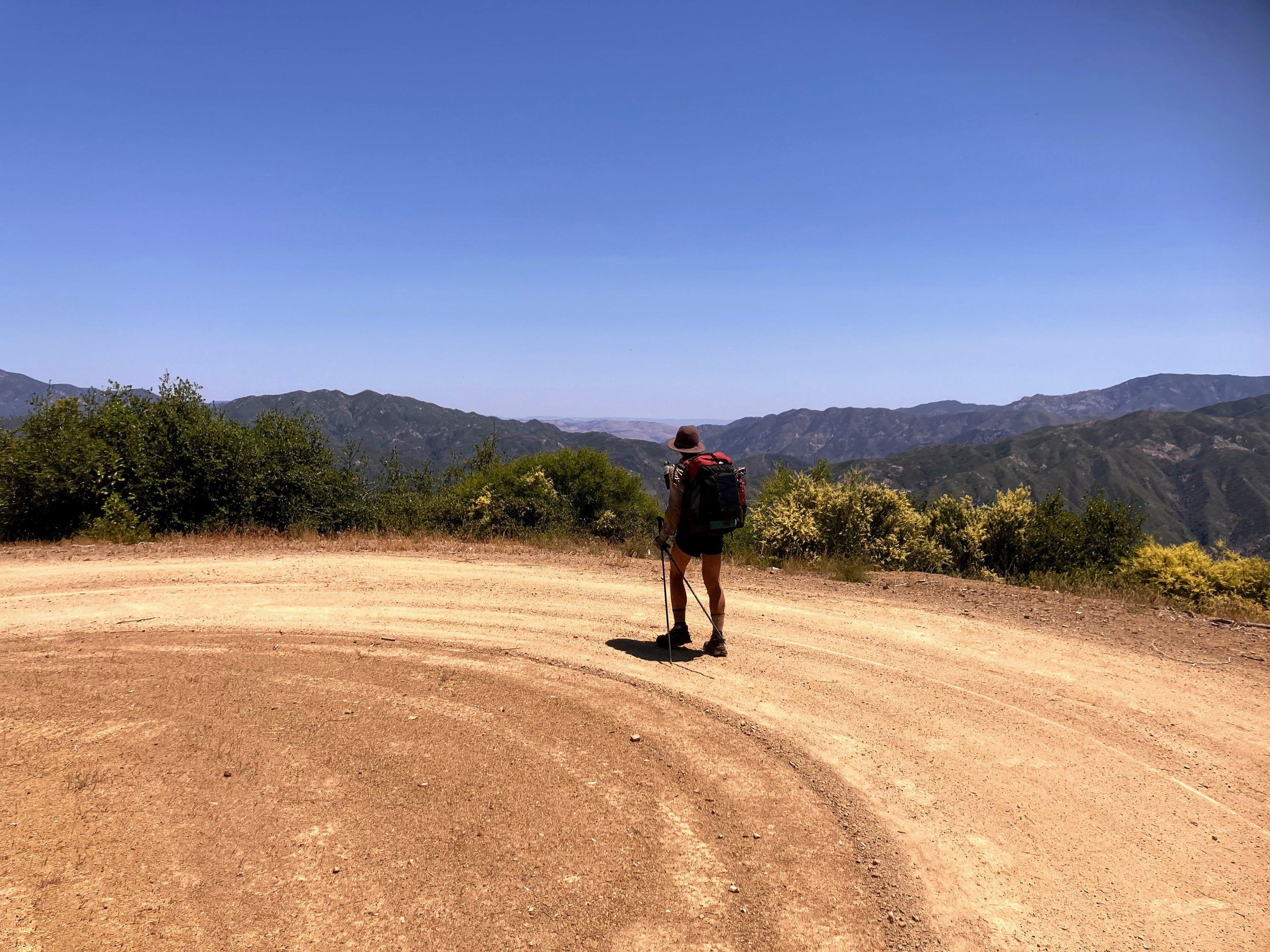
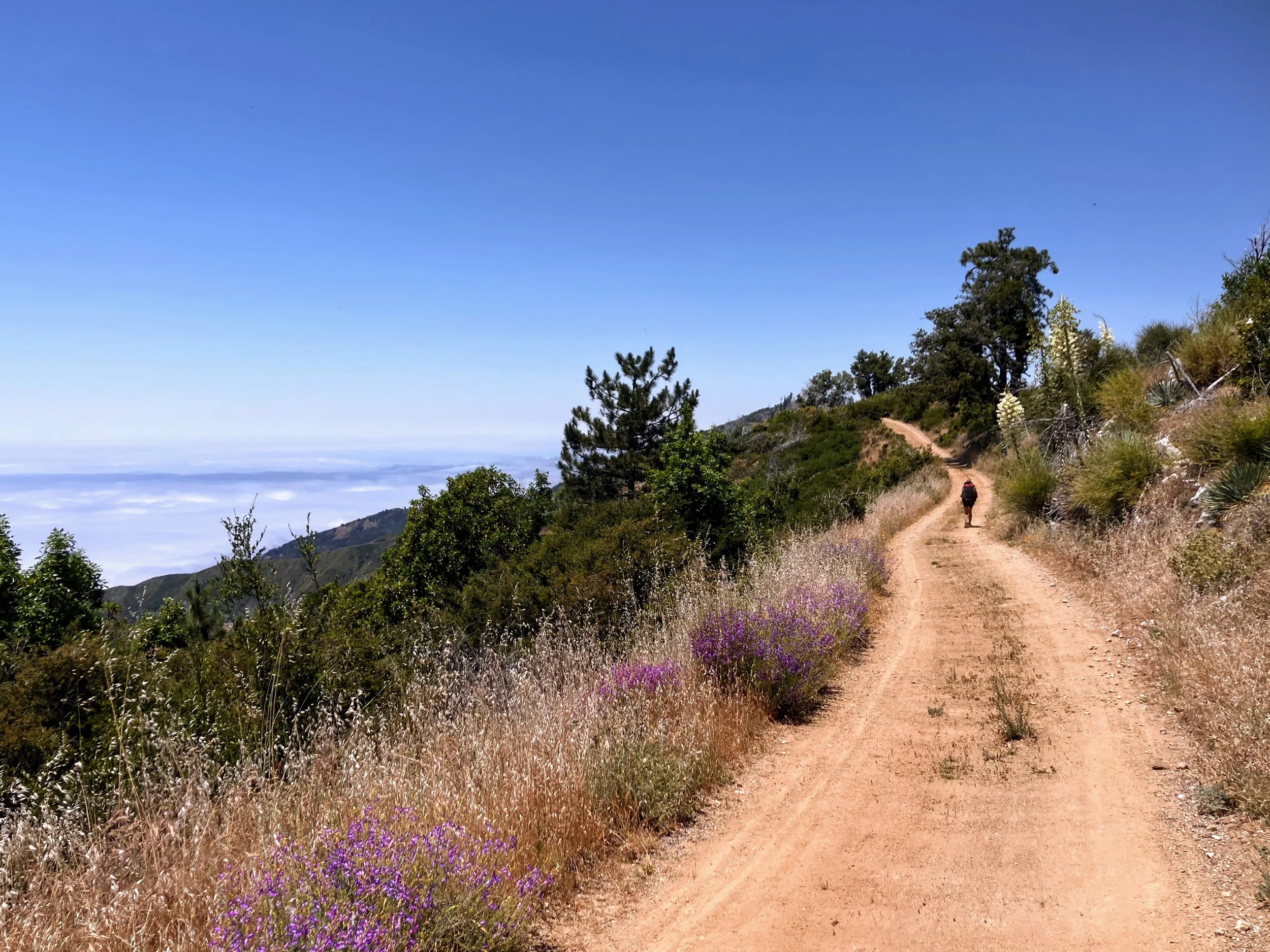
Cosmo and I get into a debate about which route has better views: the Condor Trail or the Oregon Desert Trail (ODT). I’m firmly team ODT. We get weirdly passionate about it, probably a side effect of the heat.
No amount of water can satisfy the kind of thirst this heat creates. It’s insatiable. Occasionally a cool ocean breeze brushes past, I pause and savor it. It calms my skin, dries my sweat, and, for a moment, pushes the gnats away. It feels like an act of God.
Cosmo stops on the trail, staring up. I follow his gaze, just in time.
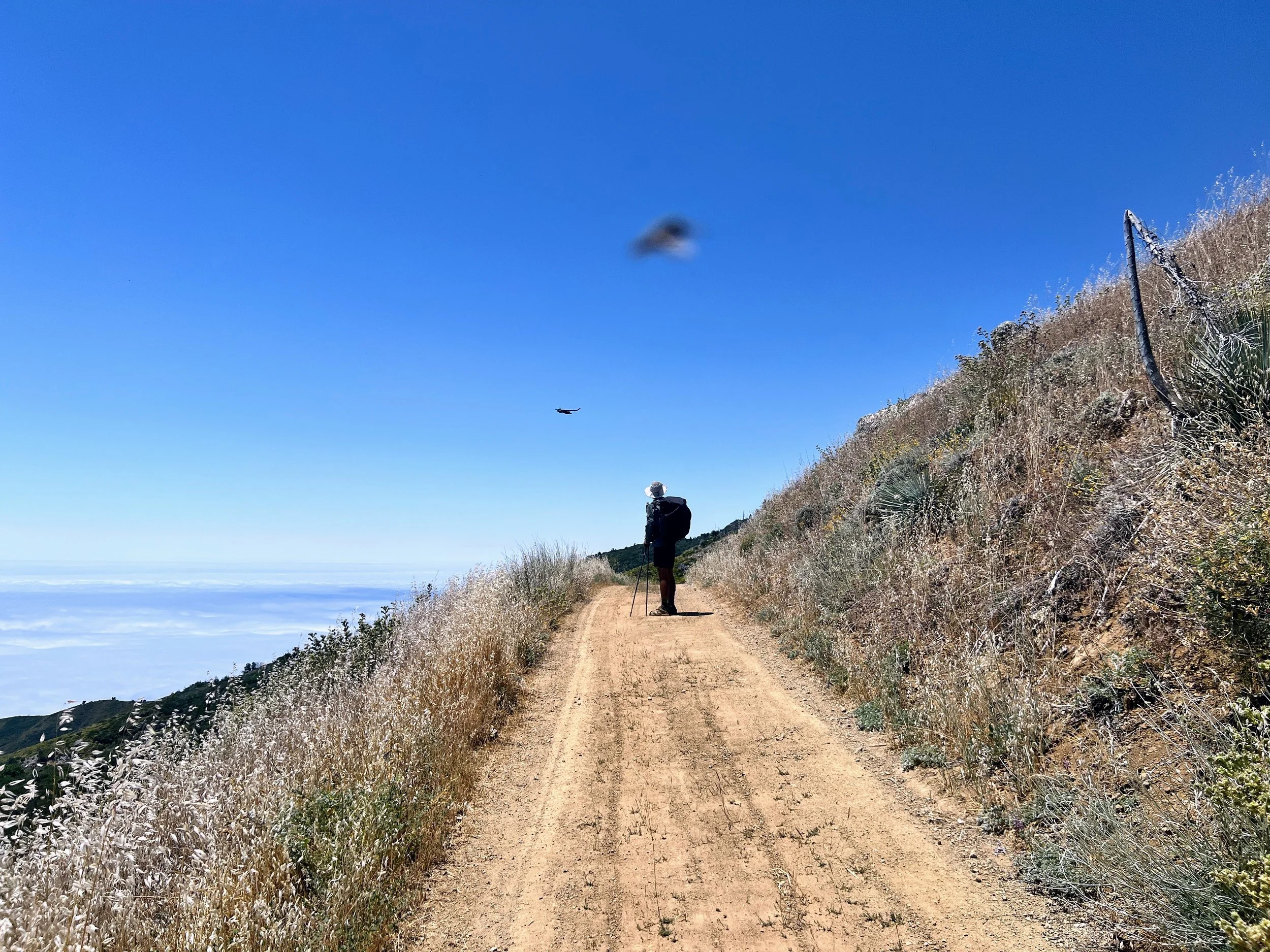
In a matter of seconds, a giant bird appears—then swoops silently over our heads. So close it feels like we could reach up and touch it. Wings outstretched. Black feathers, sharp white patches flashing underneath. A bare pink head, a tag on its wing. Unmistakable.
The wings stay still, it's soaring, not flying, just riding the current. It circles back toward us, drifting in slow, perfect loops.
The timing couldn’t be more perfect.
“Was that a condor?!”
“I think so!”
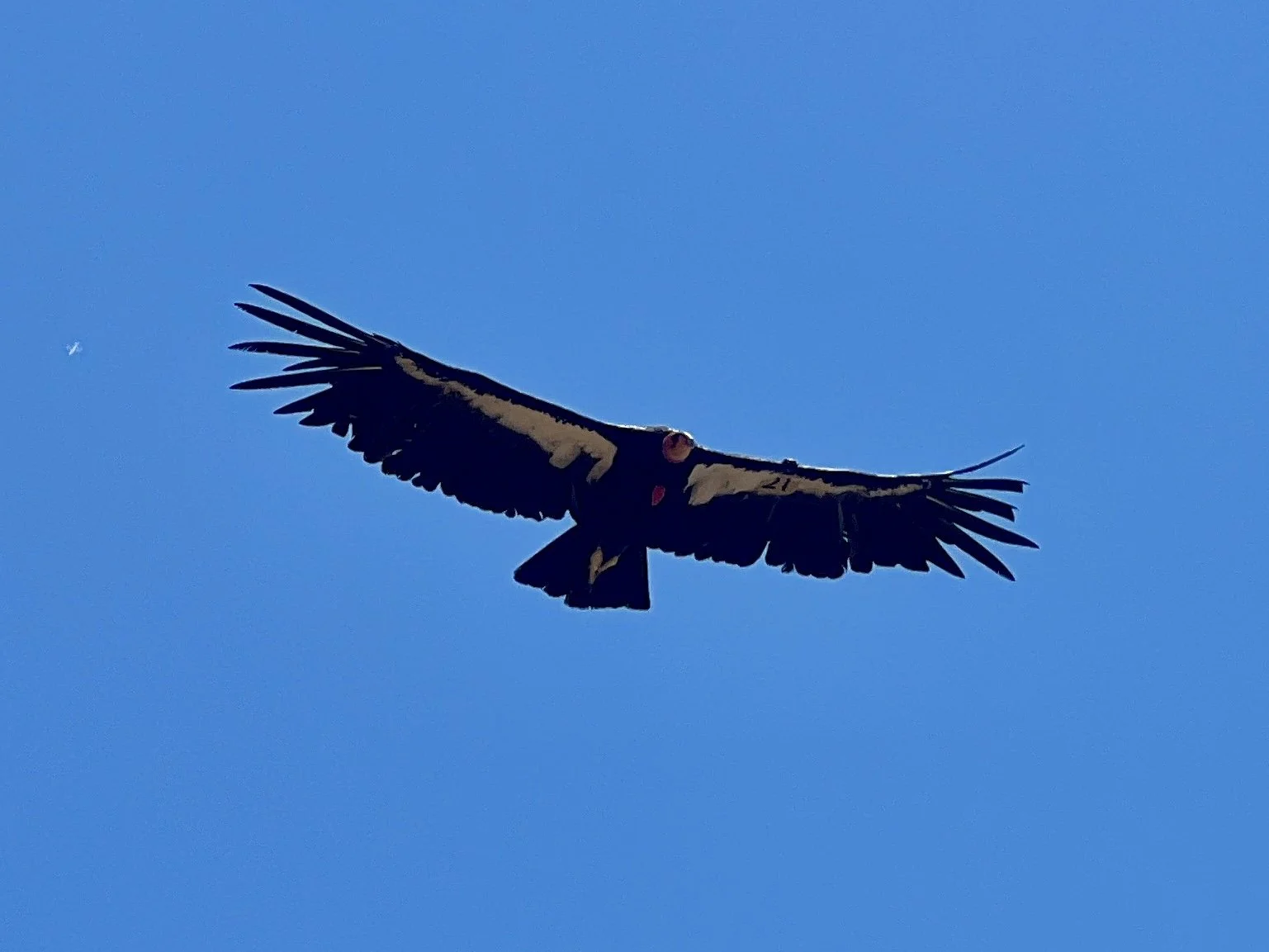
I lower the camera and watch as the condor circles, wide, slow, effortless.
I stand there, still stunned by what just happened.
When I finally look up, Cosmo’s already walking ahead. I jog to catch up.
“Where are you going?”
He glances back, a little uncertain. “I don’t know... it was flying really low. I wasn’t sure what it was doing.”
I laugh. “I don’t think it’s trying to snatch me.”
It keeps soaring above us in big, lazy loops, and we hike on, feeling satisfied. No matter what else happens out here, at least we saw a condor on the Condor Trail.
Later in the day we take a break under the shade of a western sycamore. Our water tastes hot.
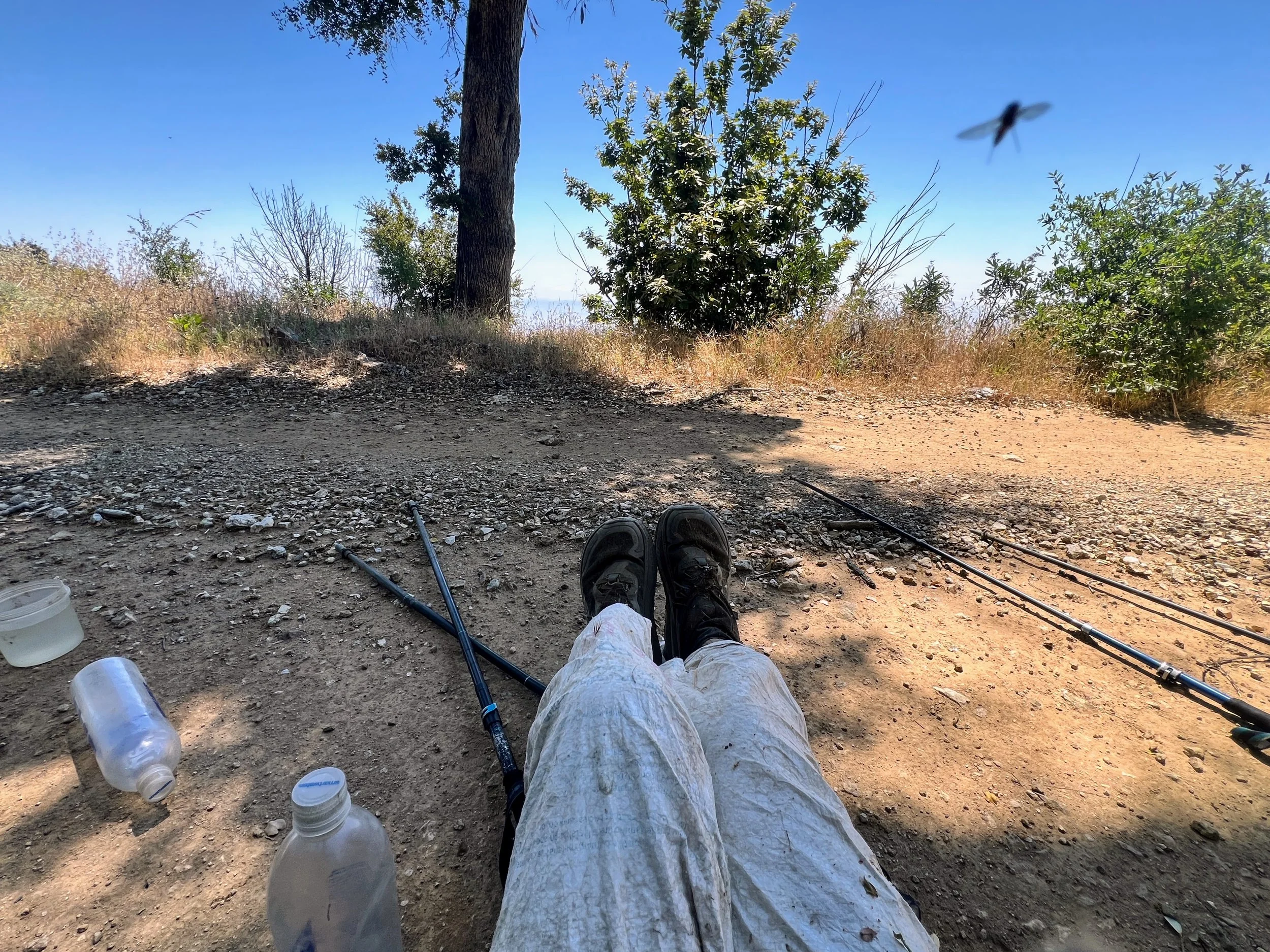
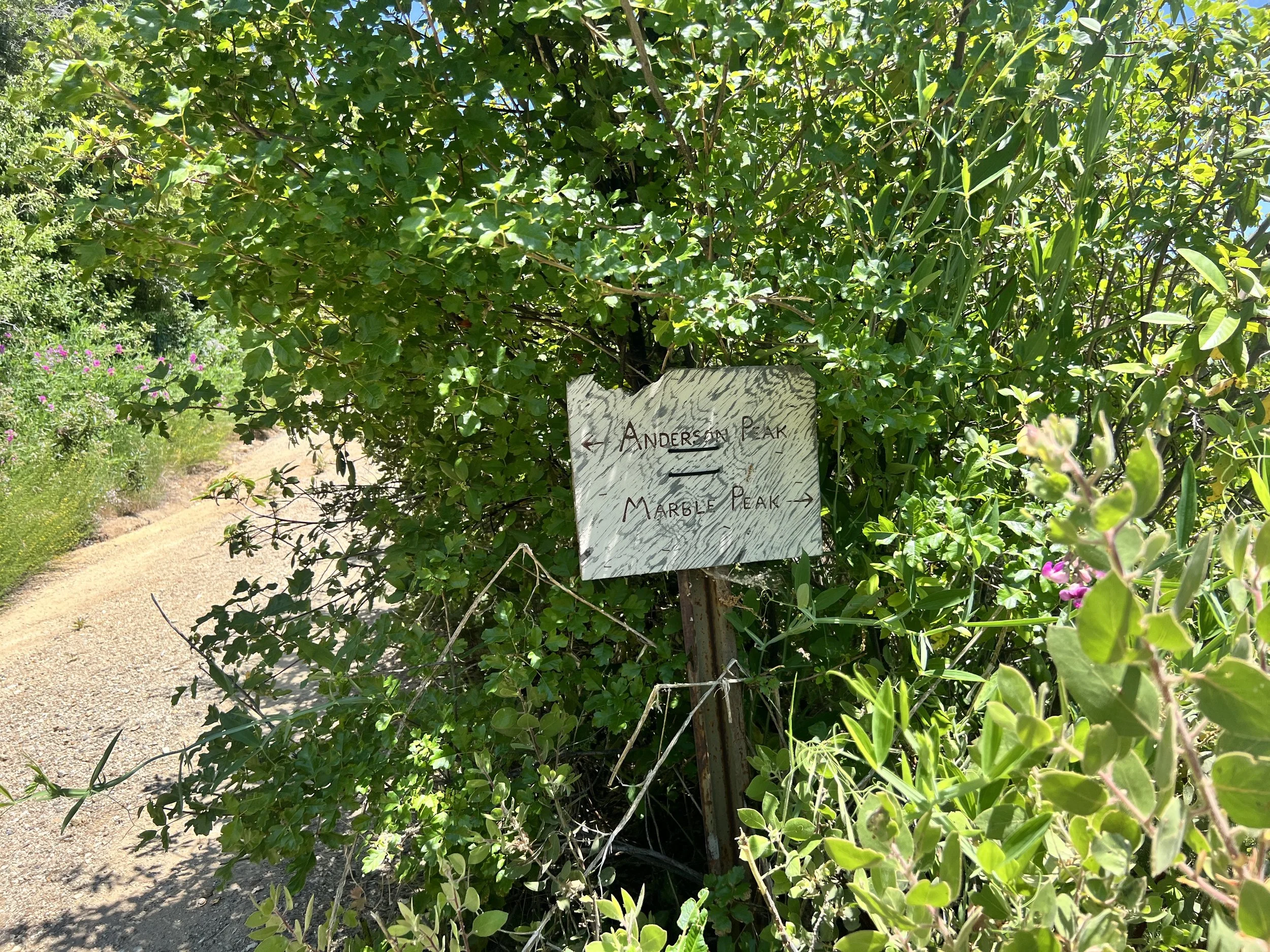
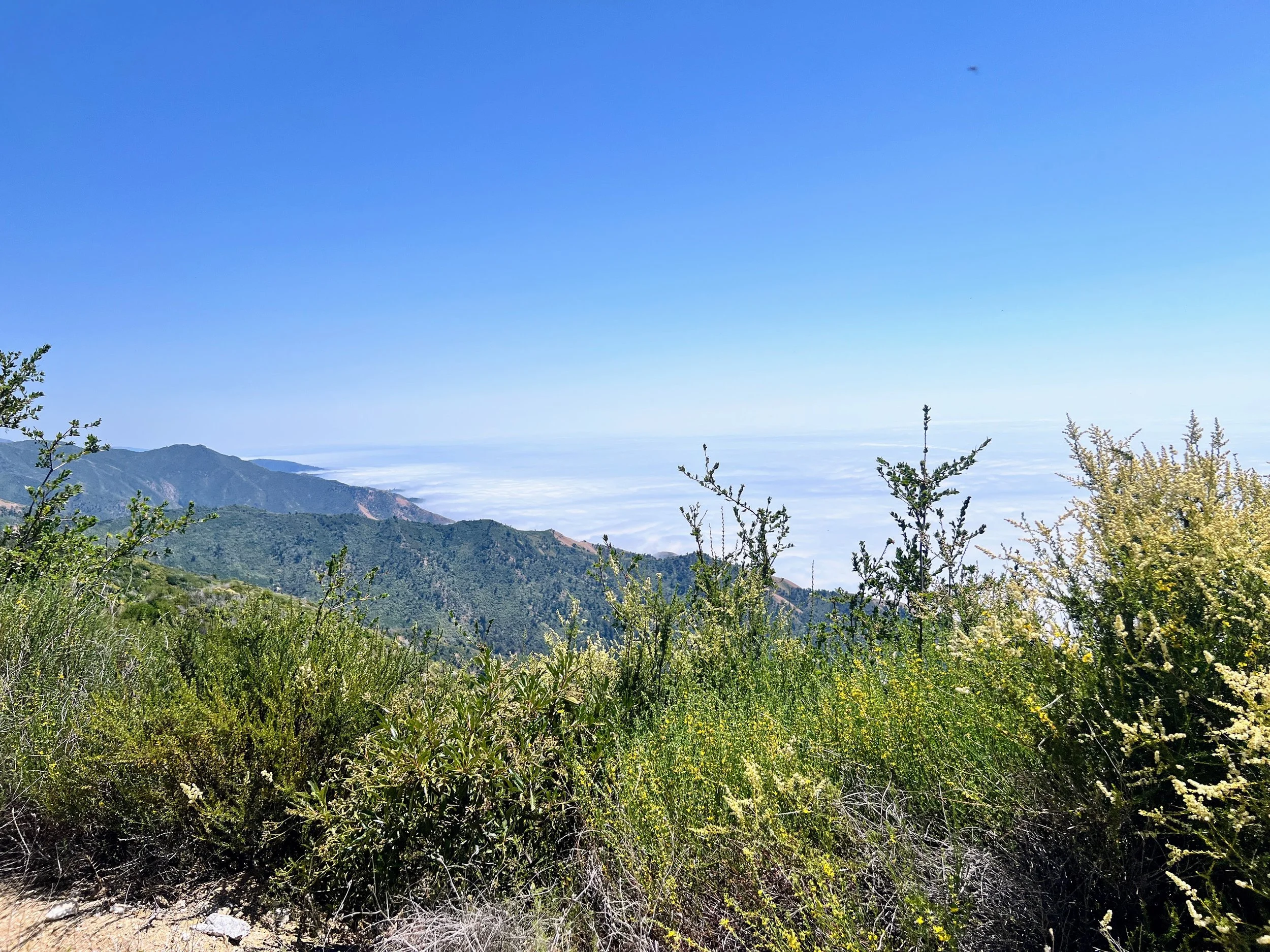
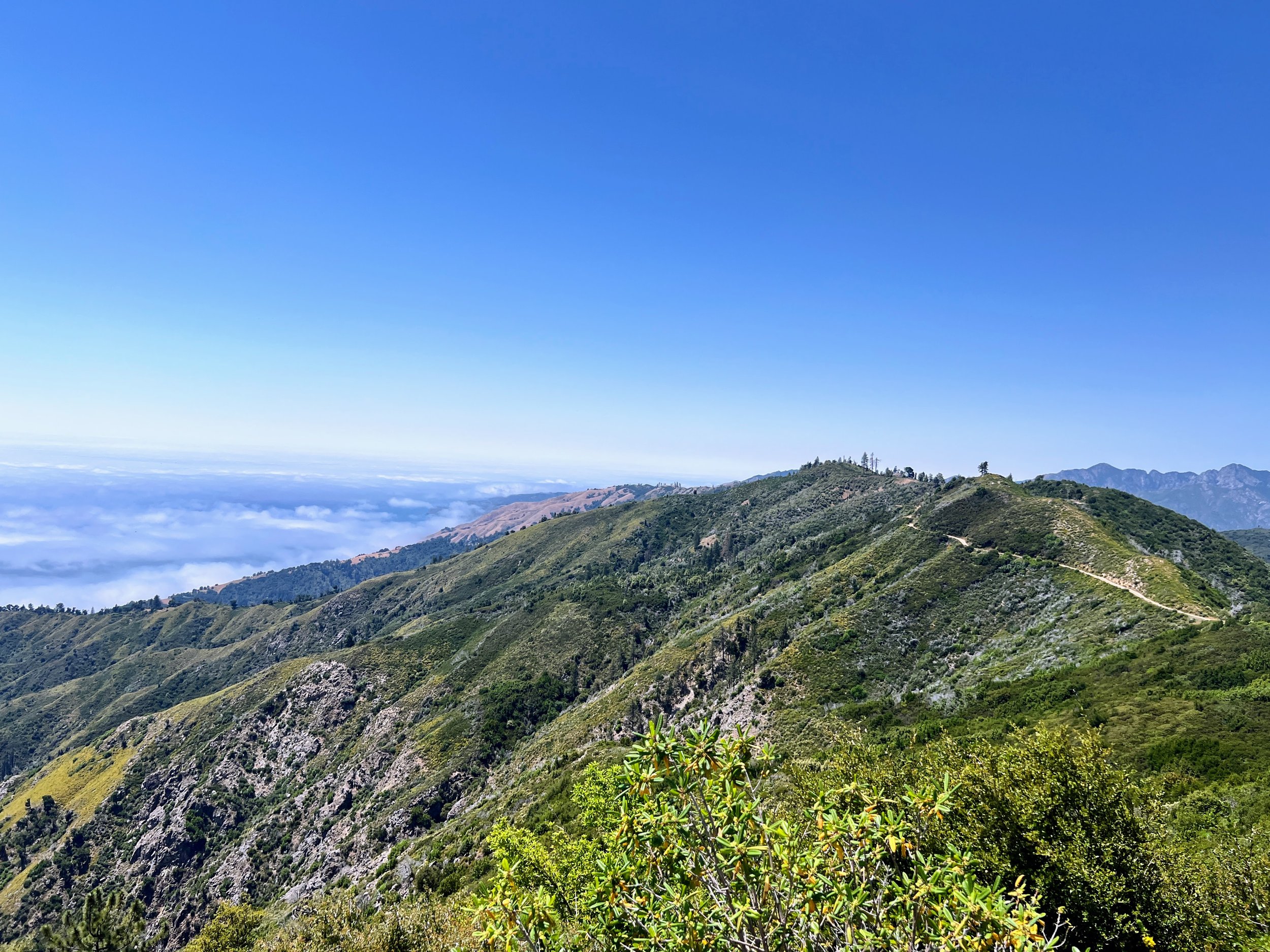
We decide on another alternate, piecing together our own route from a web of side trails instead of following the official Condor Trail line (marked impassable in a number of sections ahead) This time, we stick to North Coast Ridge Road and plan to drop onto the Big Sur Trail, skipping the section from Marble Peak to South Fork.
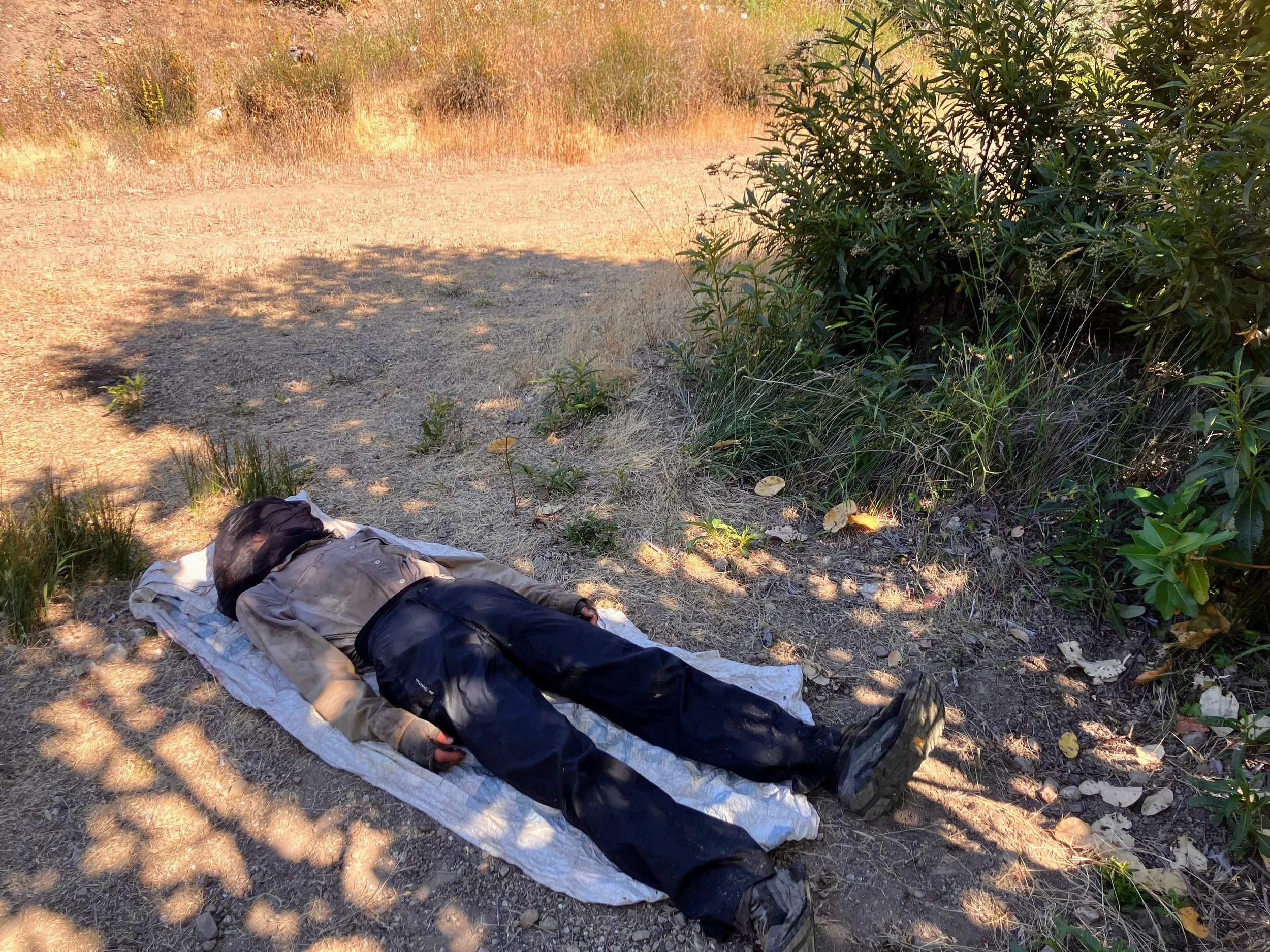
We’re trying to dodge more poison oak, for obvious reasons, but also because my rain pants, one of the few things protecting my skin, have ripped even more. What started as a big hole is now a full tear running from my left butt cheek down the back of my leg.
The gnats take a break with us, swarming as we try to look at the map. I wrap myself in Tyvek and try to relax.
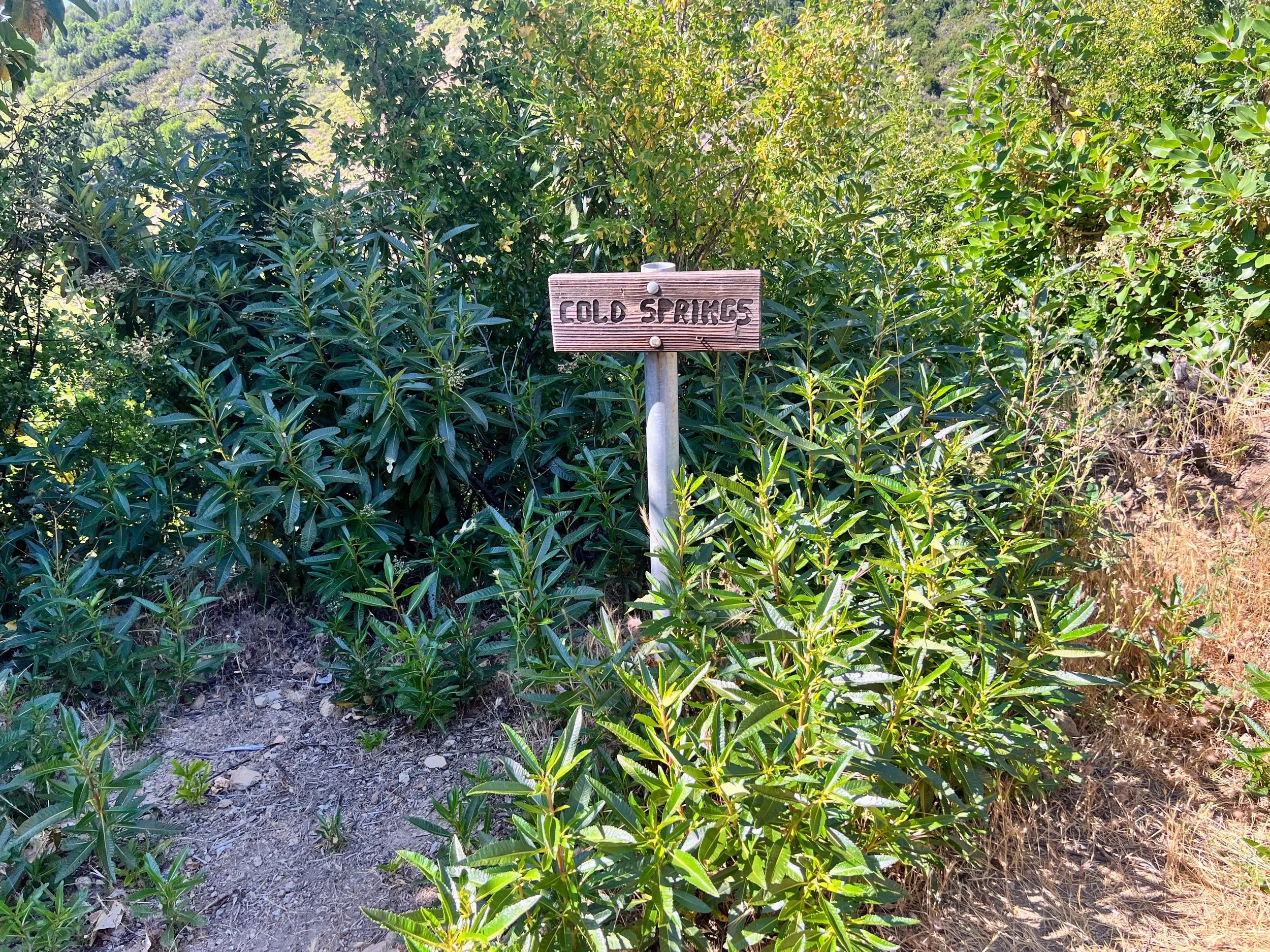
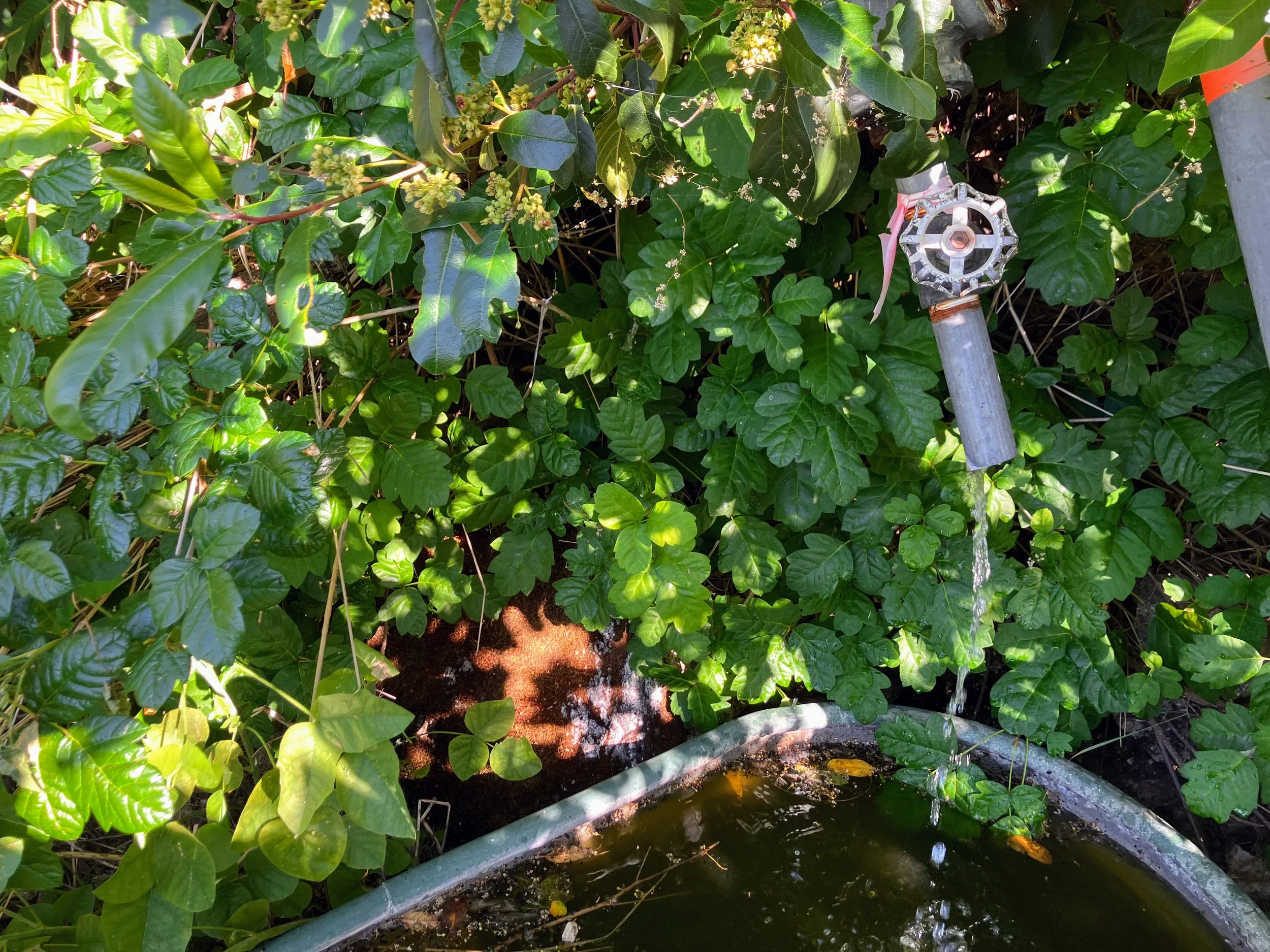
The water at Cold Spring is flowing strong, a metal pipe pours clear water into a tub below. But of course, nothing comes easy out here. The spigot is nearly swallowed by poison oak. Glossy leaves crowd behind it, curling around the pipe, dangling into the tub, and stretching toward the dial like little green fingers. You can still fill up if you're careful (and wearing gloves), but you have to lean in slow, collect carefully, and try not to laugh at how absurd it is. It’s ridiculous, but at this point, not surprising. The water’s cold and worth it.
At Cold Spring, we find wonderfully cold water. I dump it over my head before filling up my bottles. The heat lifts off my skin, and for a moment, my whole body exhales.
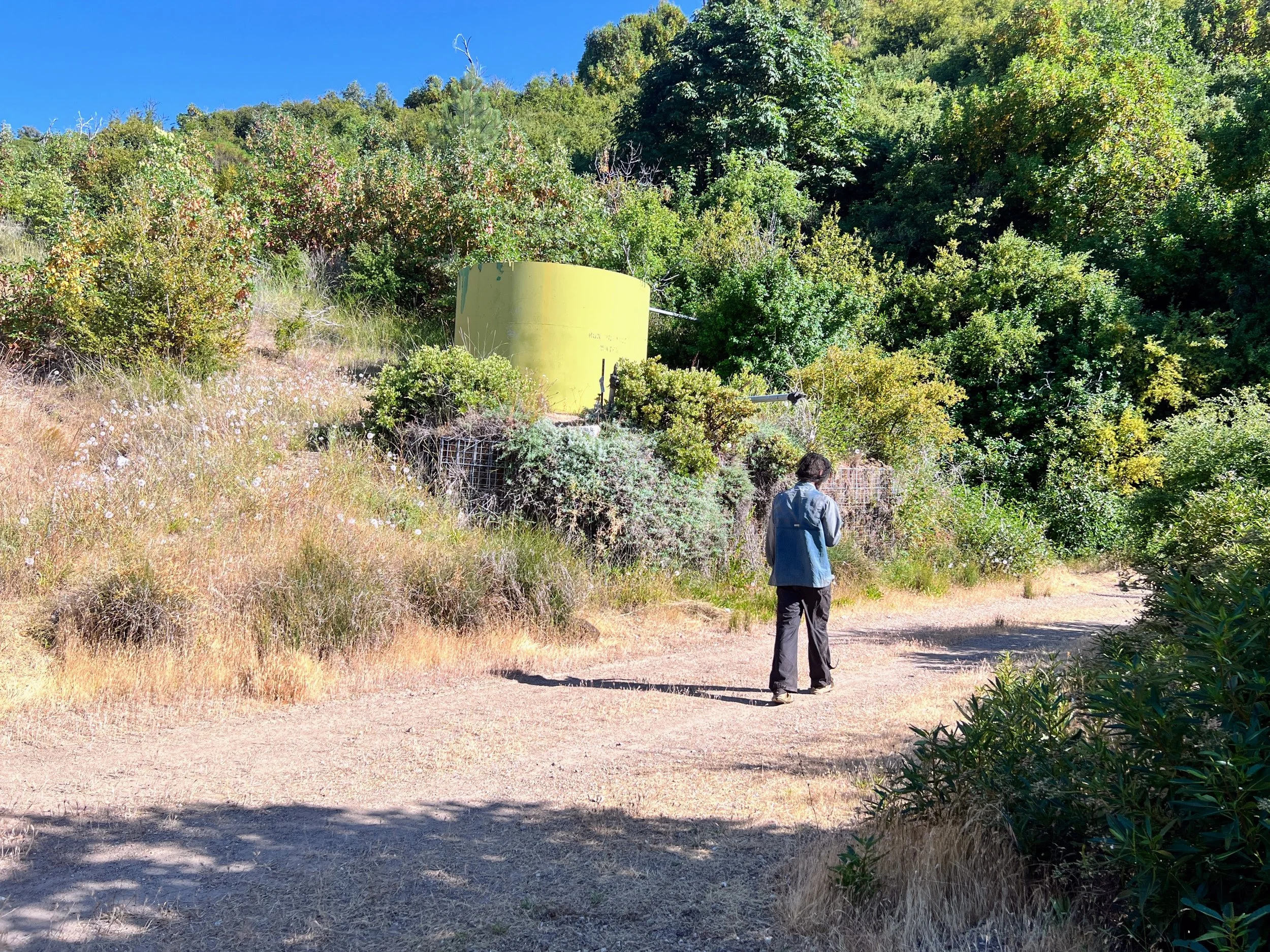
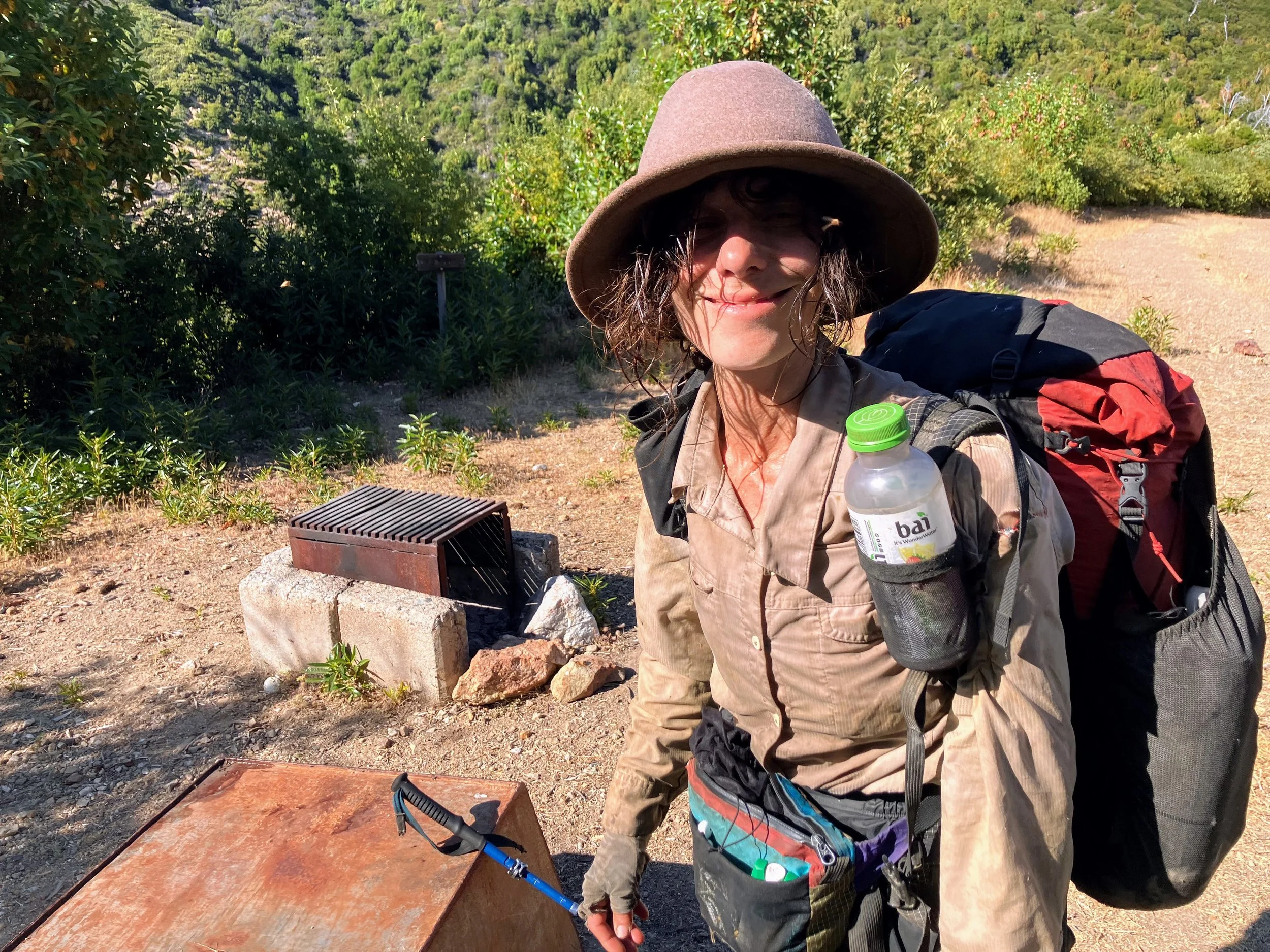
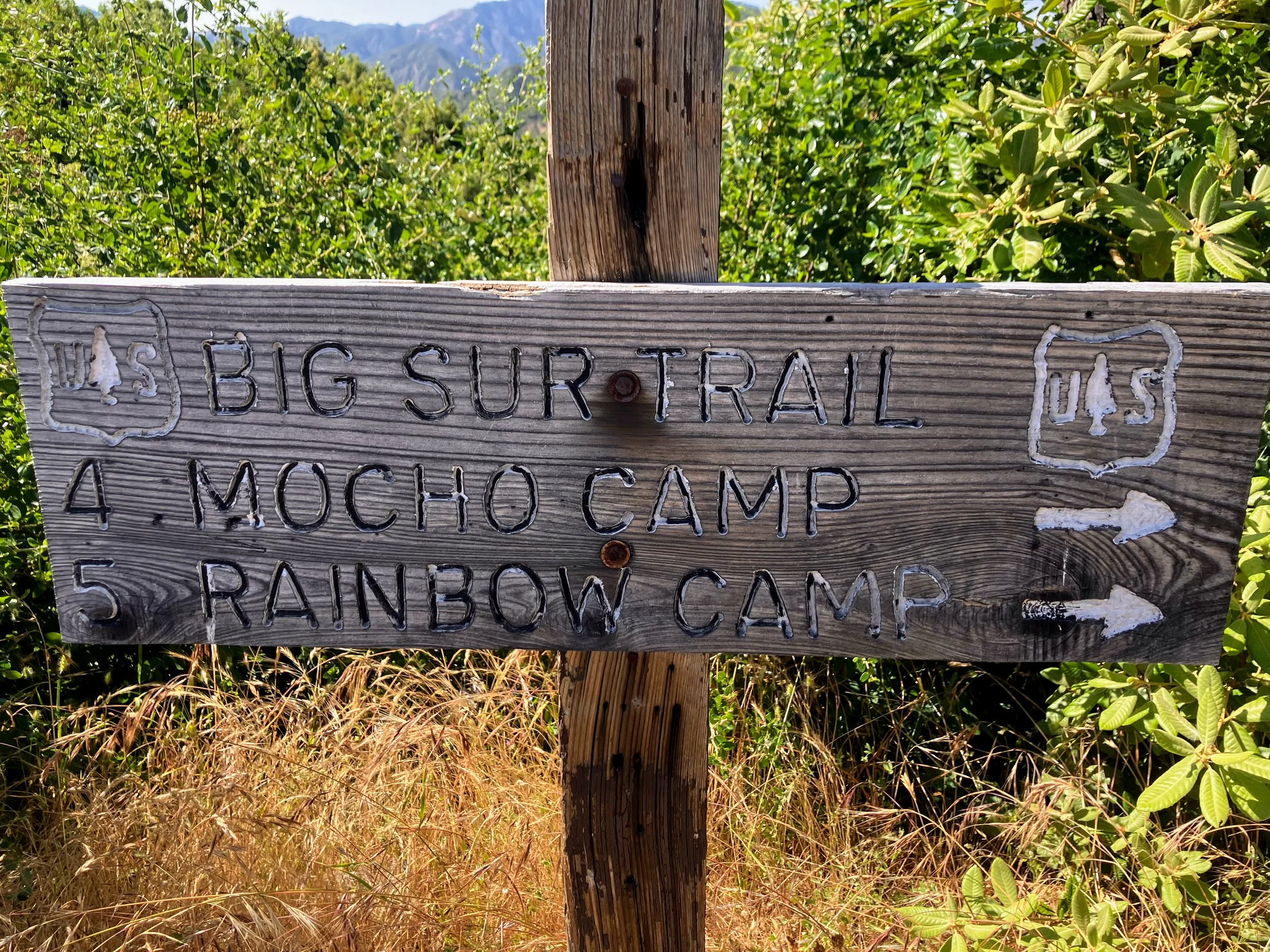
We leave Cold Spring and head down the Big Sur Trail, sticking to our alternate route and hoping the conditions hold. Poison oak keeps us on our toes, but it’s more of a nuisance than a real problem. I keep my eyes on the path, my arms and legs mostly covered in what’s left of my rain pants and hiking shirt. I can’t fully relax until I know the trail ahead will stay clear and mostly hike-able.
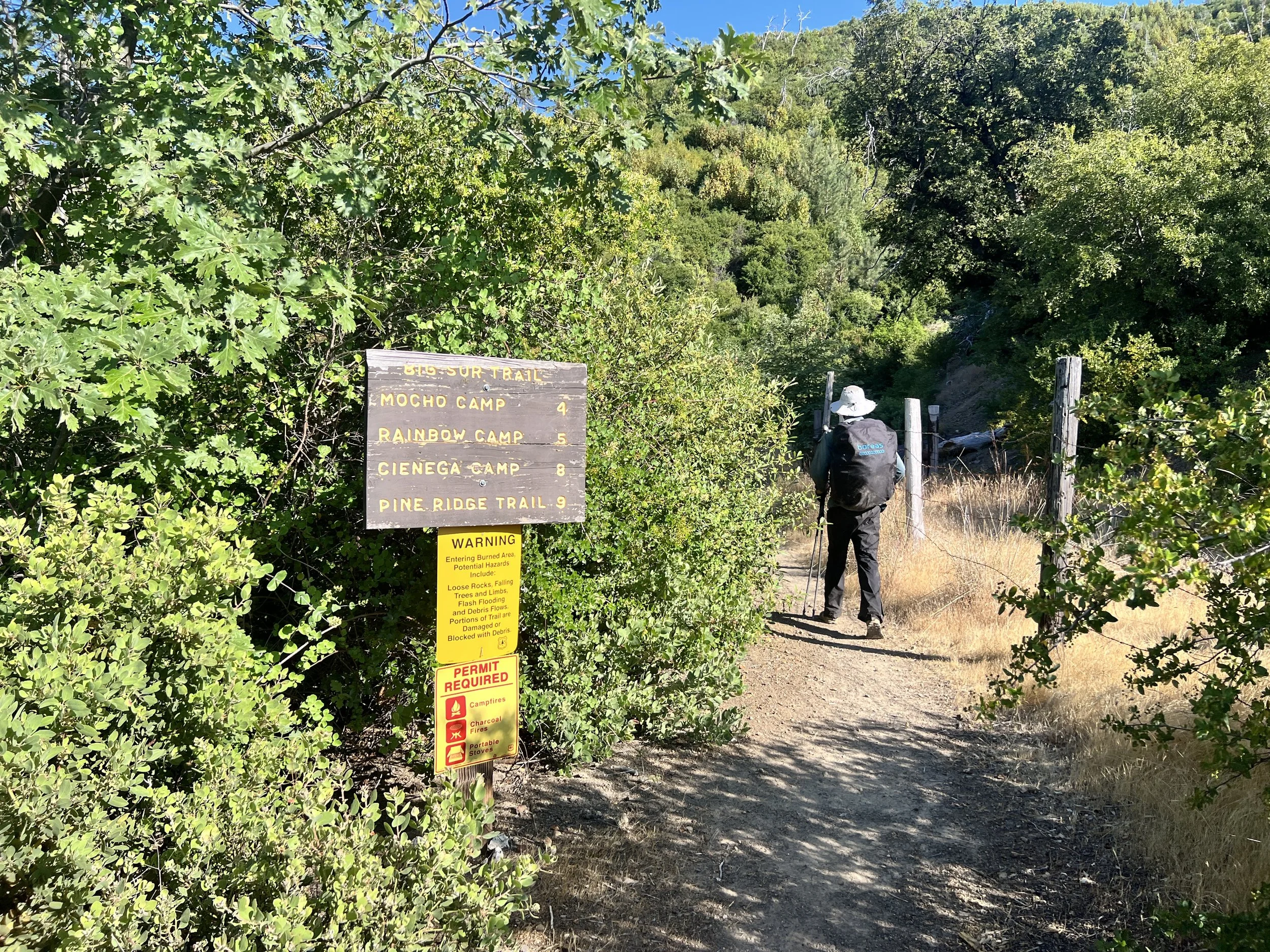
To our surprise, someone’s been maintaining the trail, branches cut and tossed aside, stubs trimmed clean. In places, the path is smooth, shaded, and wide.
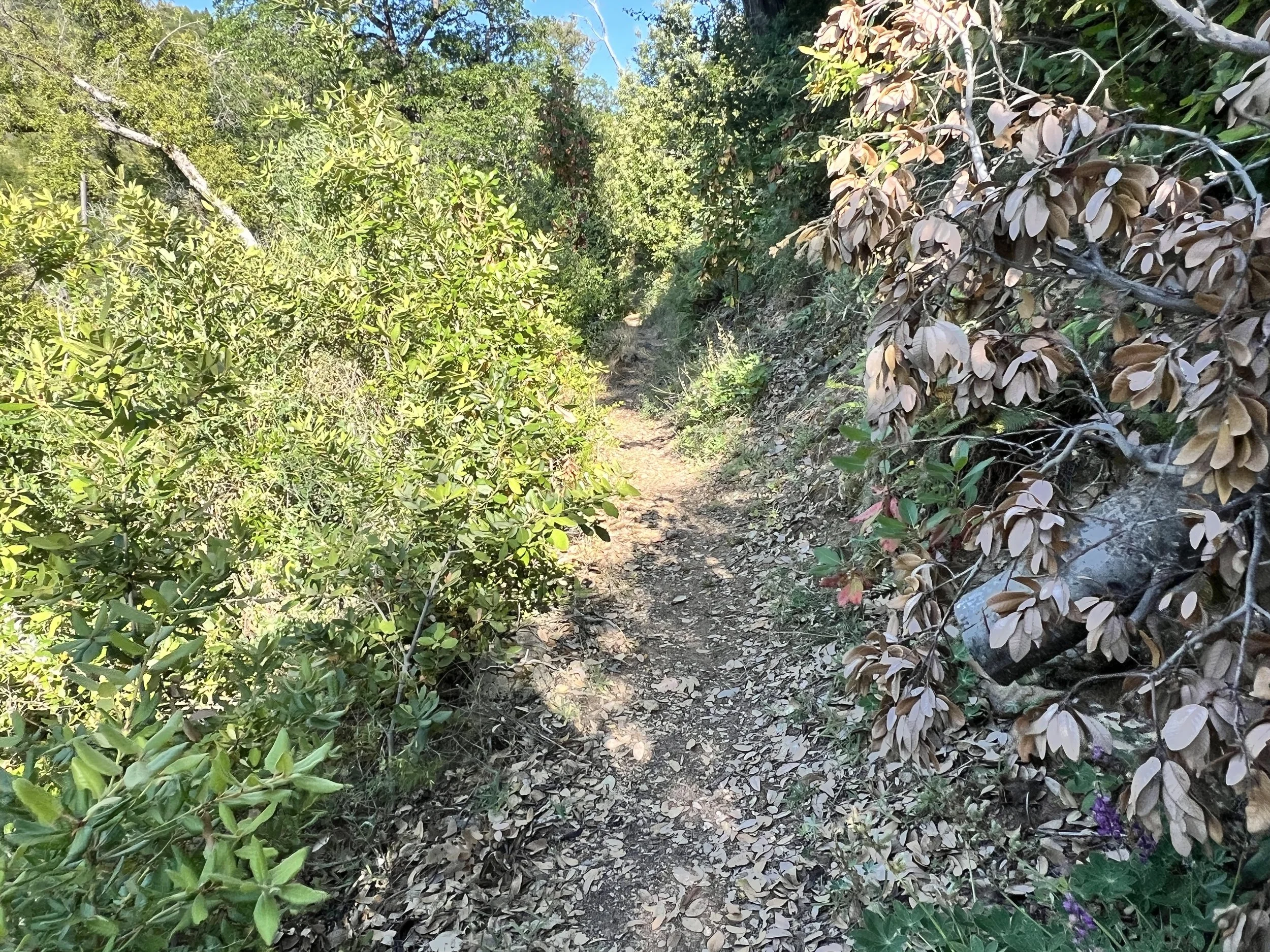
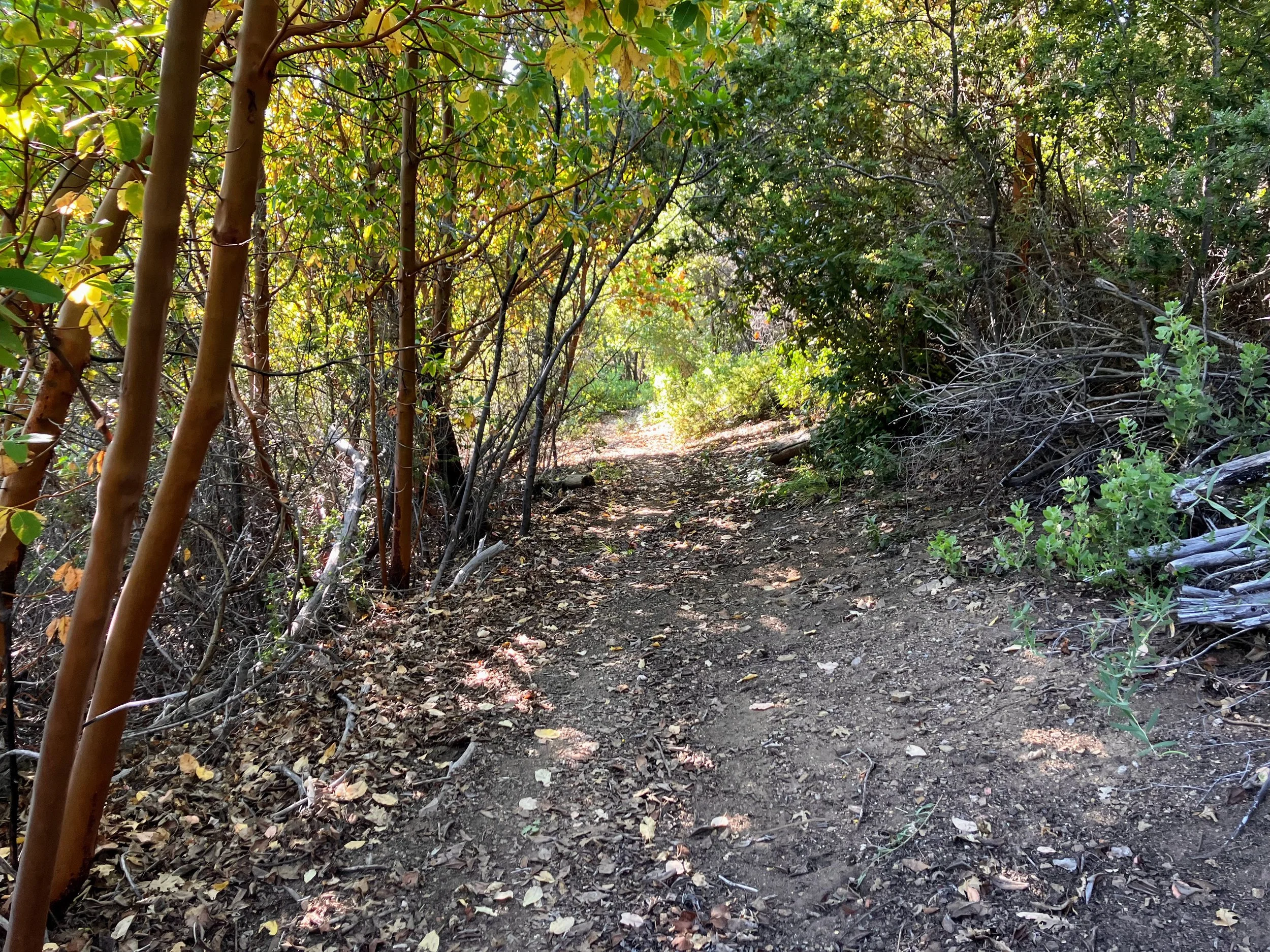
With clear tread, I’m no longer bracing for the next obstacle or locked into every step. I can finally lift my eyes and see where I am. And when I do, everything looks more beautiful, madrones glowing in the light, distant peaks unfolding ahead. It’s amazing what shows up when you’re not just focused on getting through.
To my right, I can see the same peaks we’ve been tracing all day. I think back to this morning’s pointless bickering with Cosmo about which thru-hike is more scenic, and it suddenly feels so silly. Our moods shift fast out here, shaped by comfort, scenery, and whatever nature throws at us. This section feels like a glimpse of what the Condor Trail could be if it were actually built and maintained. Enjoyable, scenic, even fun. If more of it looked like this, it would be a very different trail and a very different experience.
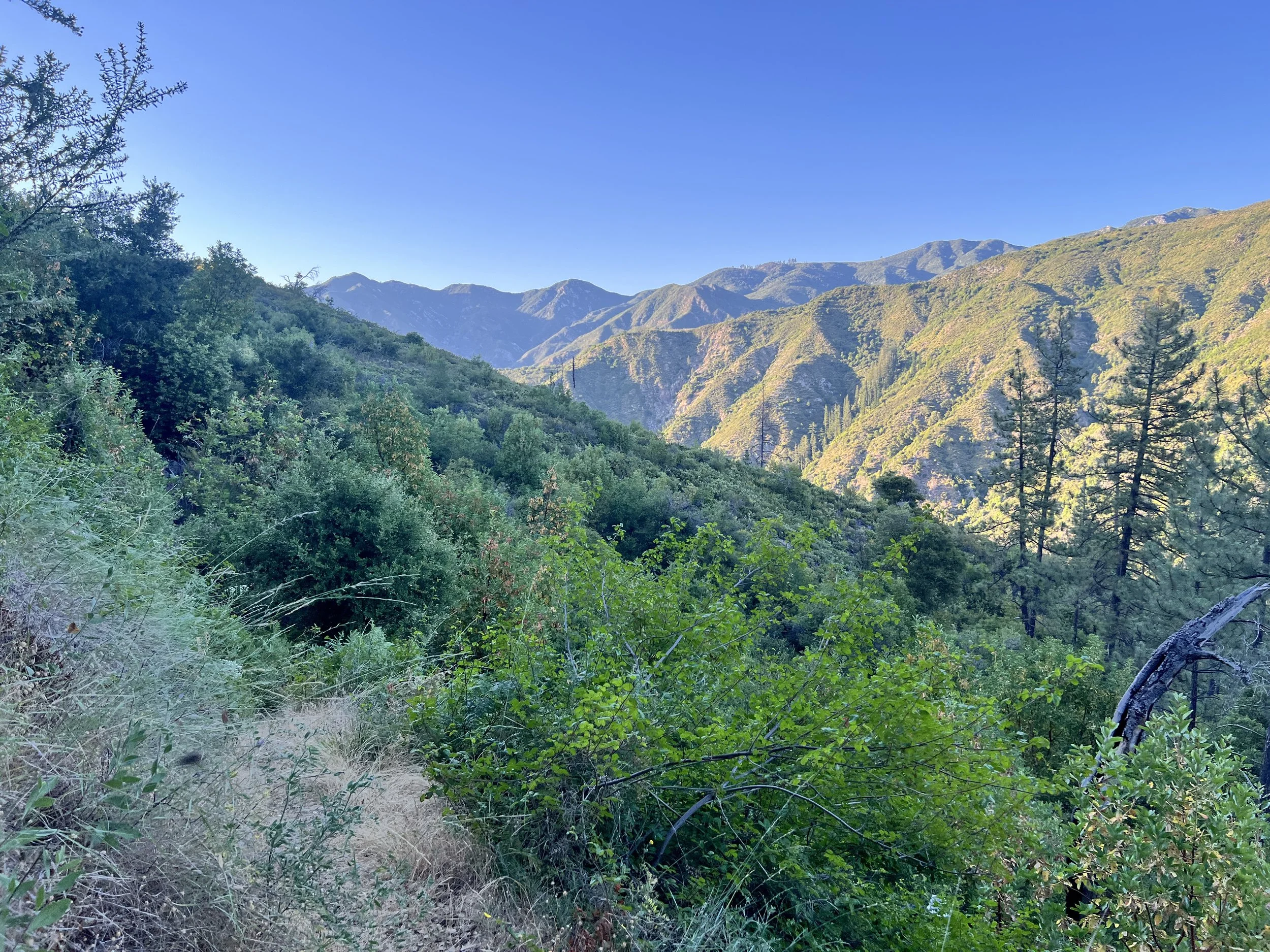
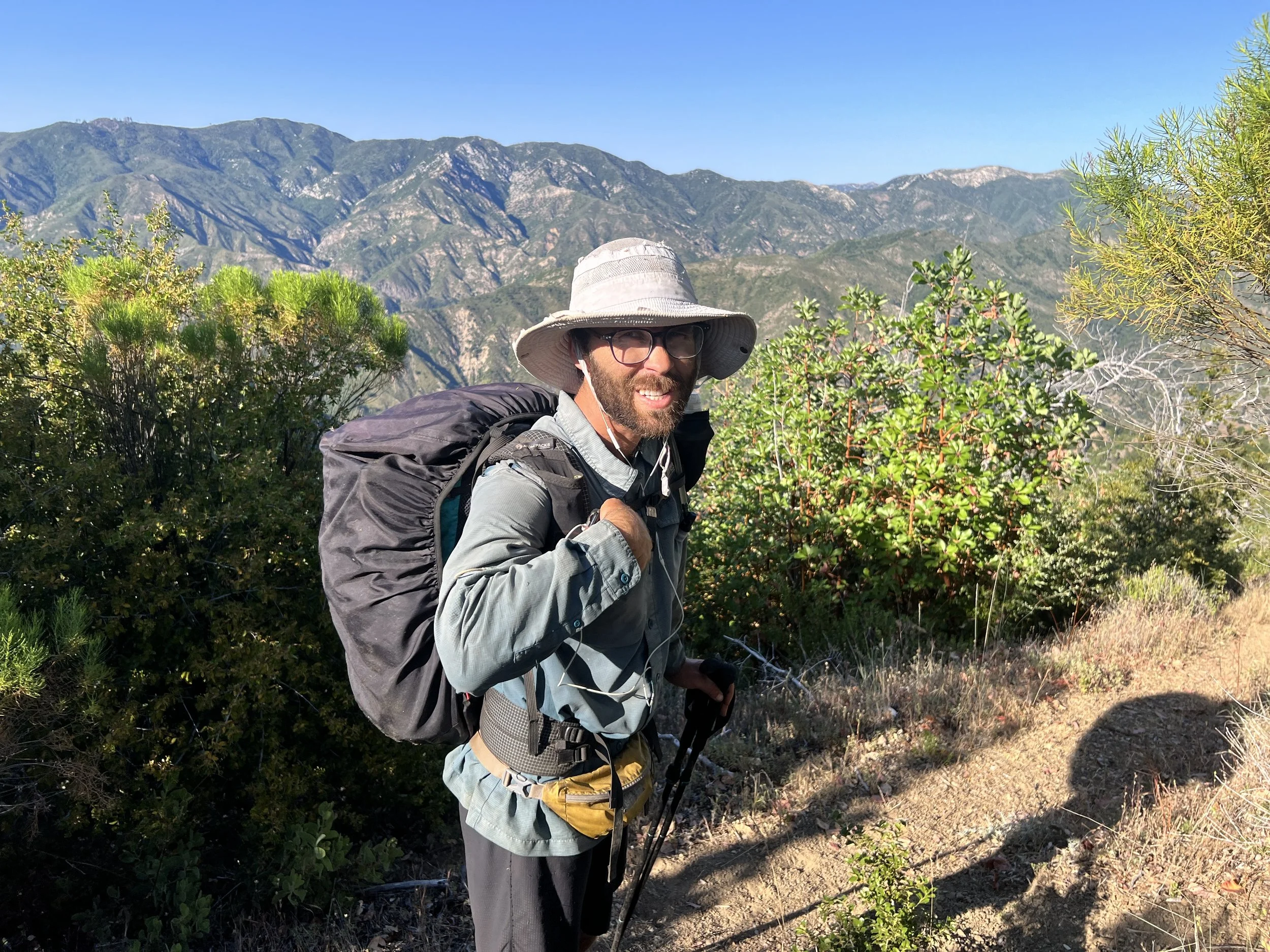
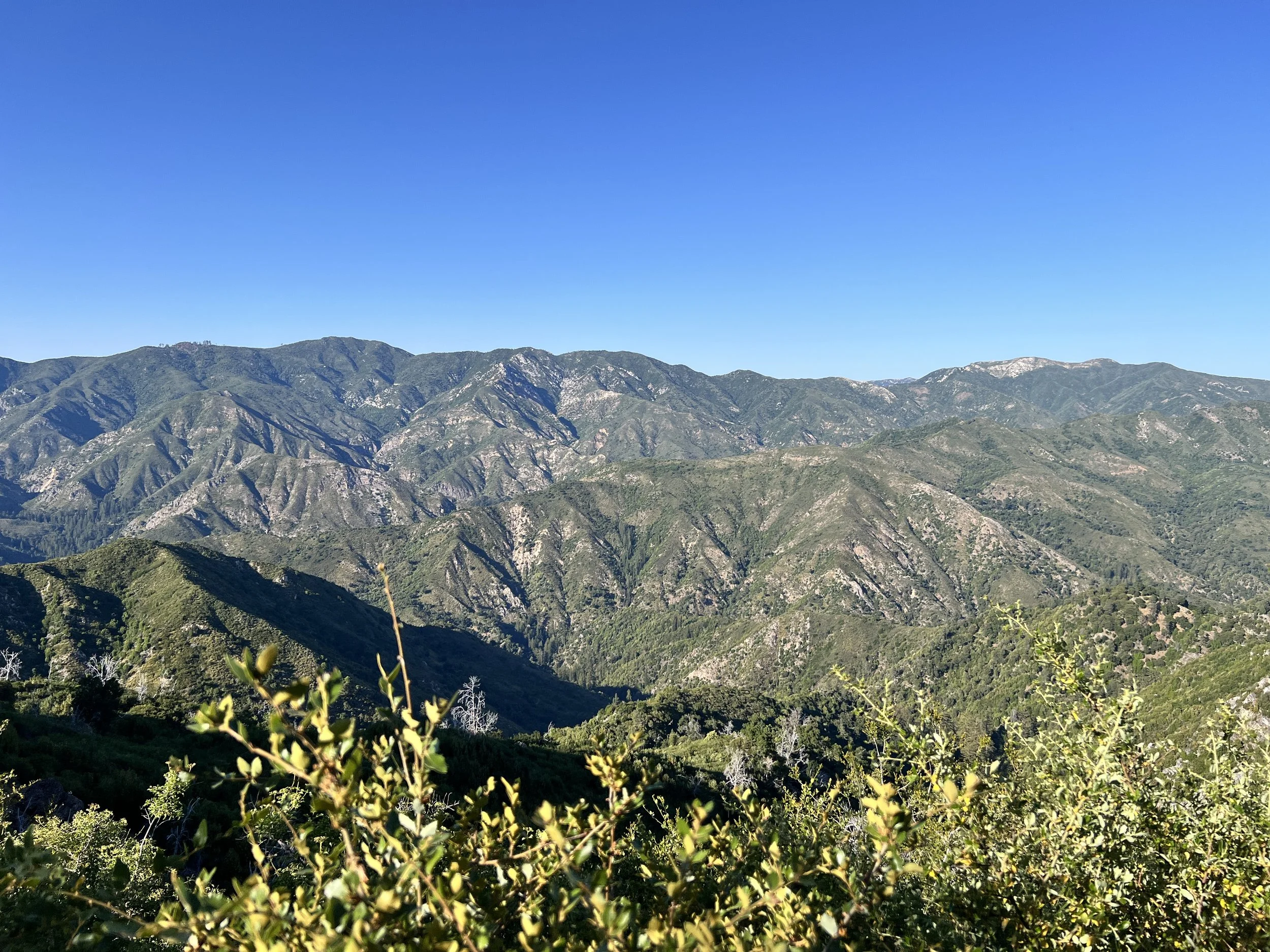
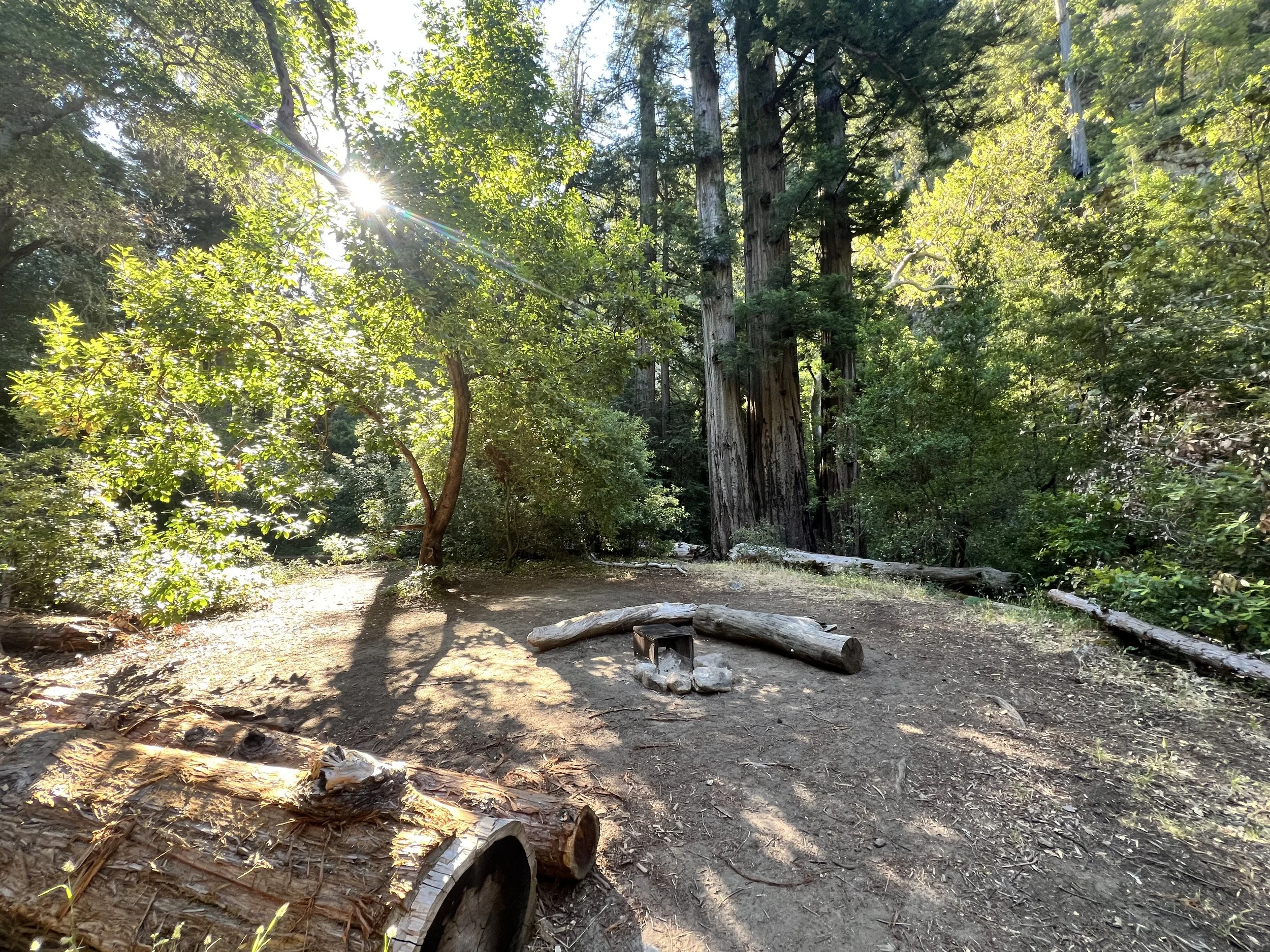
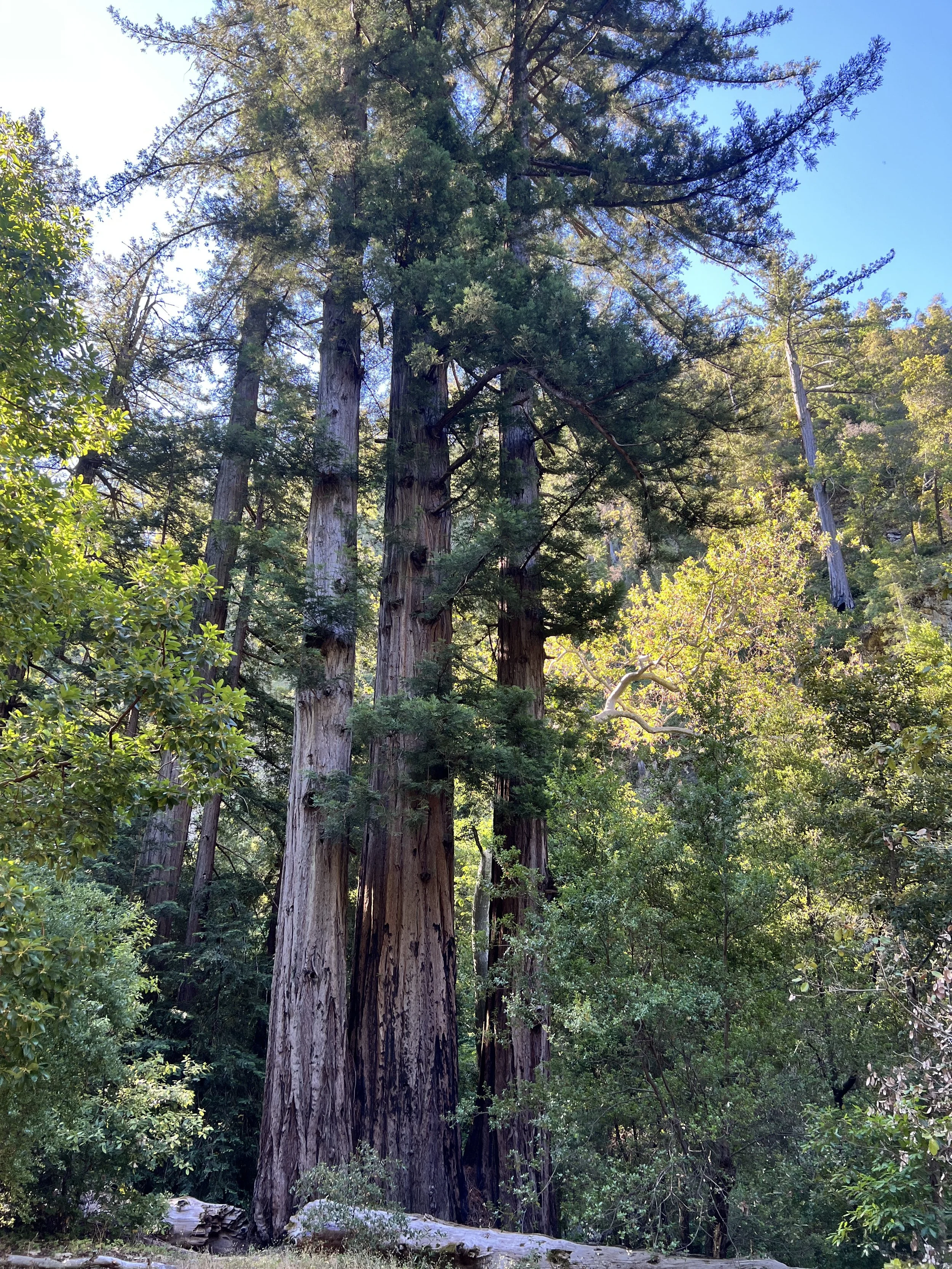
We reach South Fork Big Sur River, and for the most part the trail has stayed maintained, with only a few brushy patches of oak. Suddenly we’re walking among coastal redwoods. They are majestic.
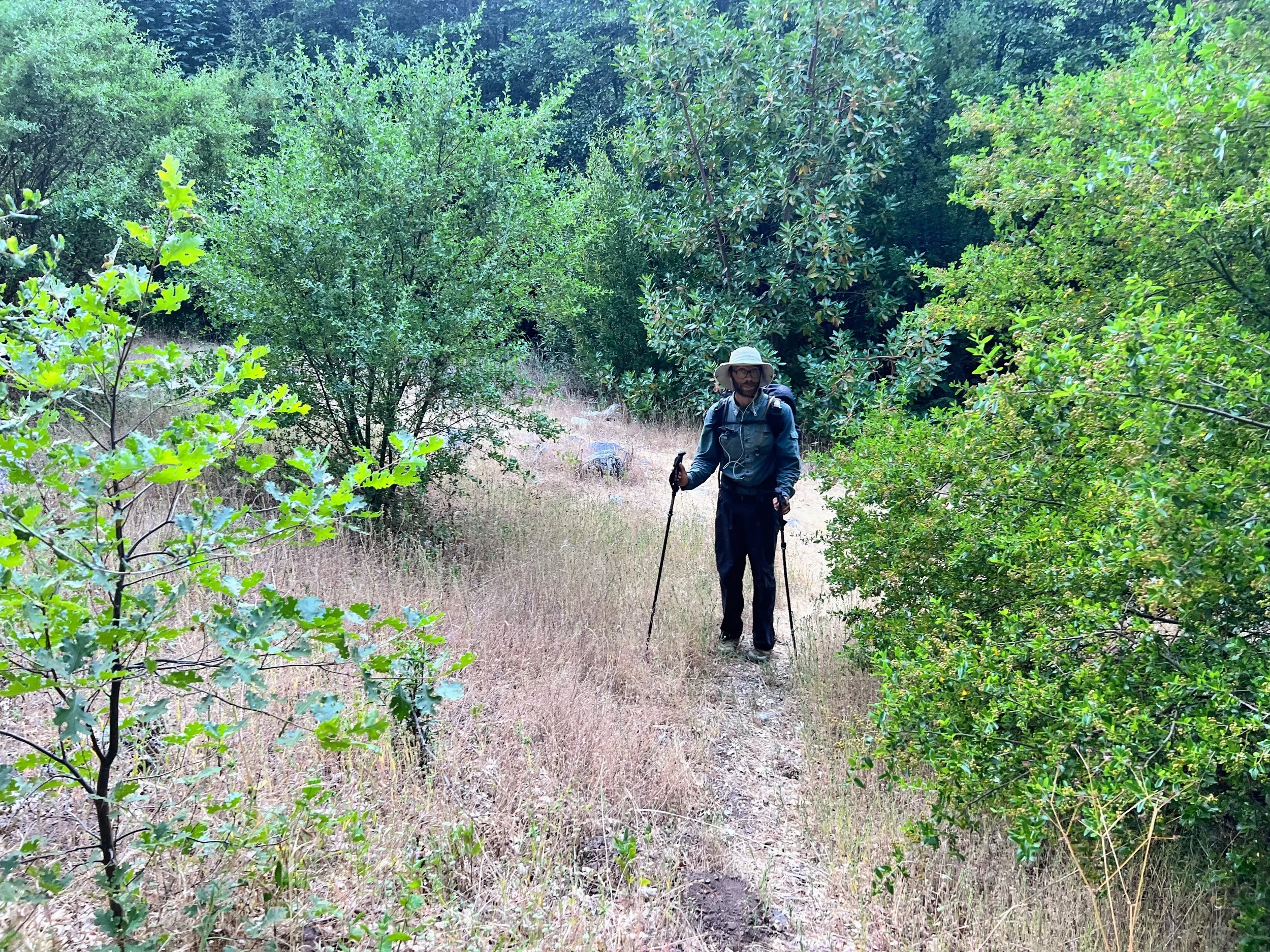
We end the day at Rainbow Camp, a quiet clearing tucked deep in the Ventana Wilderness.
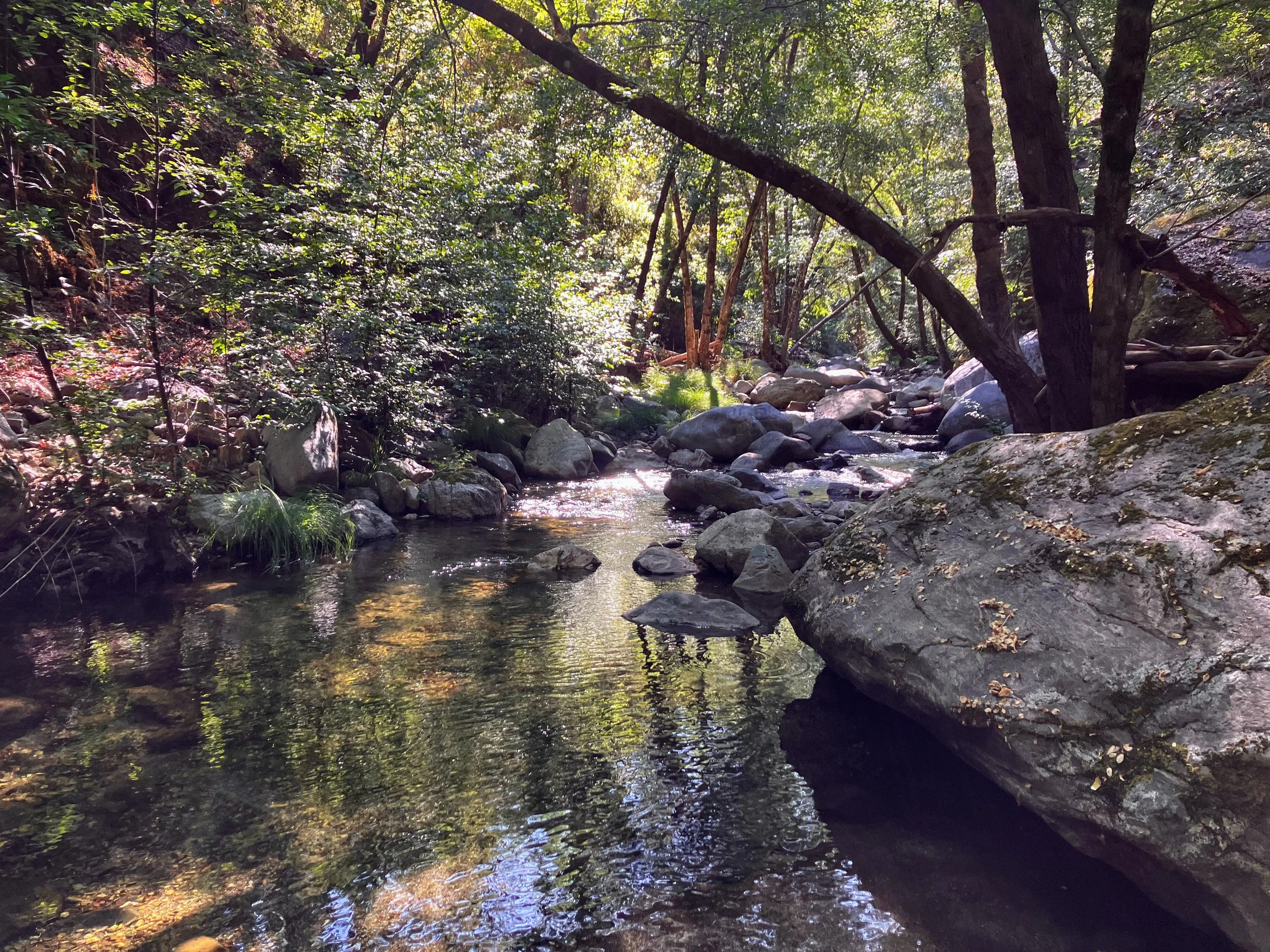
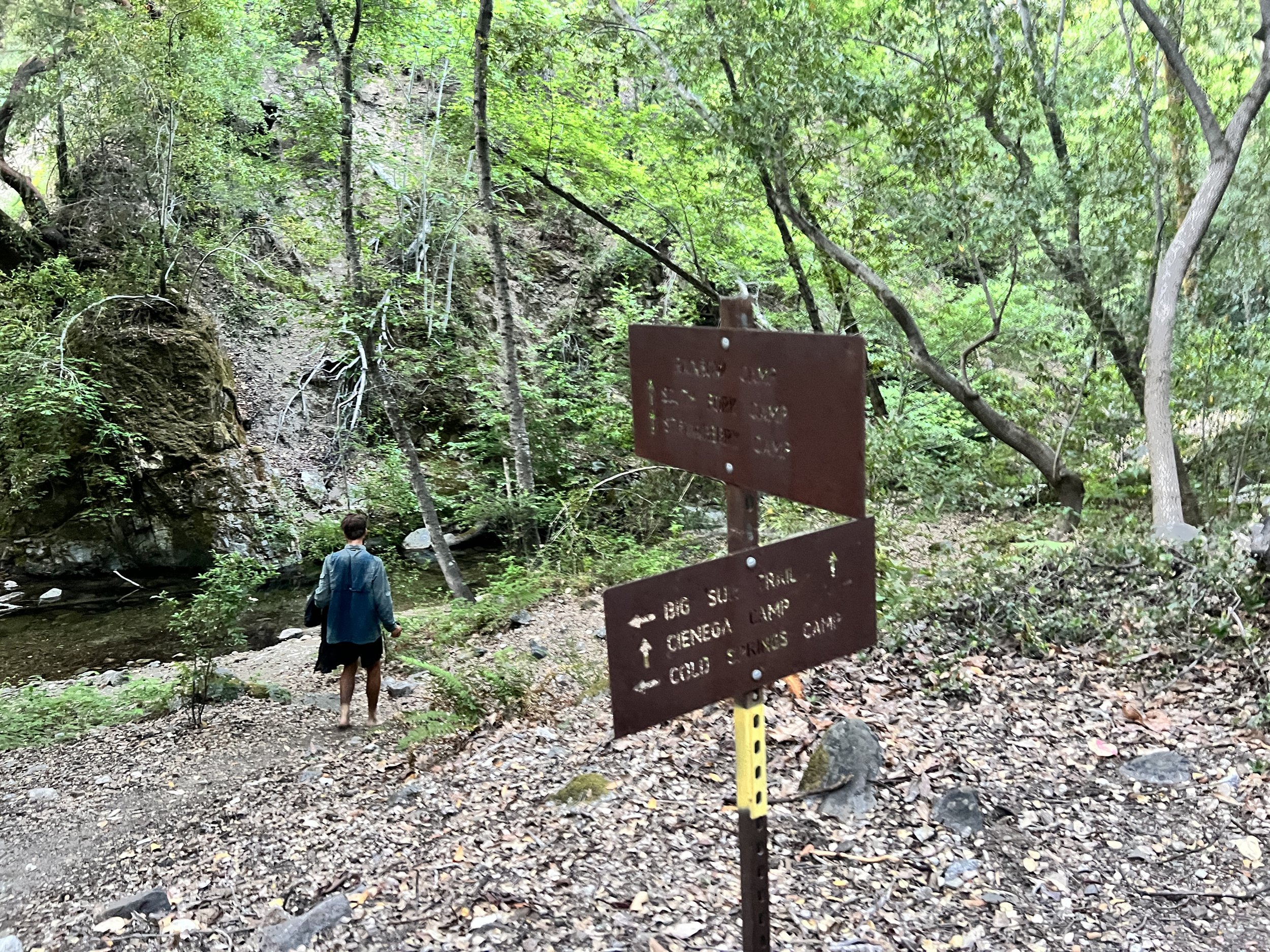
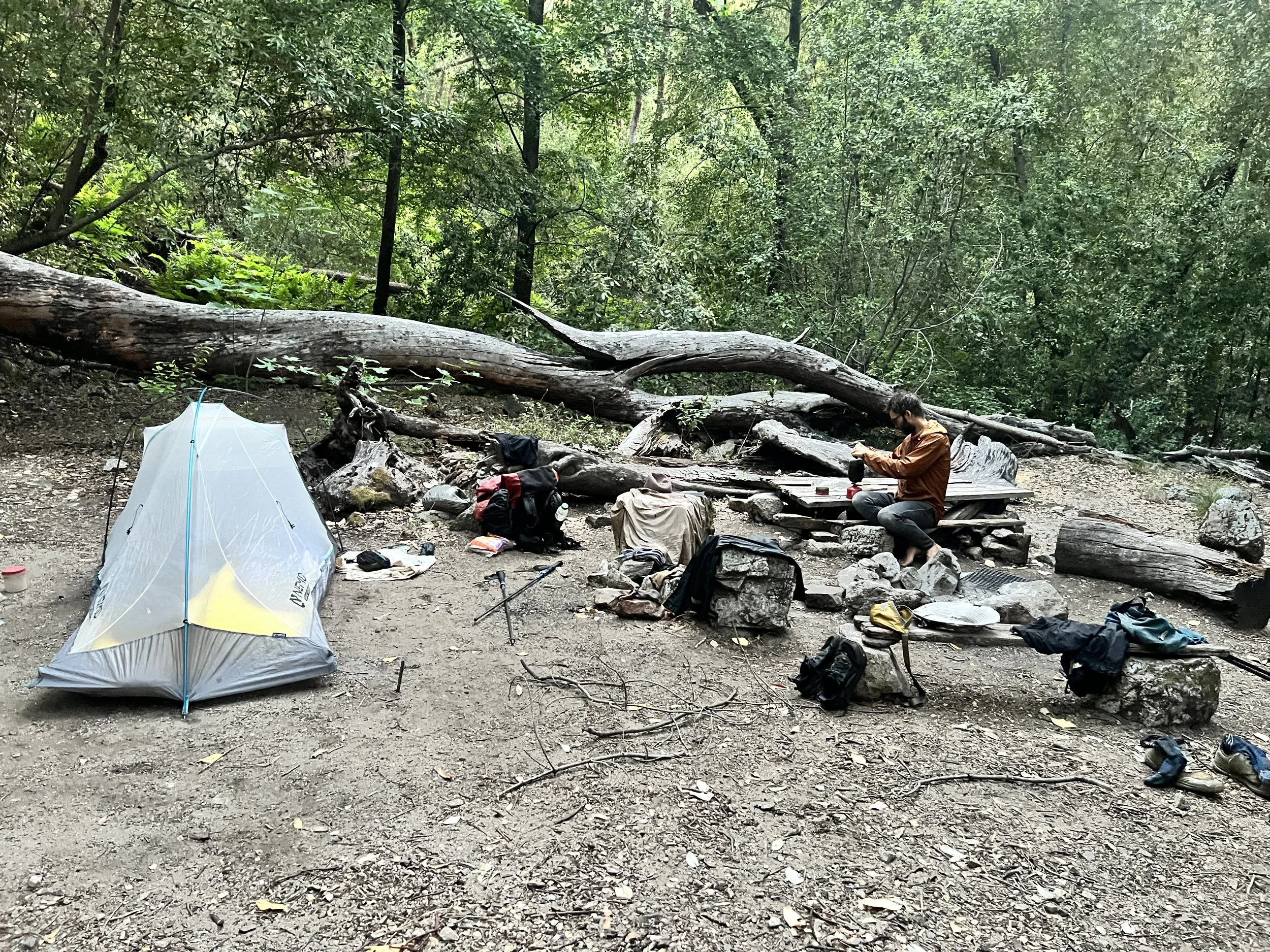
We swim in the slow moving river and read under the redwoods.
Day 27 | June 10, 2025
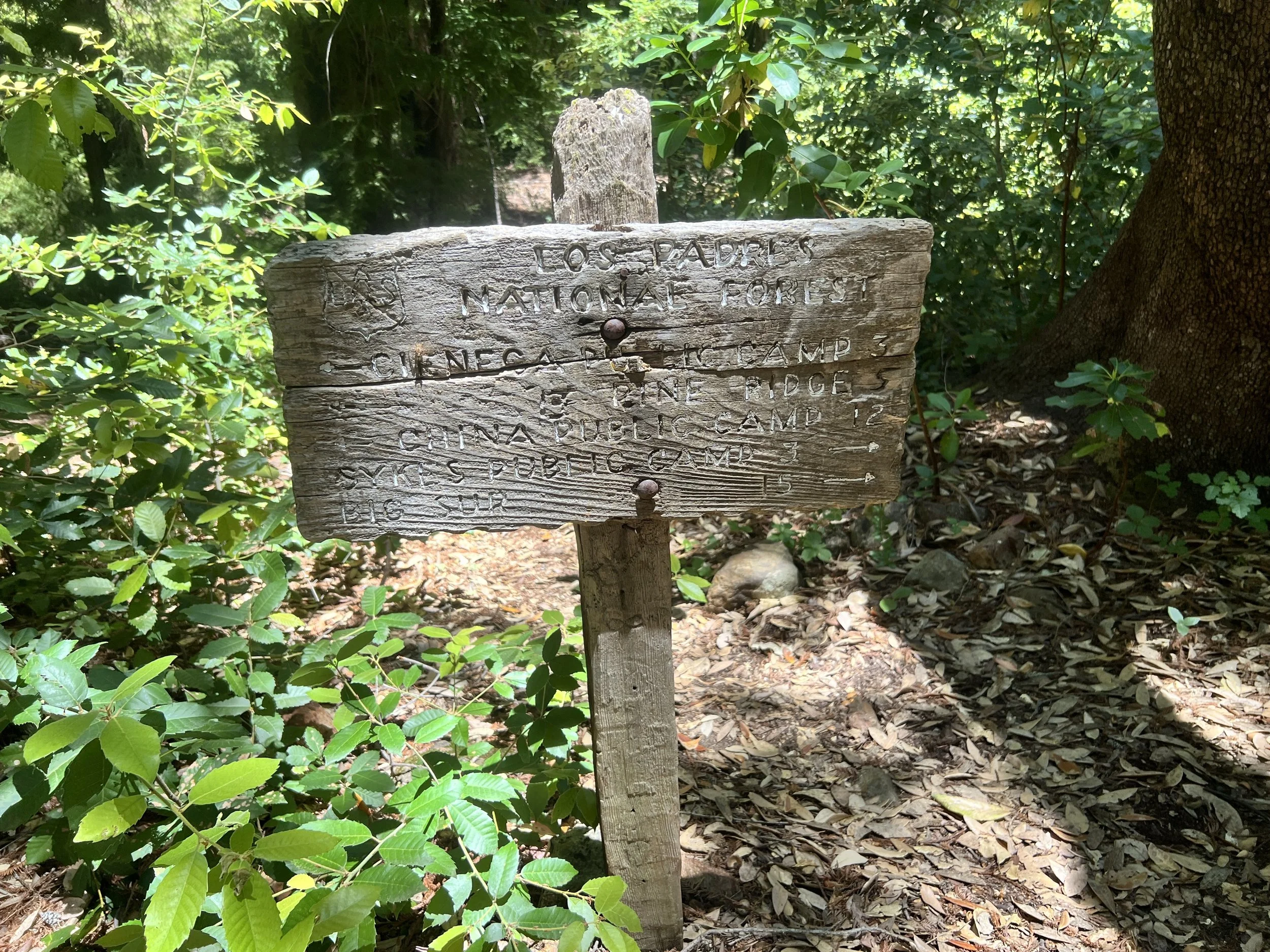
Big Sur Trail to Pine Ridge Trail.
There are stretches where poison oak crowds the trail and brushing it is almost unavoidable, but an actual tread under my feet feels like a gift compared to earlier sections.
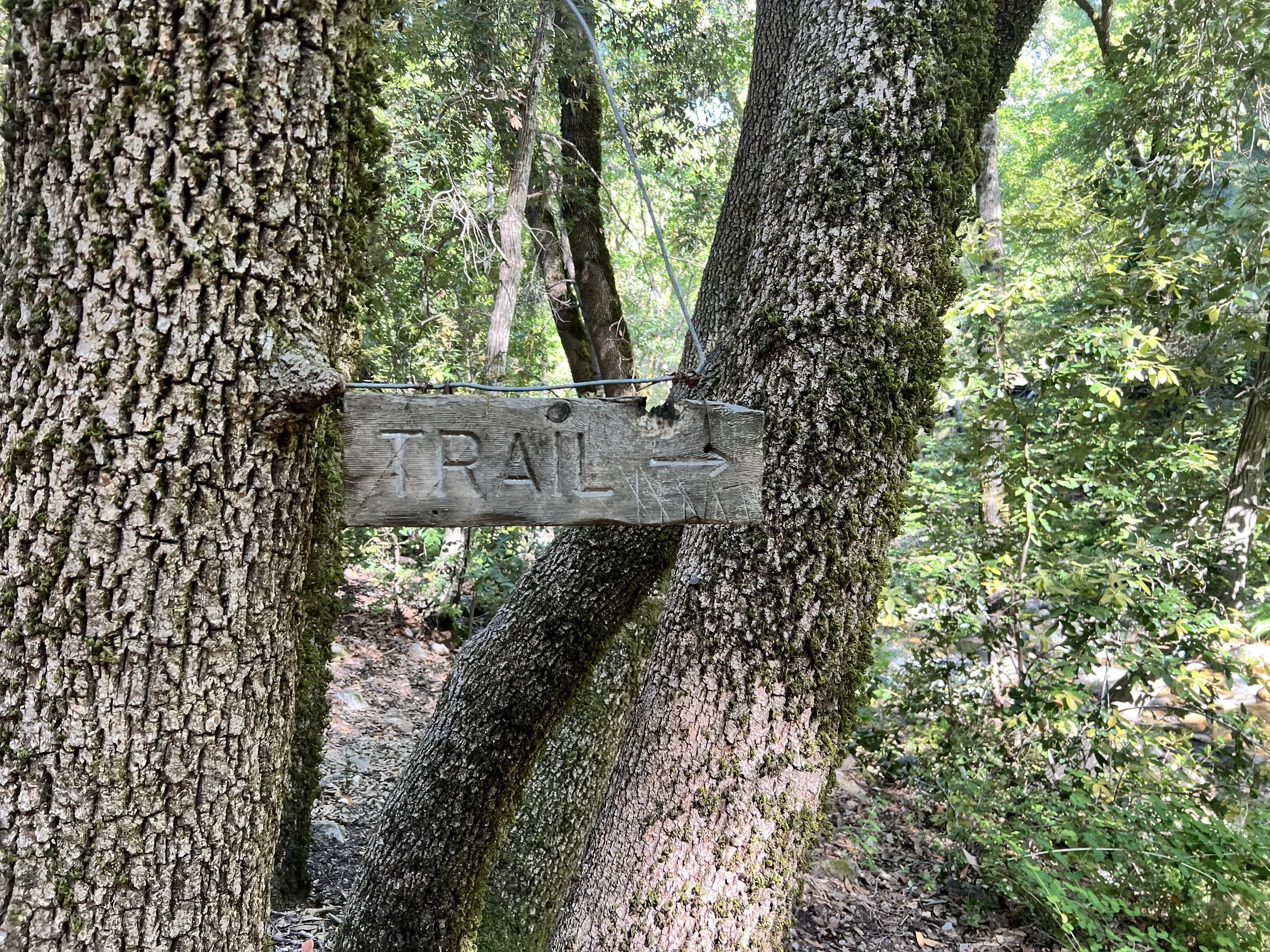
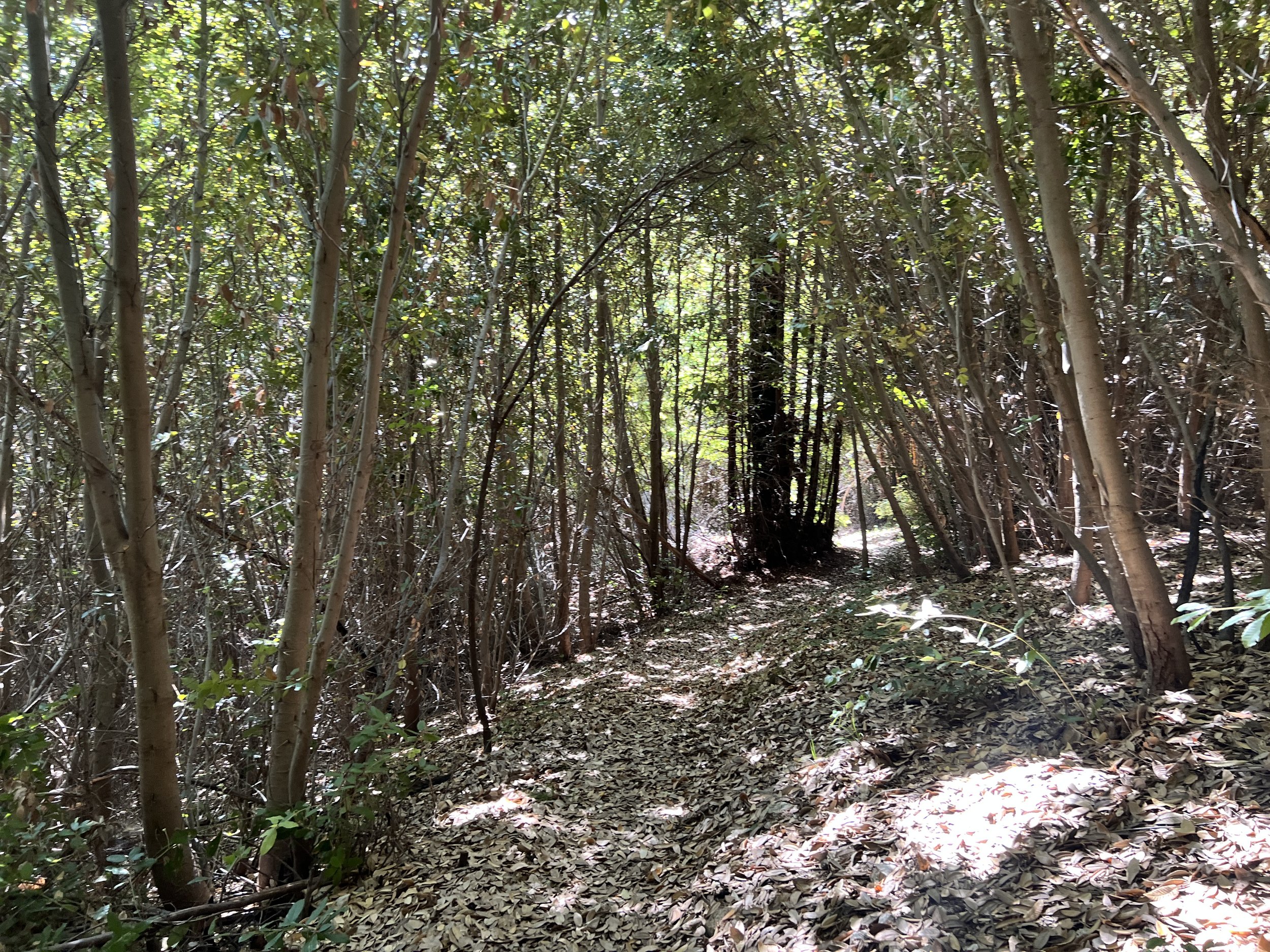
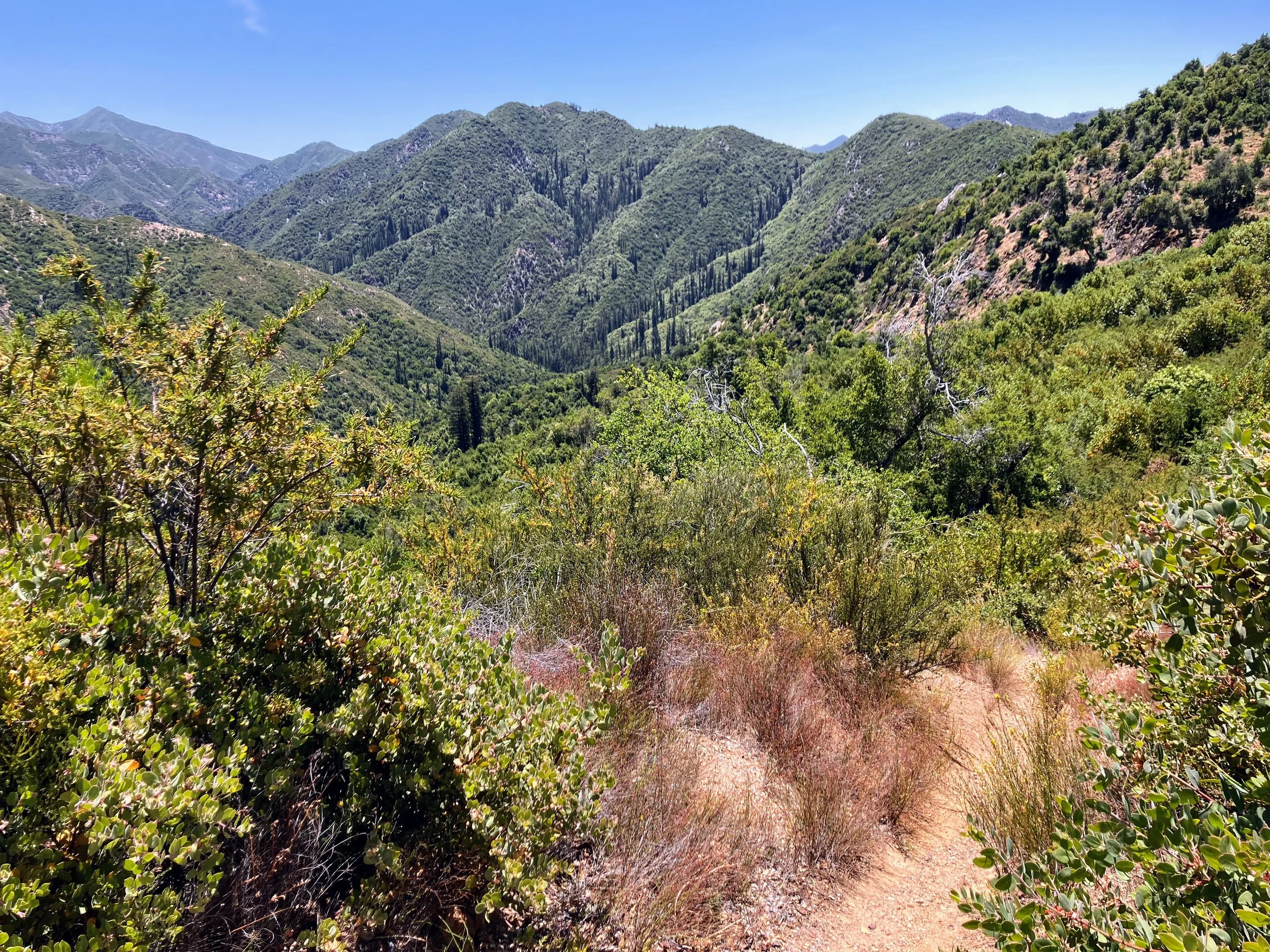
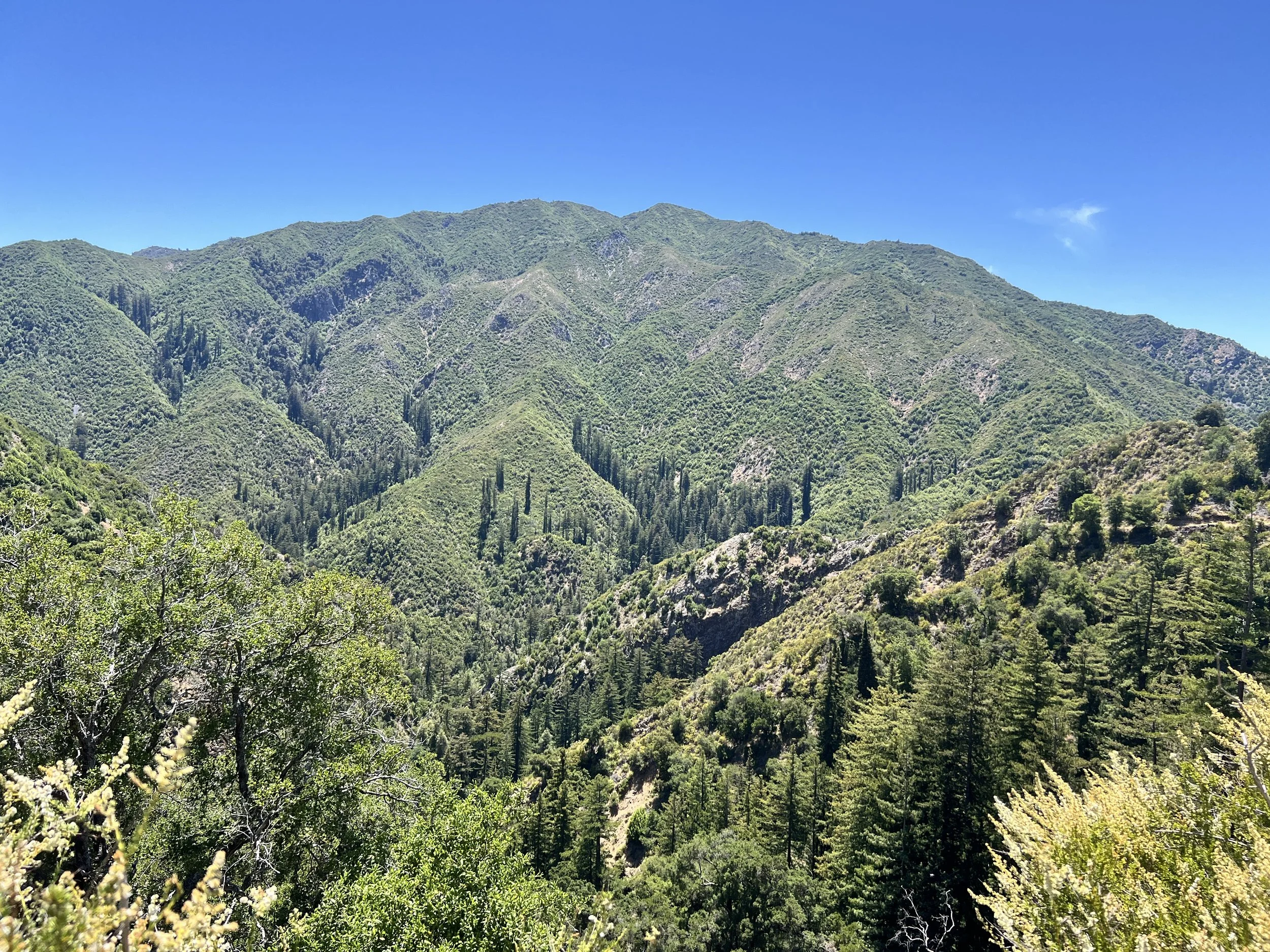
The Pine Ridge Trail skirts the side of a canyon. The views are expansive, the hillside dropping away beside us. The trail dips down to the river, redwoods rising around us, tall and still. In the distance a hawk soars and screams. For a moment the scene feels prehistoric.
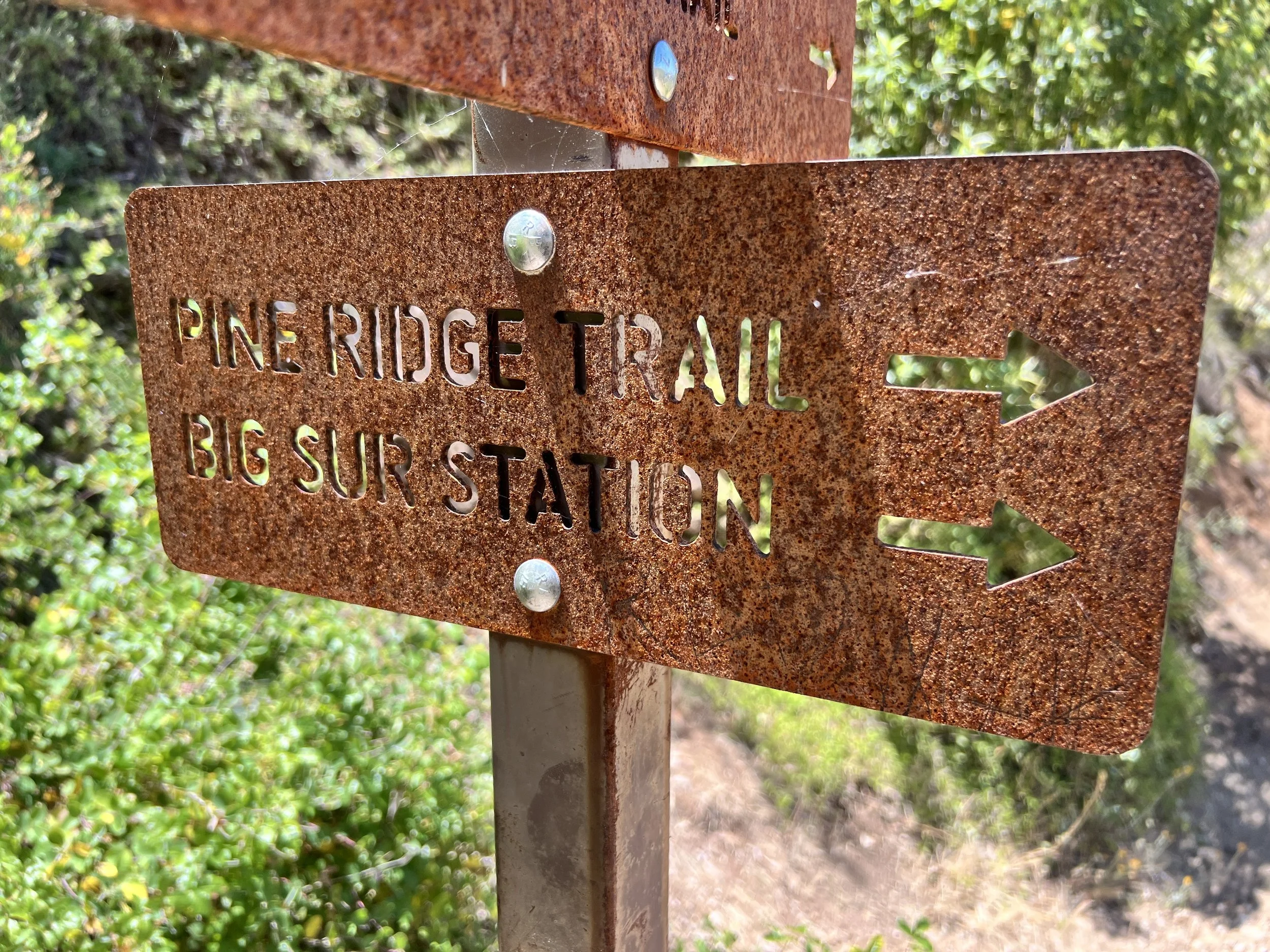
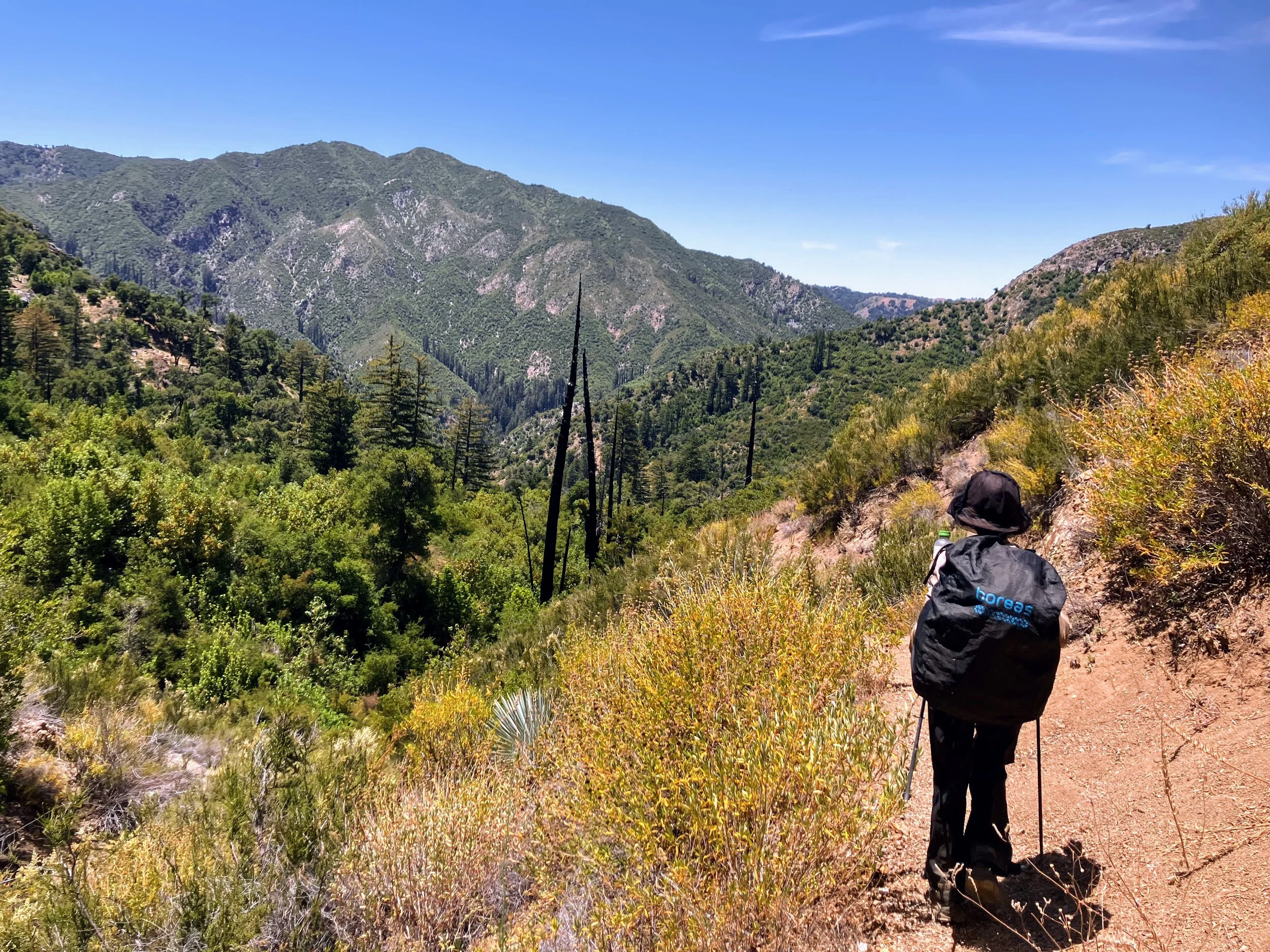
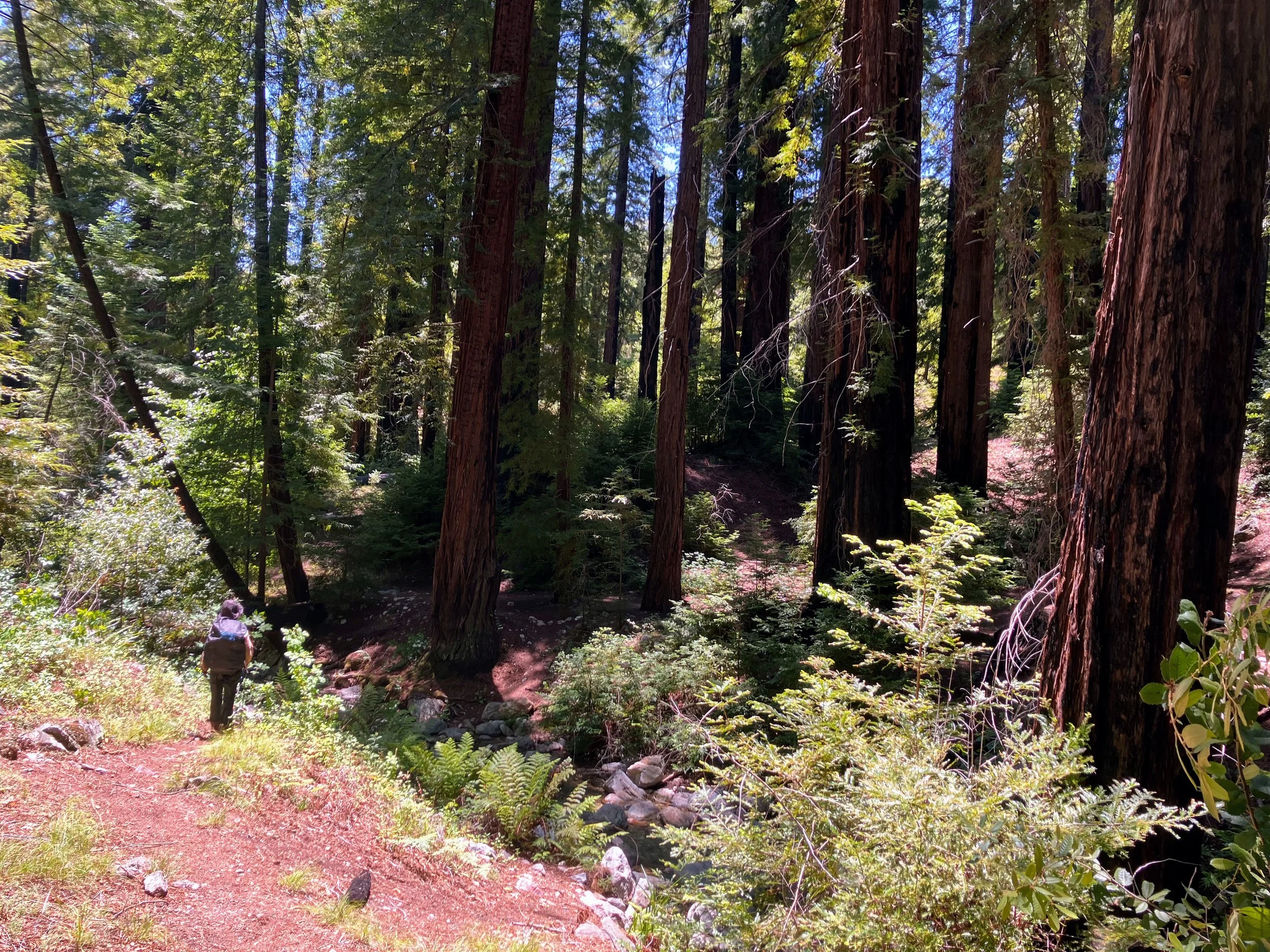
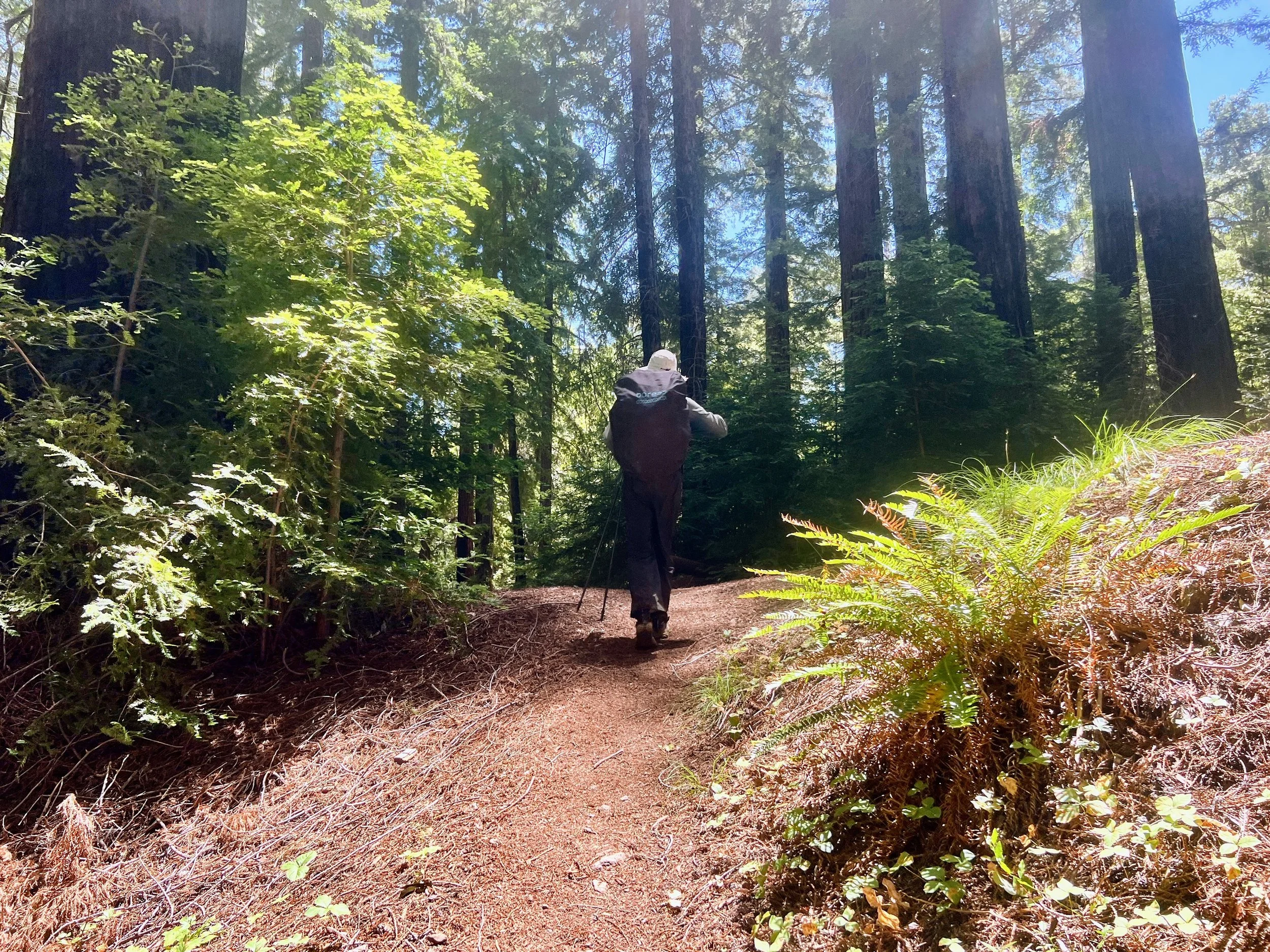
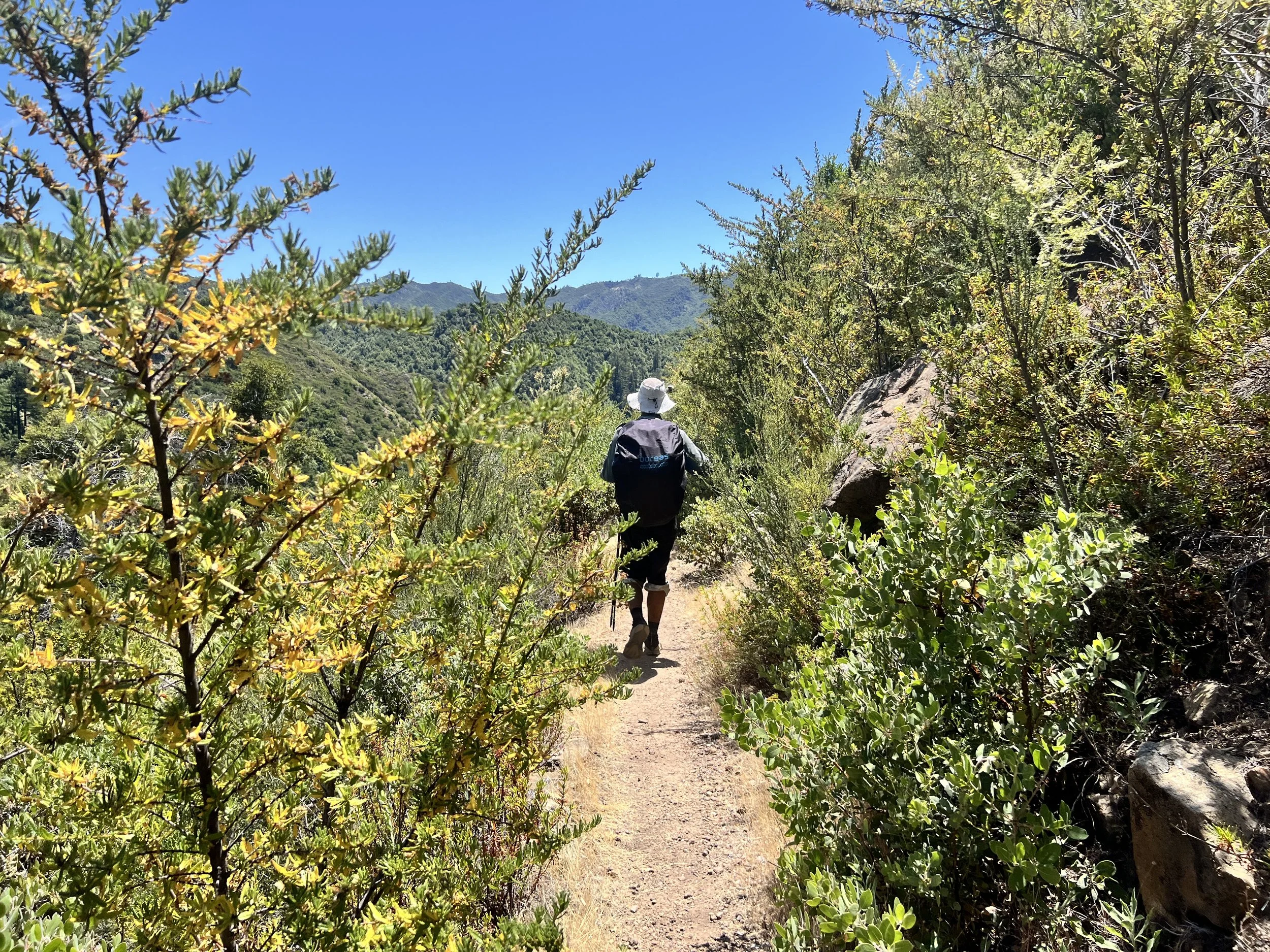
In the shade under the trees, the temperature is perfect. On the exposed climbs the heat presses in, almost suffocating. Even with a real trail, the poison oak patches keep me in my rain pants, and the gnats keep me under my bug net, both of which make the heat feel heavier.
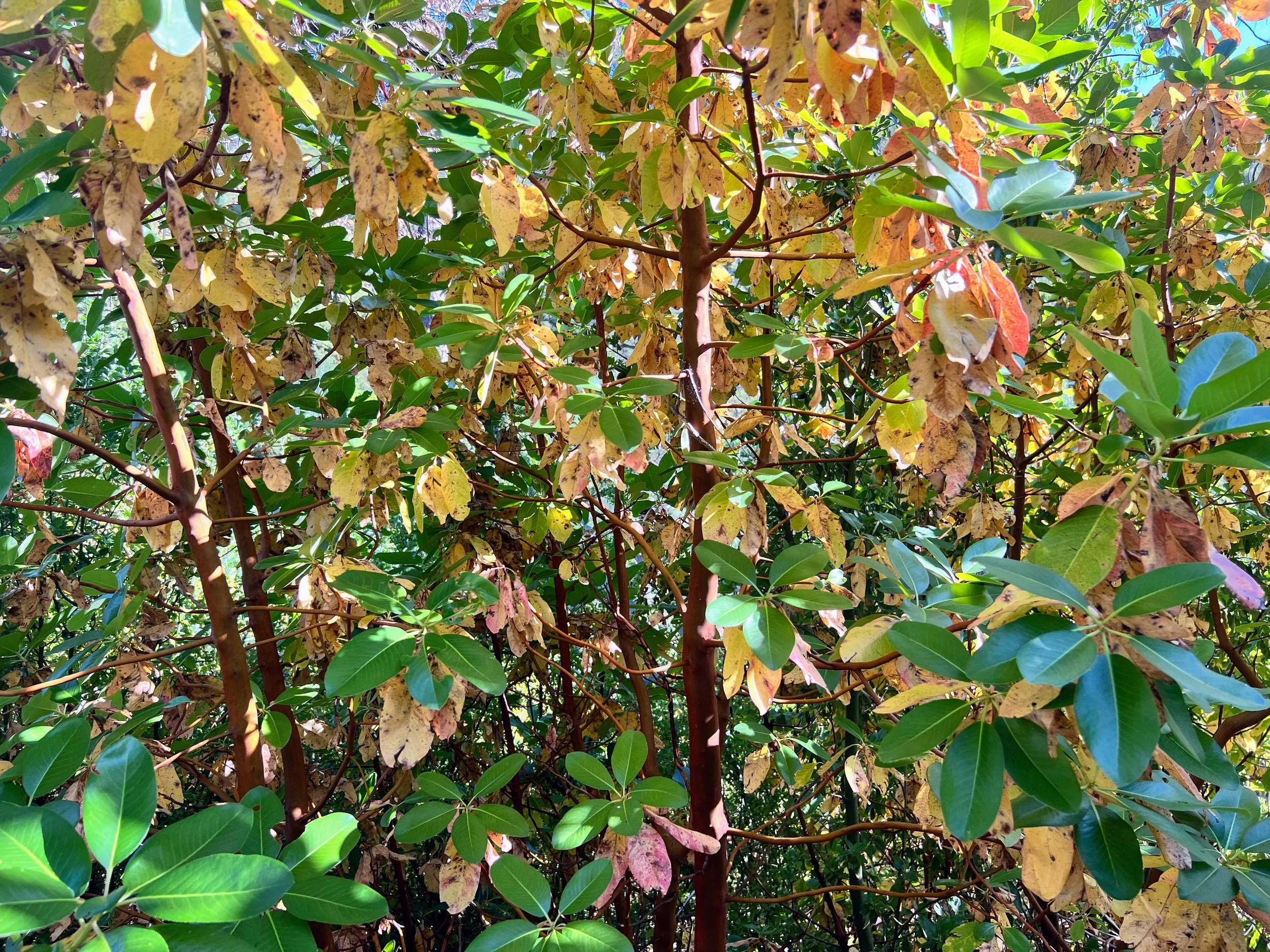
I love the stands of madrone trees along the way, their bark a burnt rust color and their leaves bright green and yellow, almost tropical.
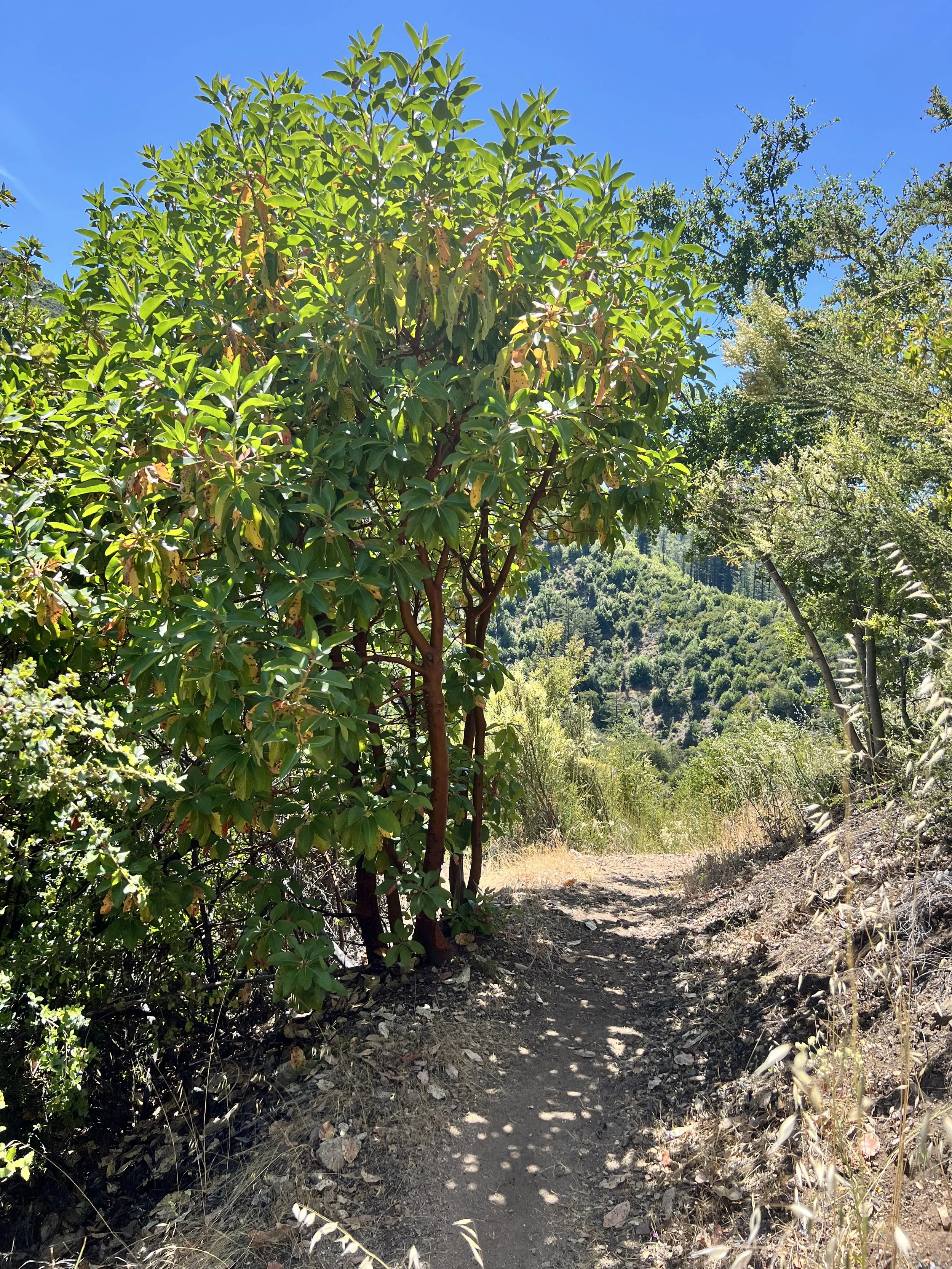
The Pine Ridge Trail has more foot traffic than we are used to. We pass a man sitting in the shade with only half a bottle of coconut water left. He had planned to day hike to Sykes Hot Spring, an eighteen-mile round trip, but after five hours and eight miles, he realized he wouldn’t make it. He turned around just a mile short of the spring. I offer him water and snacks, but he says he’s fine. Still, I’m not sure he’ll make it back to the trailhead before dark.
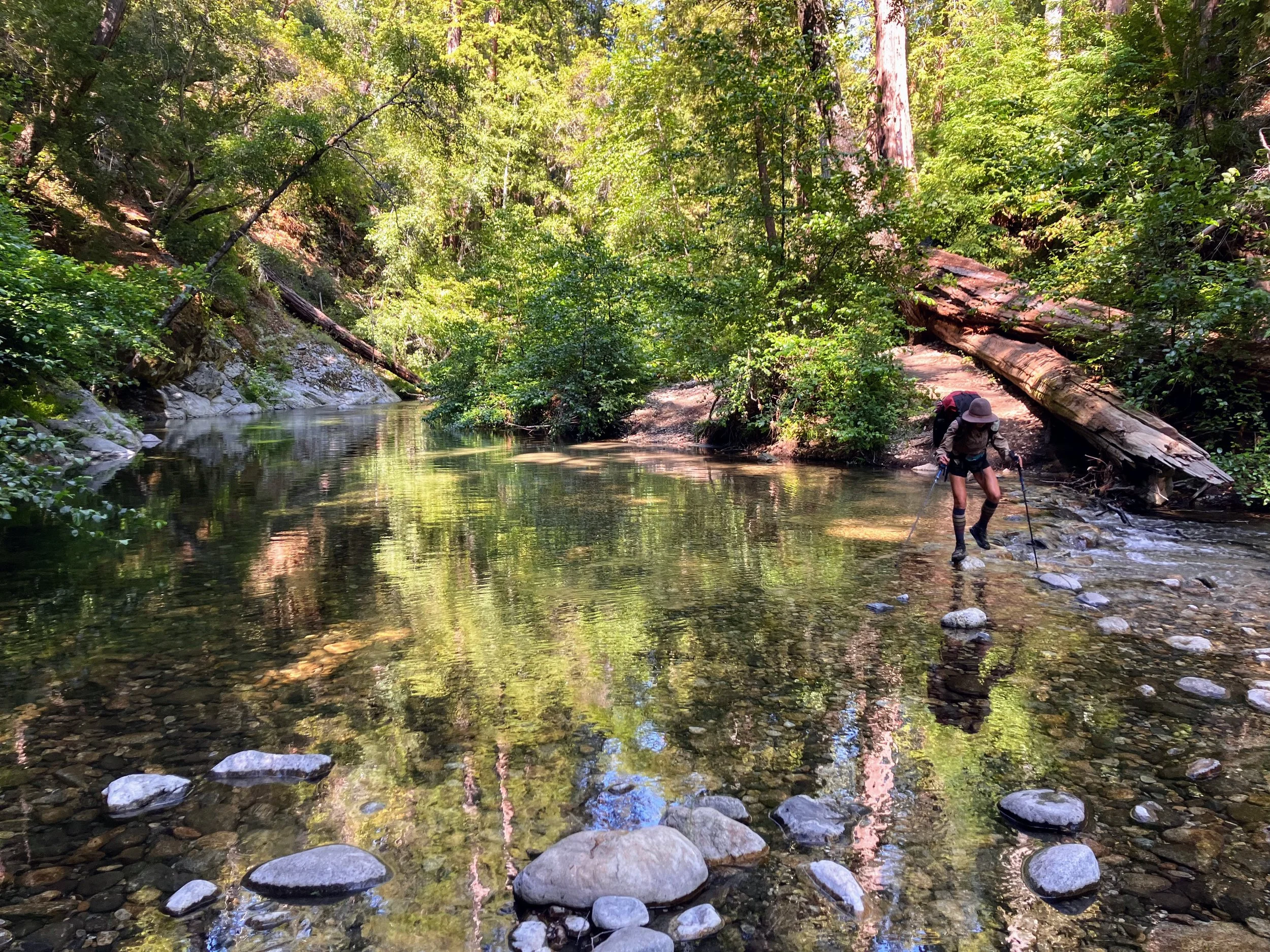
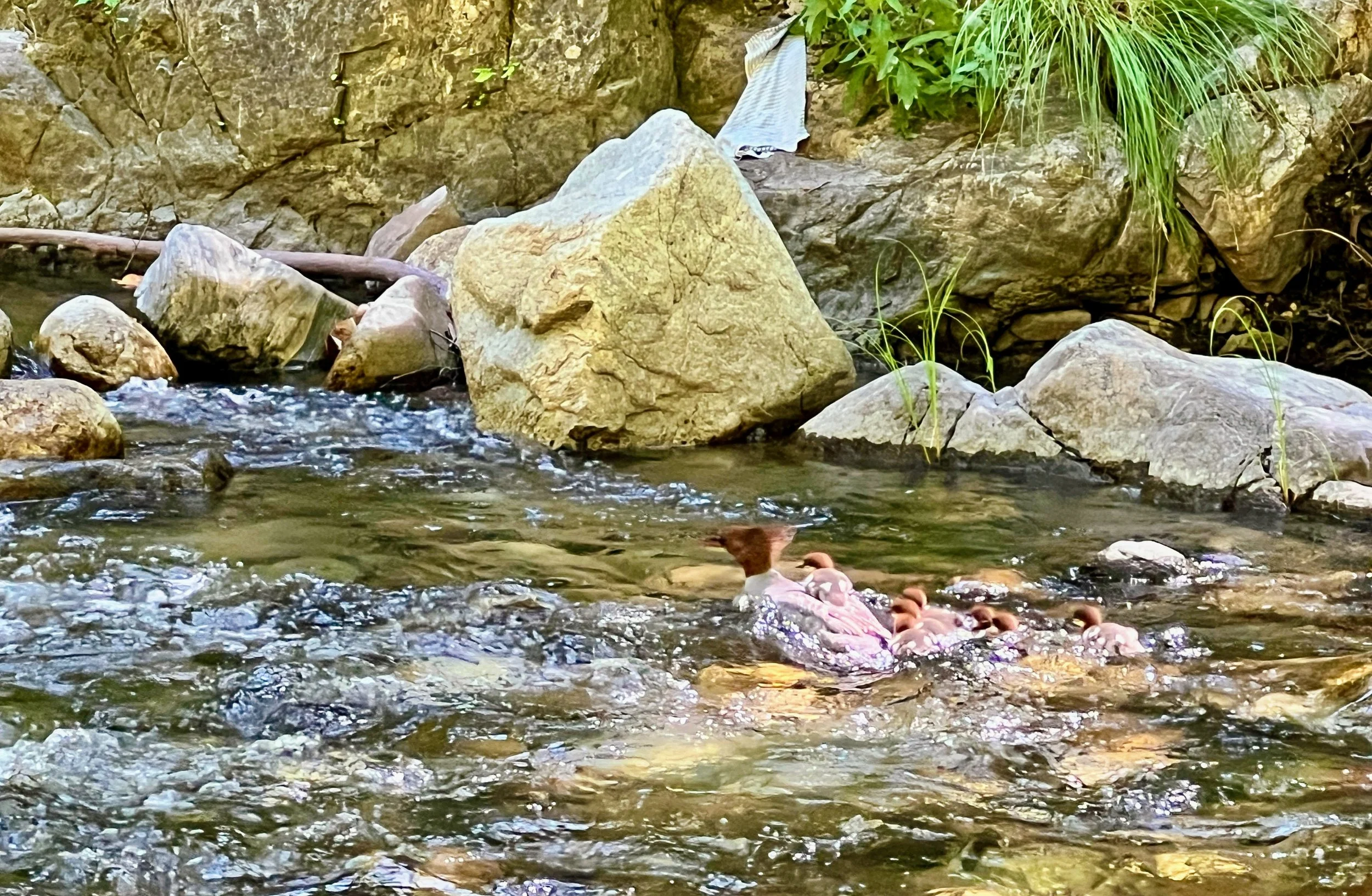
We stop early at Barlow Camp around 4:30P.M. There’s a deep swimming hole, and we dive in, letting the cold water rinse off the day. The site is large, flat, and shaded by redwoods—quiet, empty, and too inviting to pass up. We’re close to the end now, only a few miles away. Our alternate route will take us straight back to the car at Big Sur Station. But when we see this camp, we figure: what’s the rush?
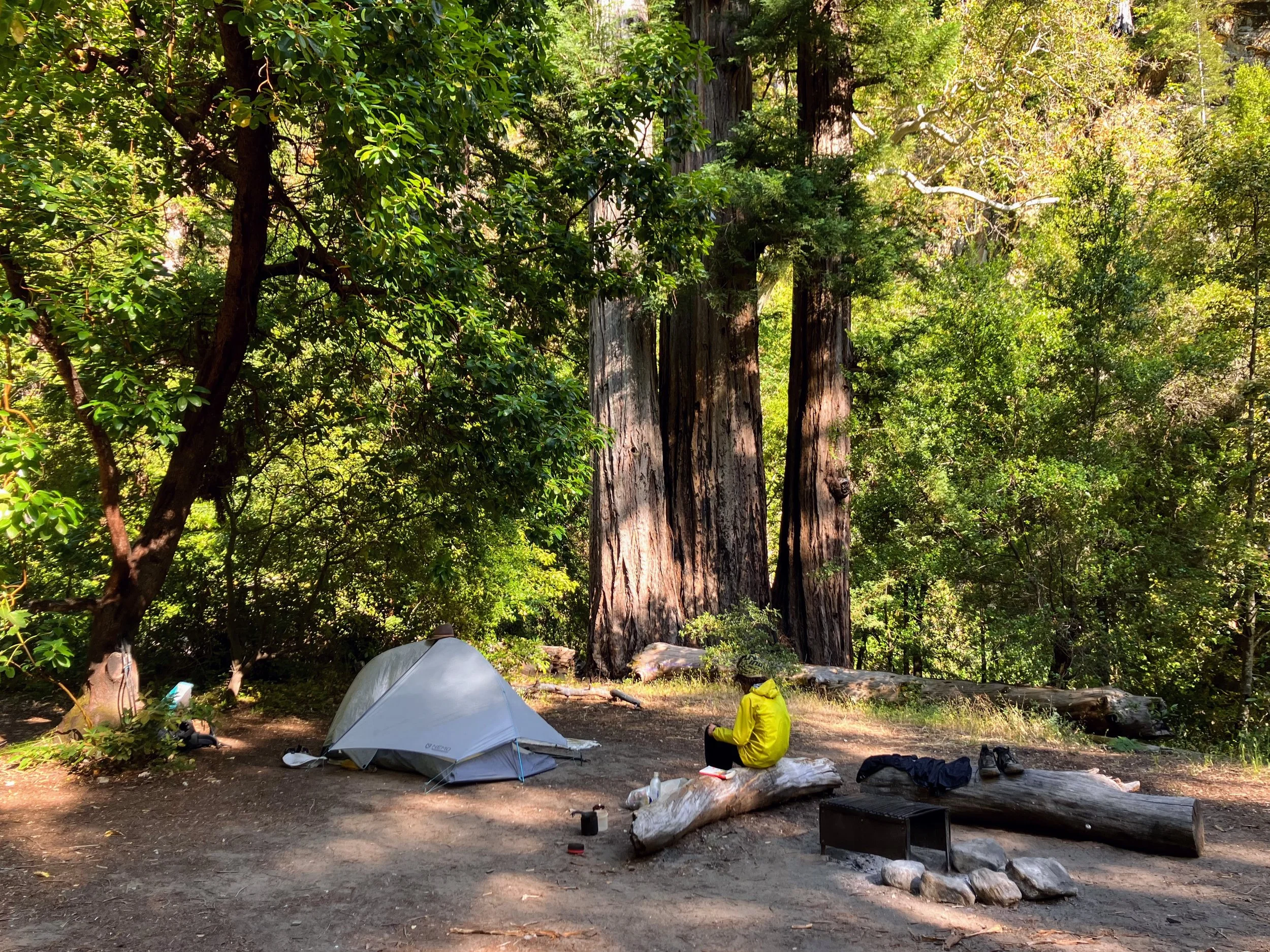
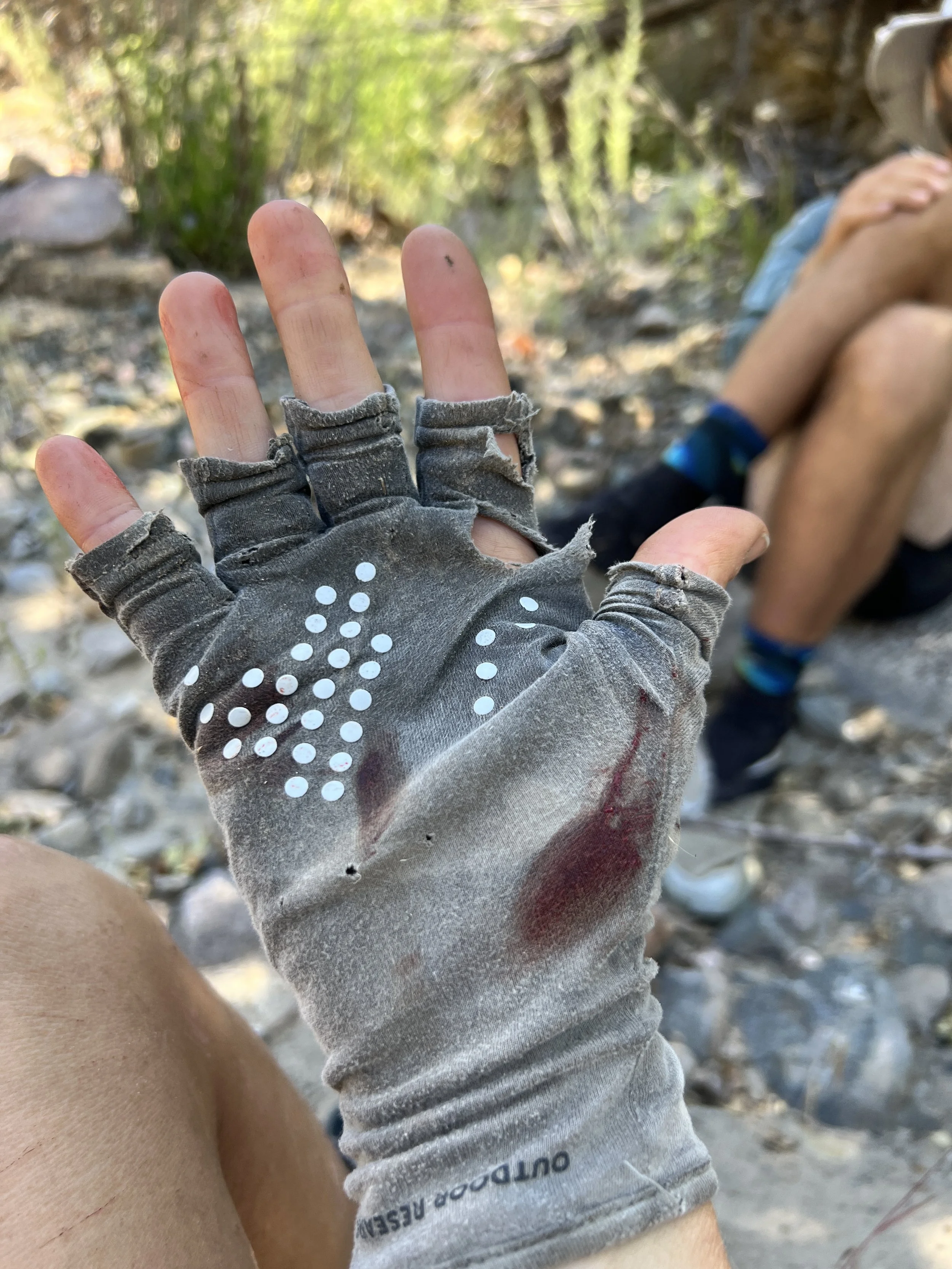
As I lay out my gear, I realize I’ve officially lost one of my sun gloves. No idea when or where, but it’s added to the list of Condor Trail gear casualties. We make three different dinners, read our books, and pretend not to be bothered by the biting gnats that never quit. My legs are covered in bites.
Day 28 | June 11, 2025
28 days later we reach the end. The end is in sight.
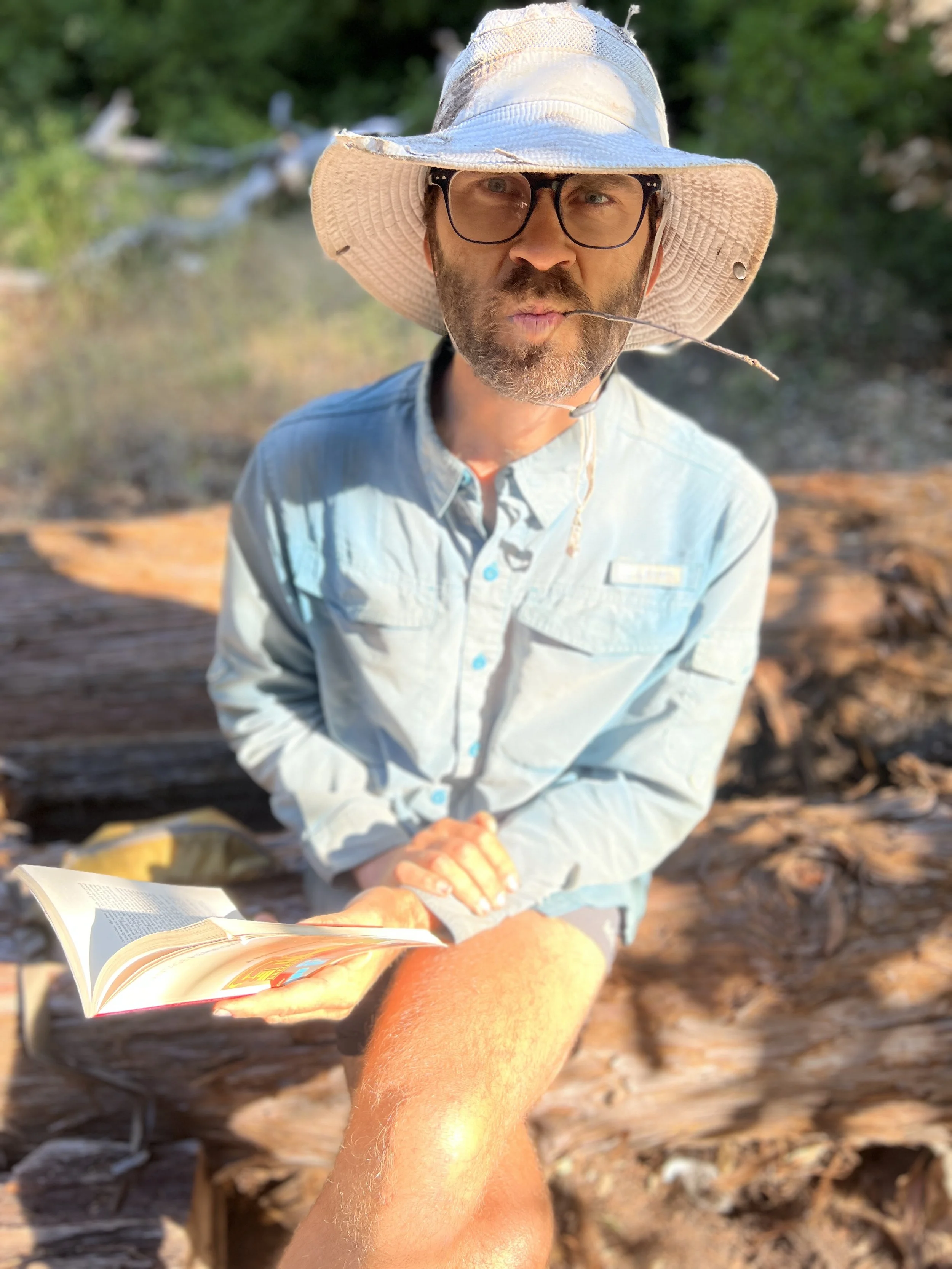
Nothing marks the final day of a thru-hike more clearly than the contrast between us and the day hikers.
They breeze past with clean clothes, hydration packs, and that “fresh linen” scent, detergent, deodorant, whatever else suburbia wears in the woods. The smell lingers on the trail longer than they do.
We look feral by comparison, with tattered clothes, sun-stained skin, scratched and bug-bitten. We’re running low on snacks, and even lower on small talk.
I wonder how I come across to them as I pass, how I look and how I smell. It can’t be good.
Feeling reflective, I think about how, at home, I spend hours each week washing dishes in the sink. Out here, I drop my spoon in the dirt, pick it up, lick it clean, scrape off the dried peanut butter, and use it again. Night after night. Morning after morning. Every meal.
I’m sure some people, maybe even you, find that image repulsive. But that’s just how it is out here. And I haven’t gotten sick. The dirt hasn’t hurt me. So what is it, then? Why are we so obsessed with scrubbing and sanitizing at home?
I know this version of me will fade once I get back. I’ll be reconditioned, domesticated and socialized, back to sinks and soap and spotless silverware. There’s a sadness in that truth, because despite the difficulty and the dirt, despite the challenge of it all, I kind of like who I am out here.
The trail grows nicer the closer we get to the parking area and civilization. It smooths into wide singletrack, flat and padded with soft pine needles. Shrubs and young coastal redwoods with frosted tips line the path. It creates the illusion that this forest is kind, welcoming, and easy.
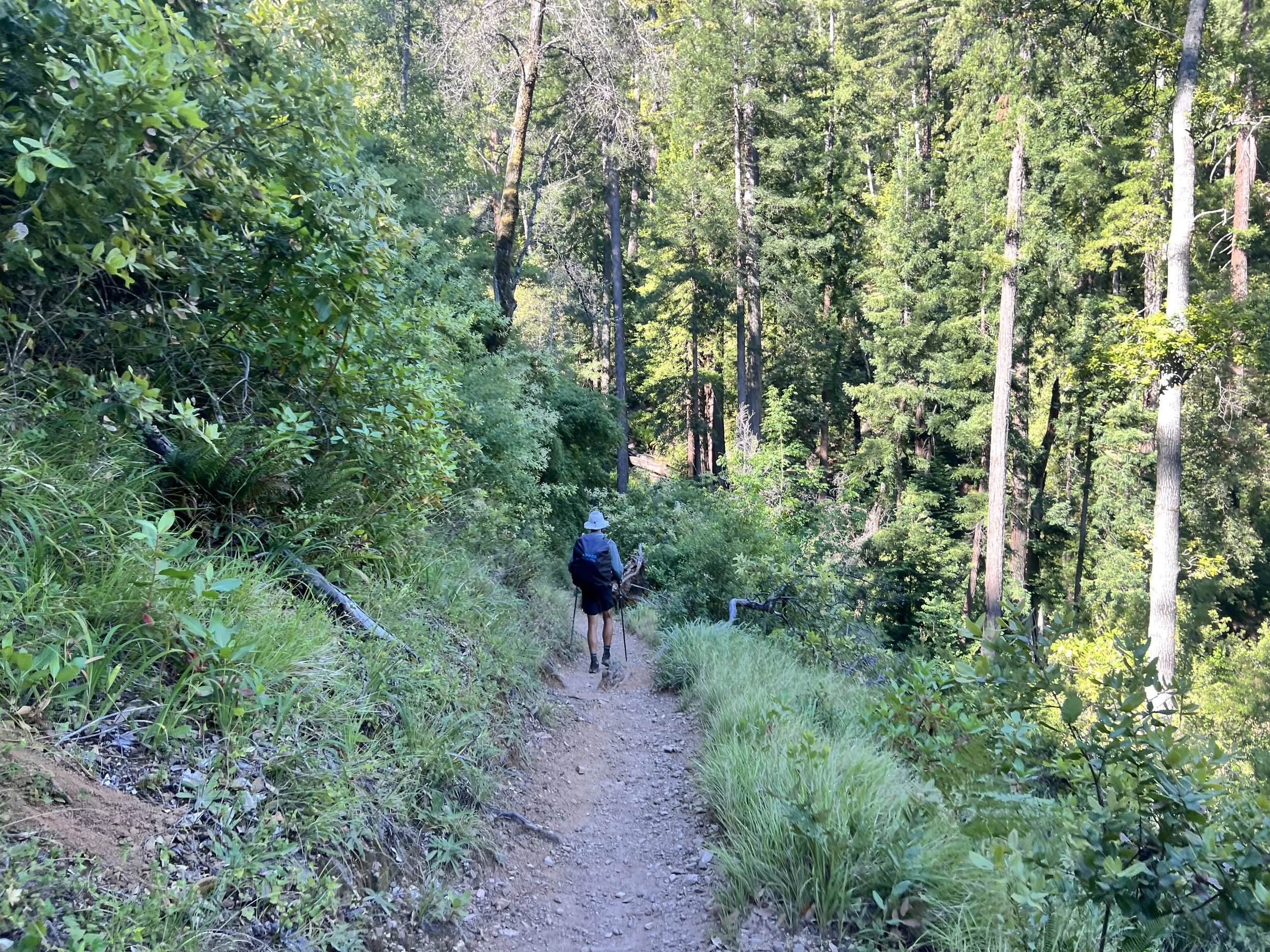
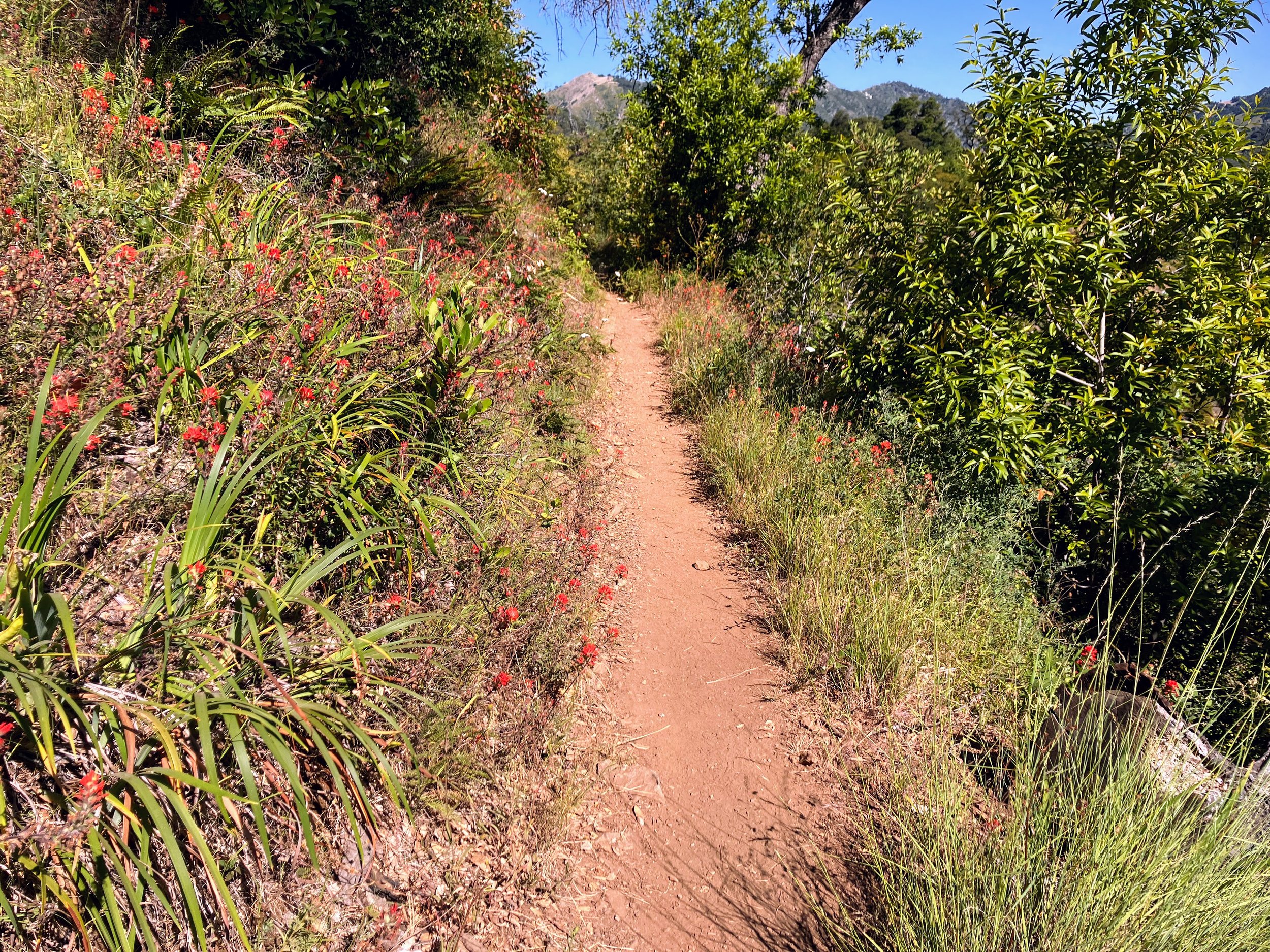
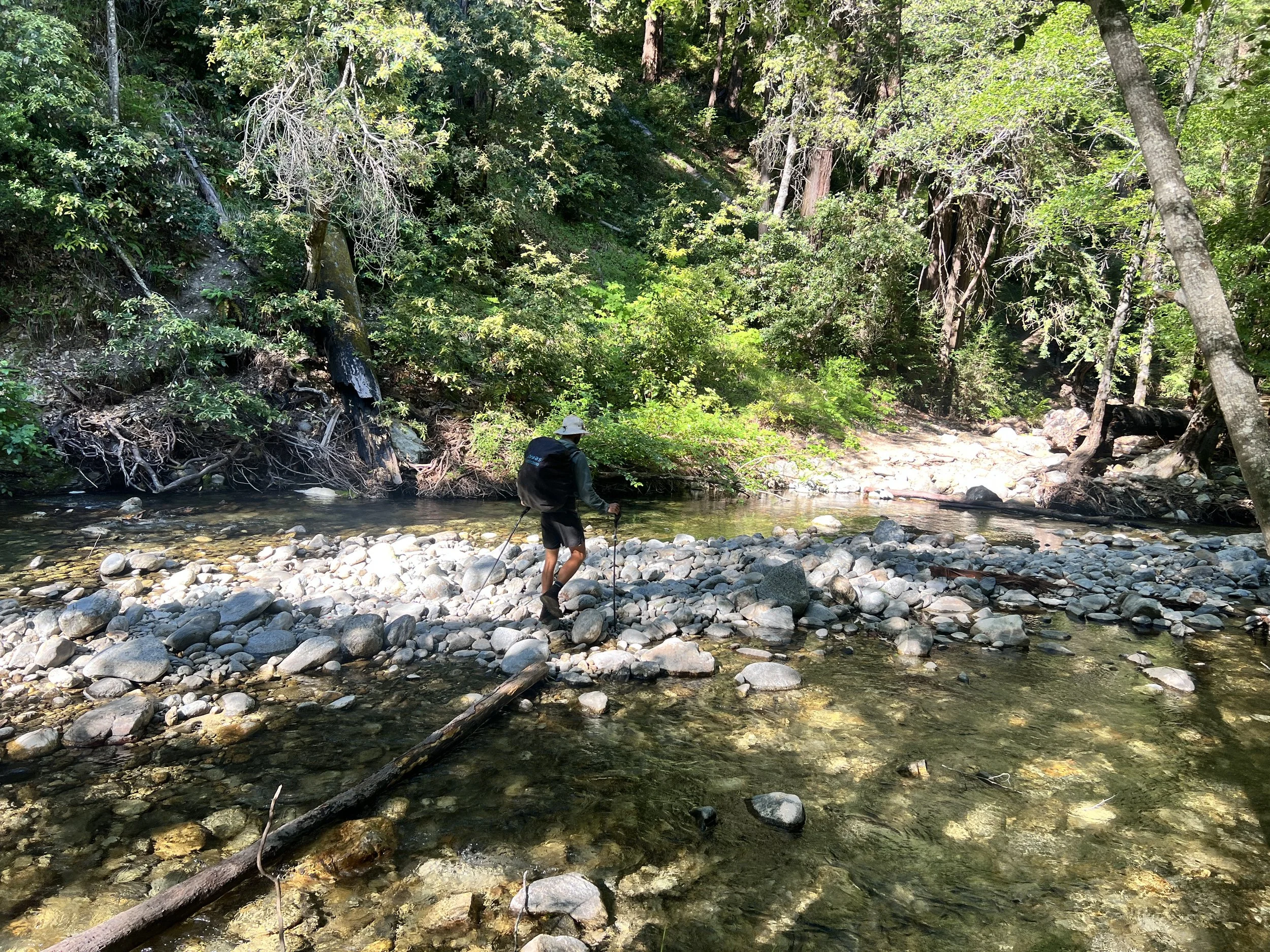
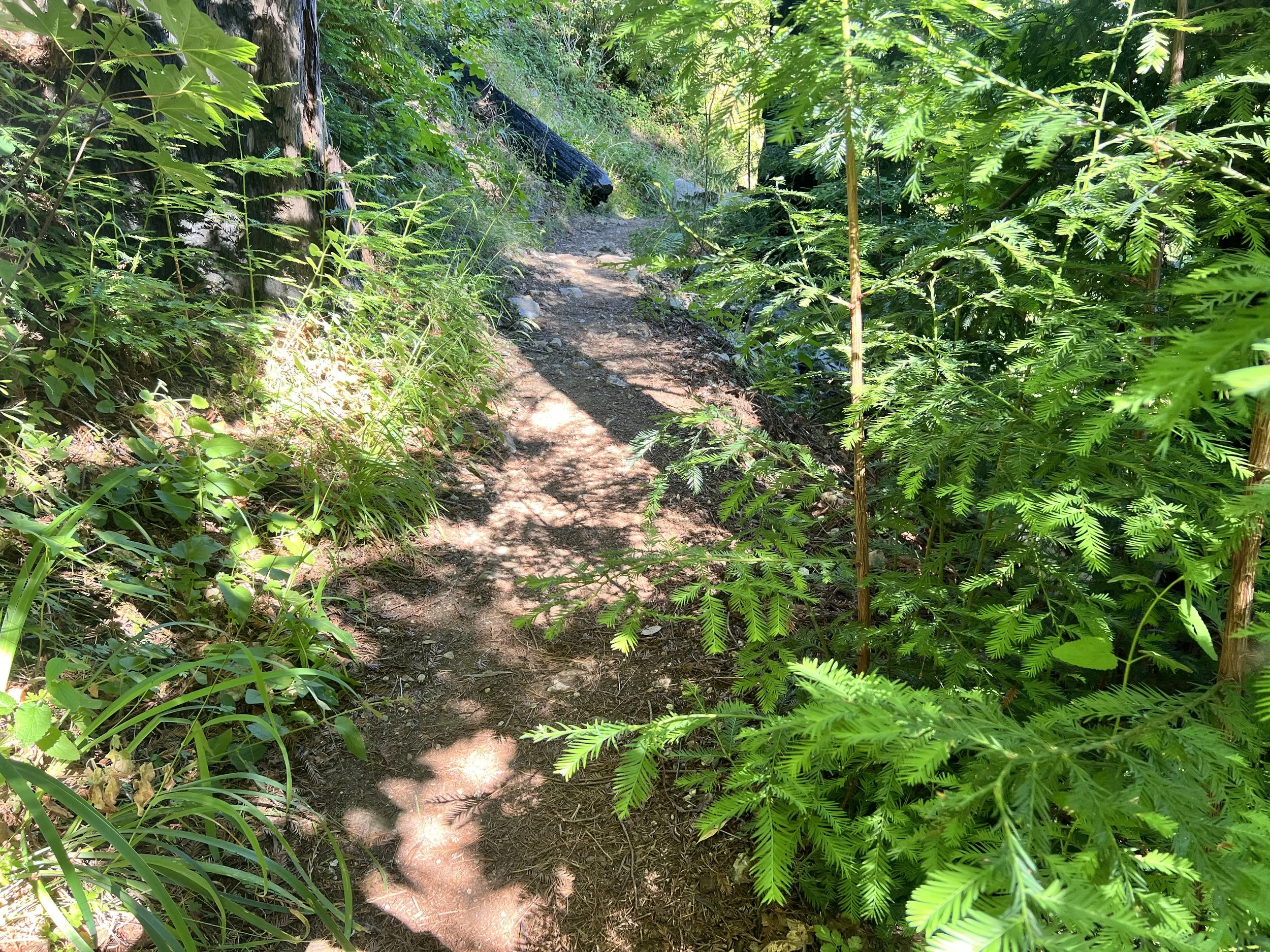
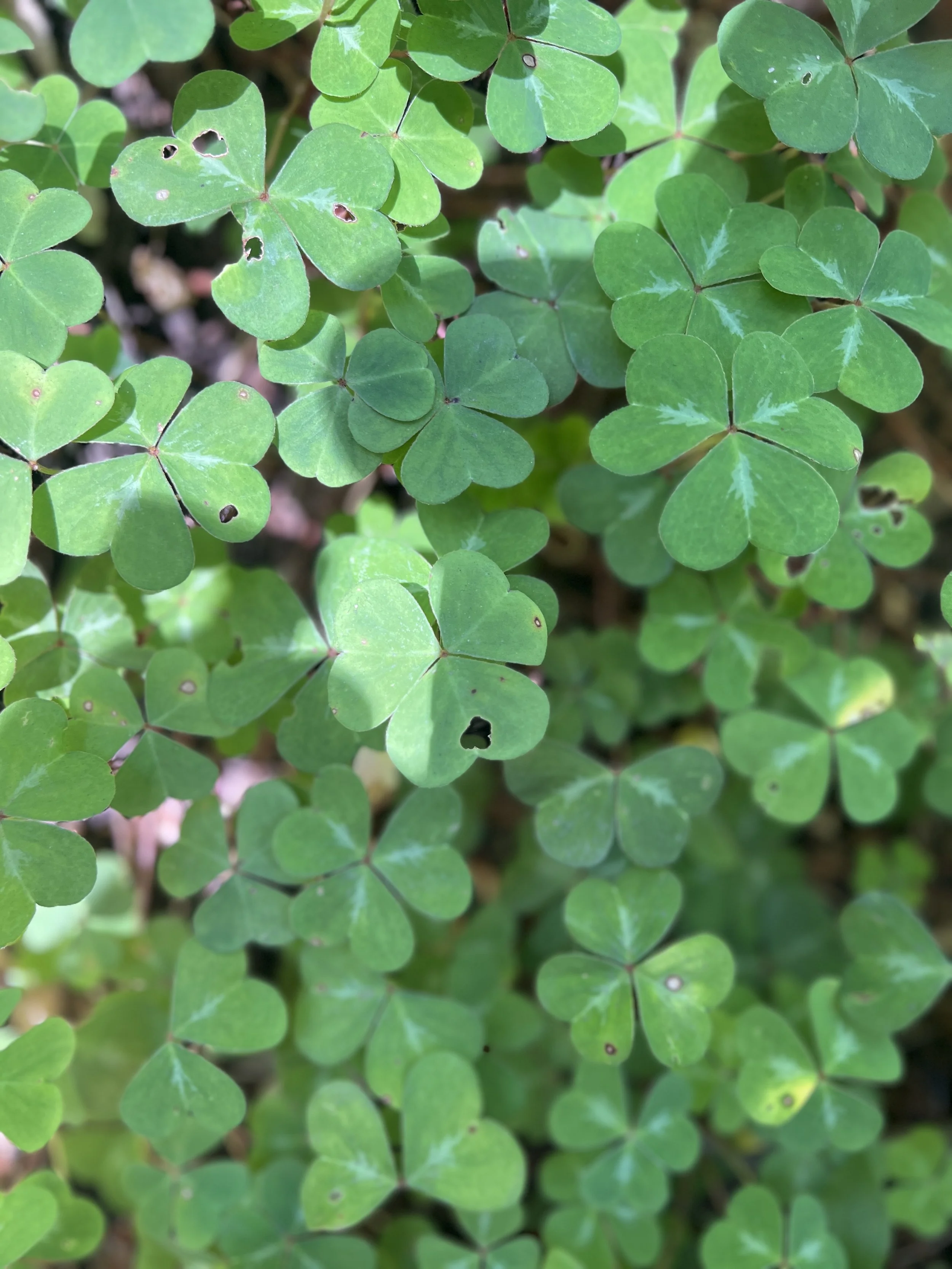
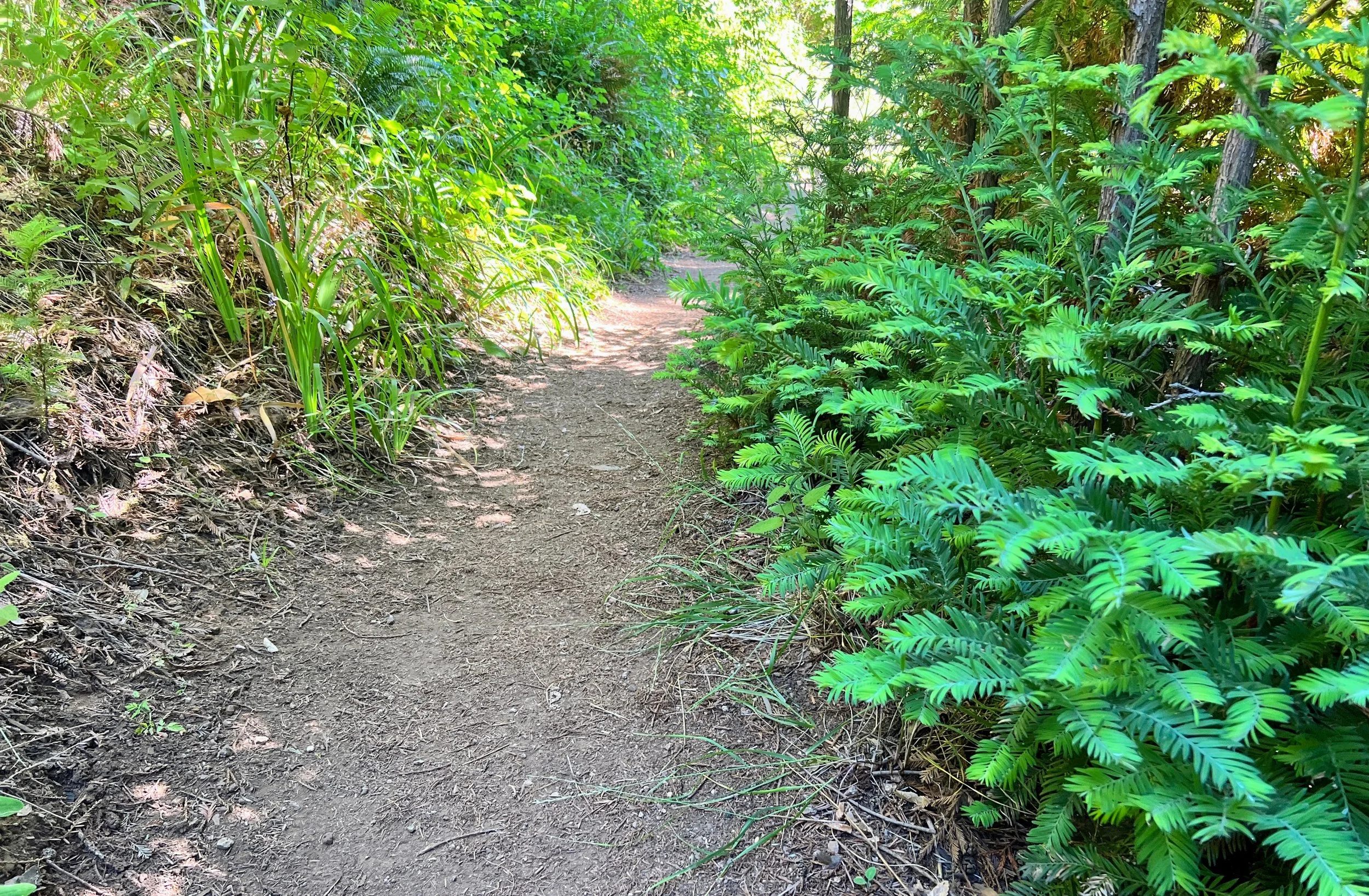
I feel proud of us for sticking with this strange, stubborn line across the mountains. I’m proud of us for persevering, for not giving up when it got hard. We didn’t quit. Instead, we trusted ourselves to make our own way when it made more sense than sticking to the planned route. Even when the trail threw walls of thorns, chest-high shrubs, and generous helpings of poison oak in our path, we kept going. The Condor Trail tested us. Sometimes it even felt personal. But Cosmo and I pushed through, literally.
Before I reach the end of the trail, I hear it, that low, mechanical whoosh of Highway 1. It rolls through the trees like something alive. Distant at first, but with every step, it gains on me. The sound presses into my chest, tightening something in my gut.
The wild soundscape I’ve lived in for weeks begins to peel back: night crunchers, elephant seal barks, owl hoots, and scattered bird calls fade beneath the rising hum of engines and the rush of tires on pavement. Nature isn’t quiet, but this noise is different, steady, manufactured, and inescapable.
It’s a sound I’m used to at home, but out here, it feels invasive. The noise presses in like a wall, the traffic a symbol of the speeding world we’re about to rejoin.
My body keeps walking, but something in me hesitates. I want to turn around, to hold onto the part of myself that’s more accessible out here. I don’t want to stay on the trifling Condor Trail, but I’m not ready to let that version of me slip away. The spell is breaking.
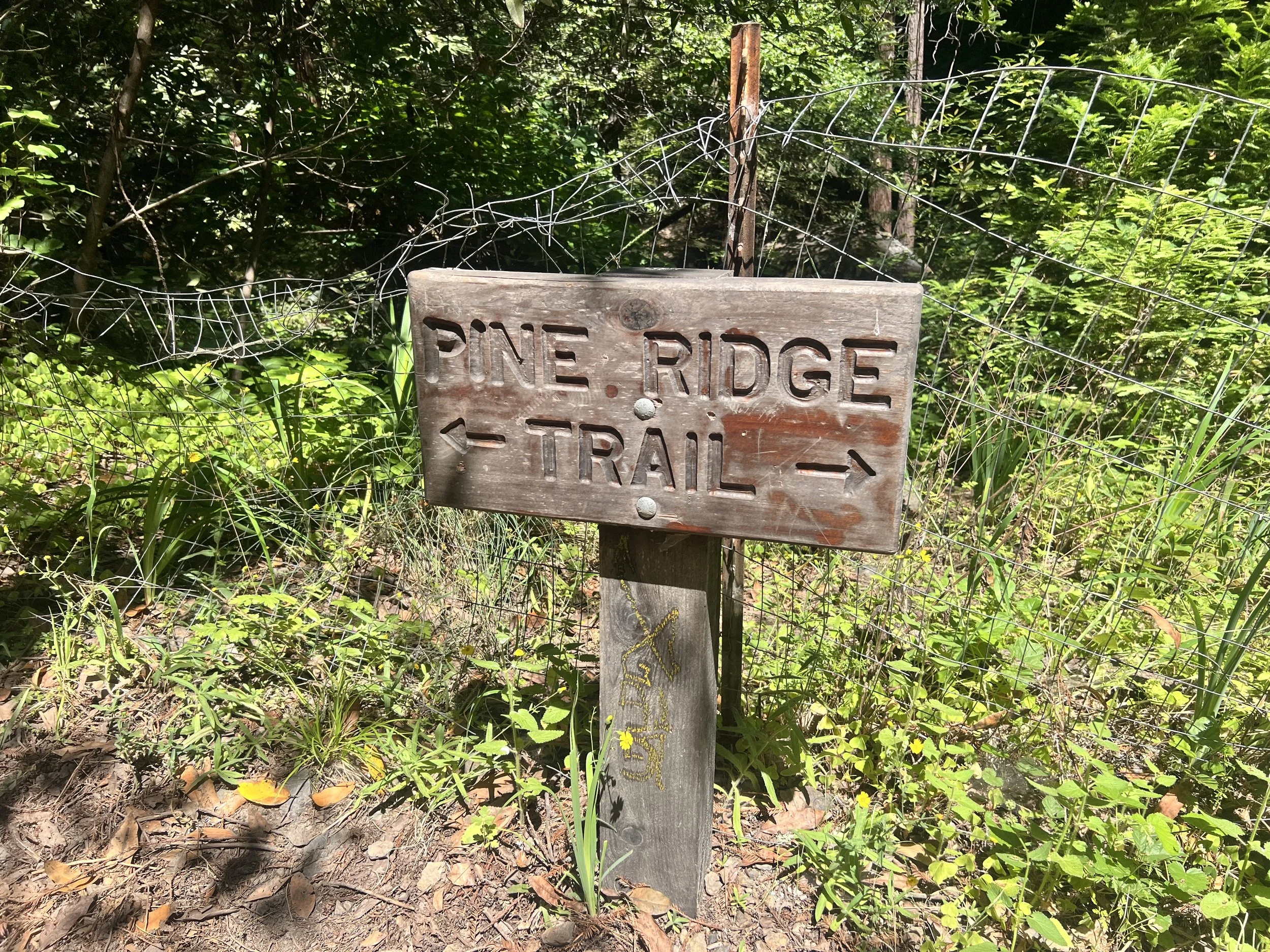
The trailhead sign is a portal. We step off dirt and onto pavement, merging back into the fast, familiar world.
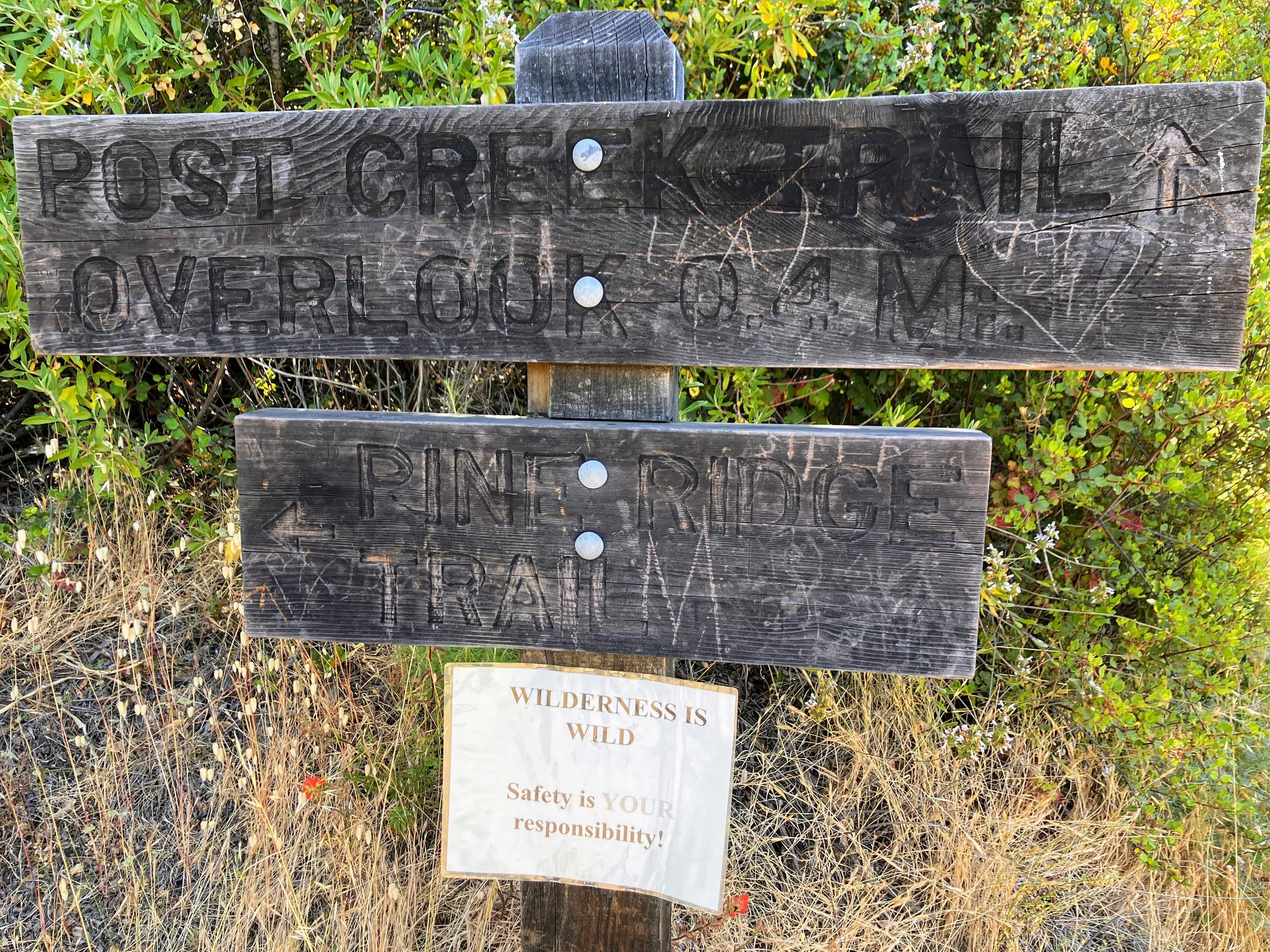
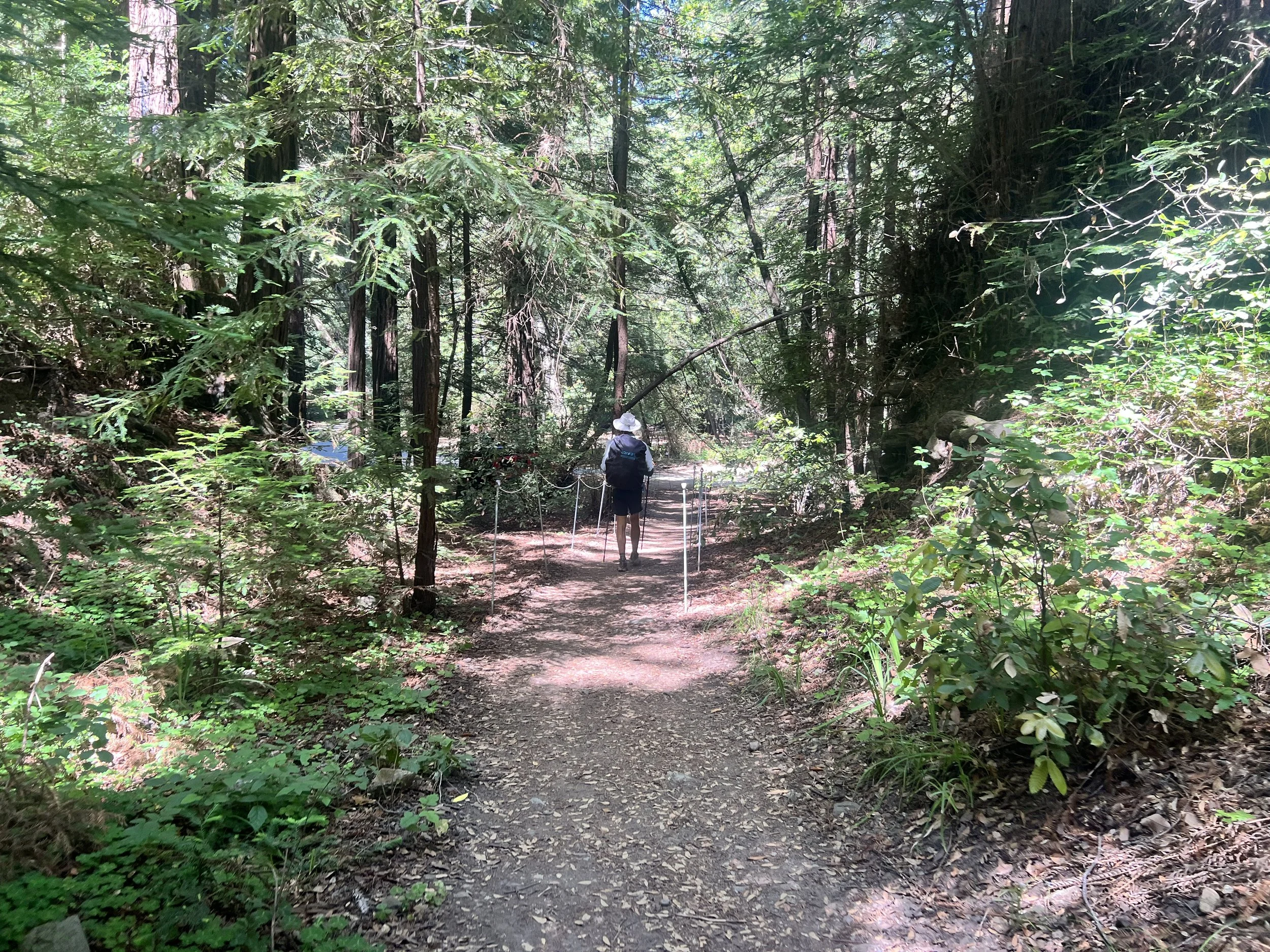
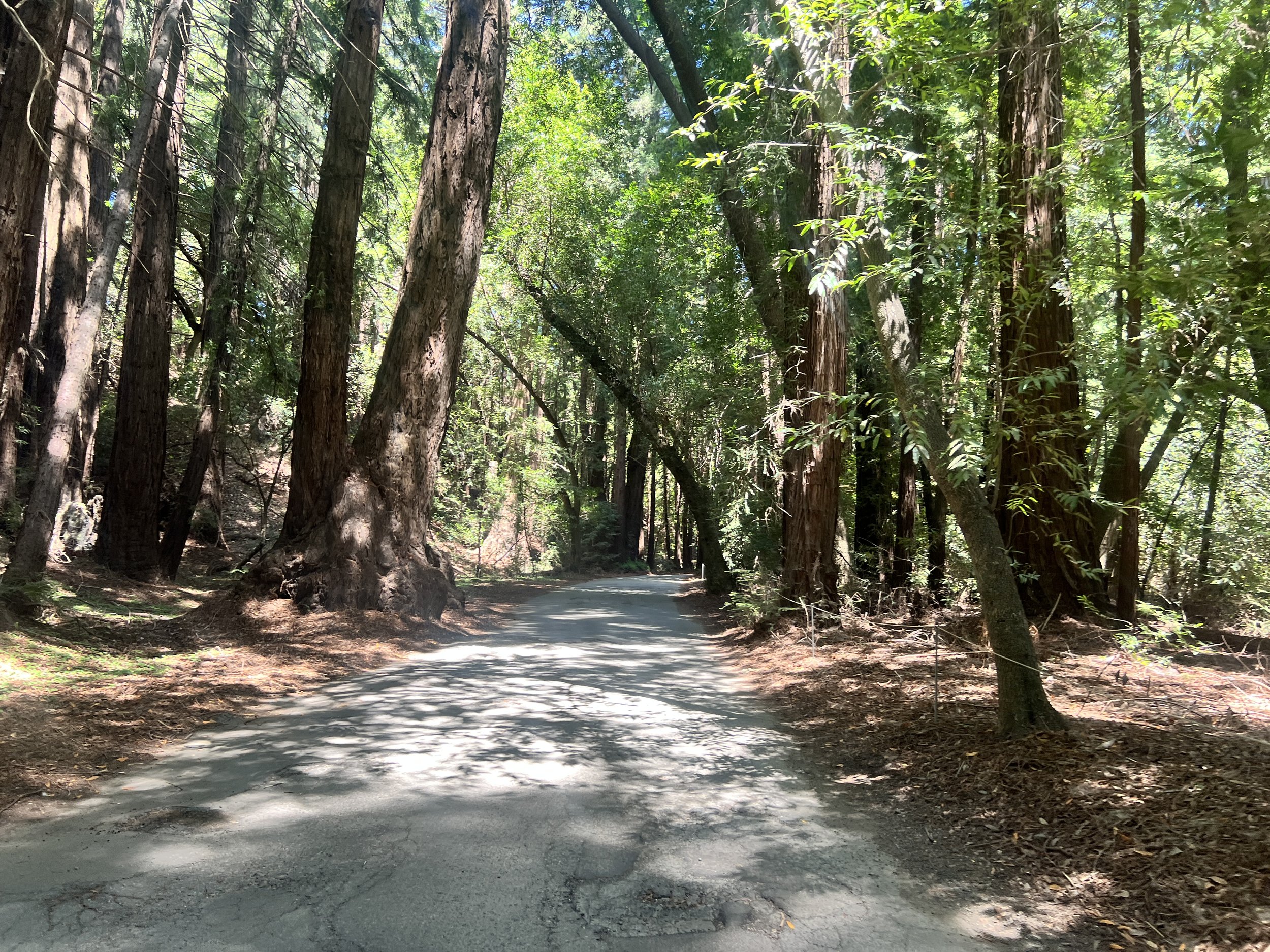
Suddenly we’re walking among giant redwoods and elaborate car camping setups at Pfeiffer State Park Campground. The road is wide and paved. Thick foliage is roped off on either side, neatly contained. After weeks of rugged terrain and no trail, I can’t say I’m mad about it. Families lounge around with full breakfast set-ups on their sites’ tables, 10-person tents, and reclining chairs.
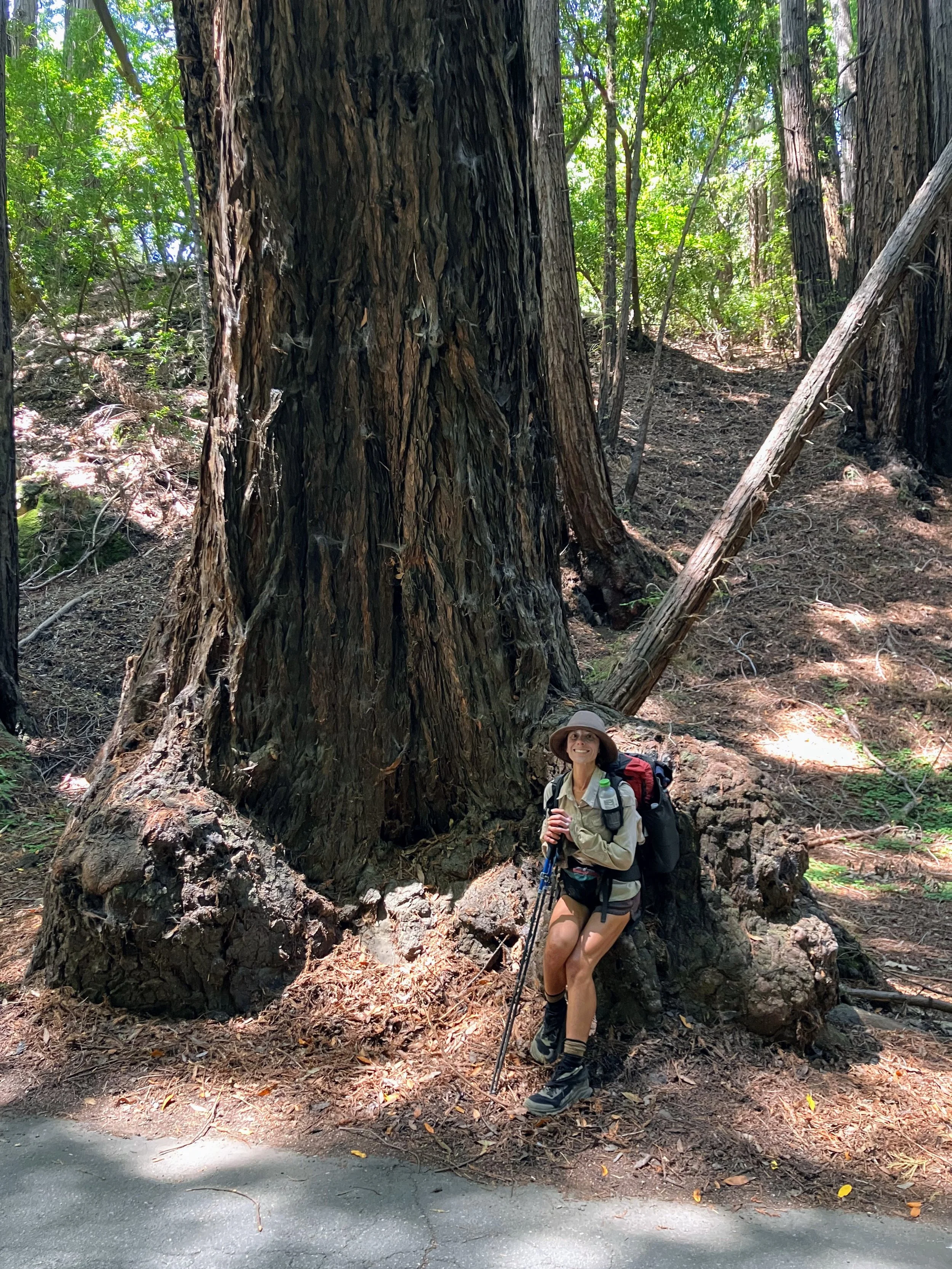
We made it to Big Sur Station, grimy, sunburned, covered in rashes and scratches, clothes tattered gear missing and stomachs beyond empty.
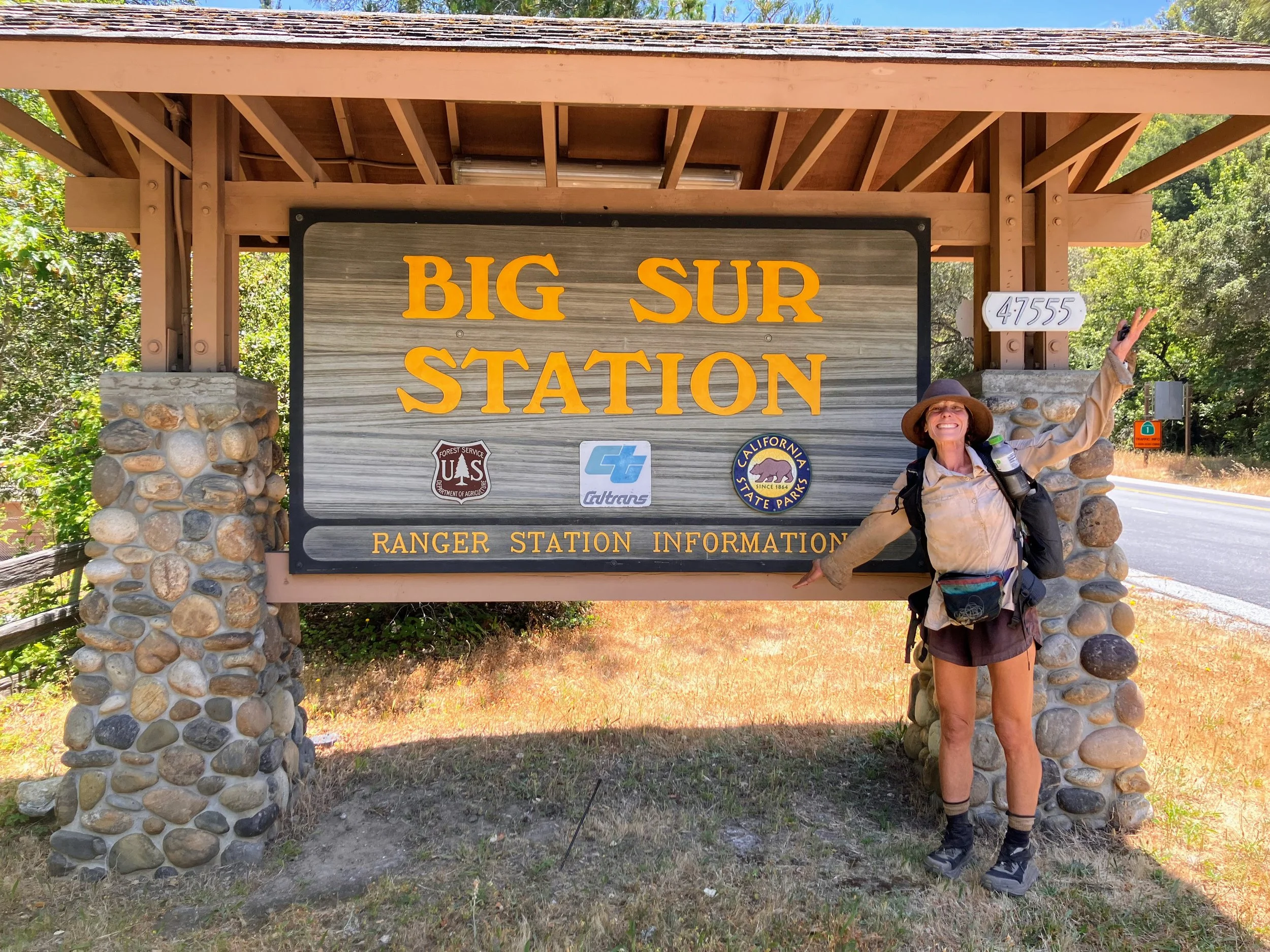
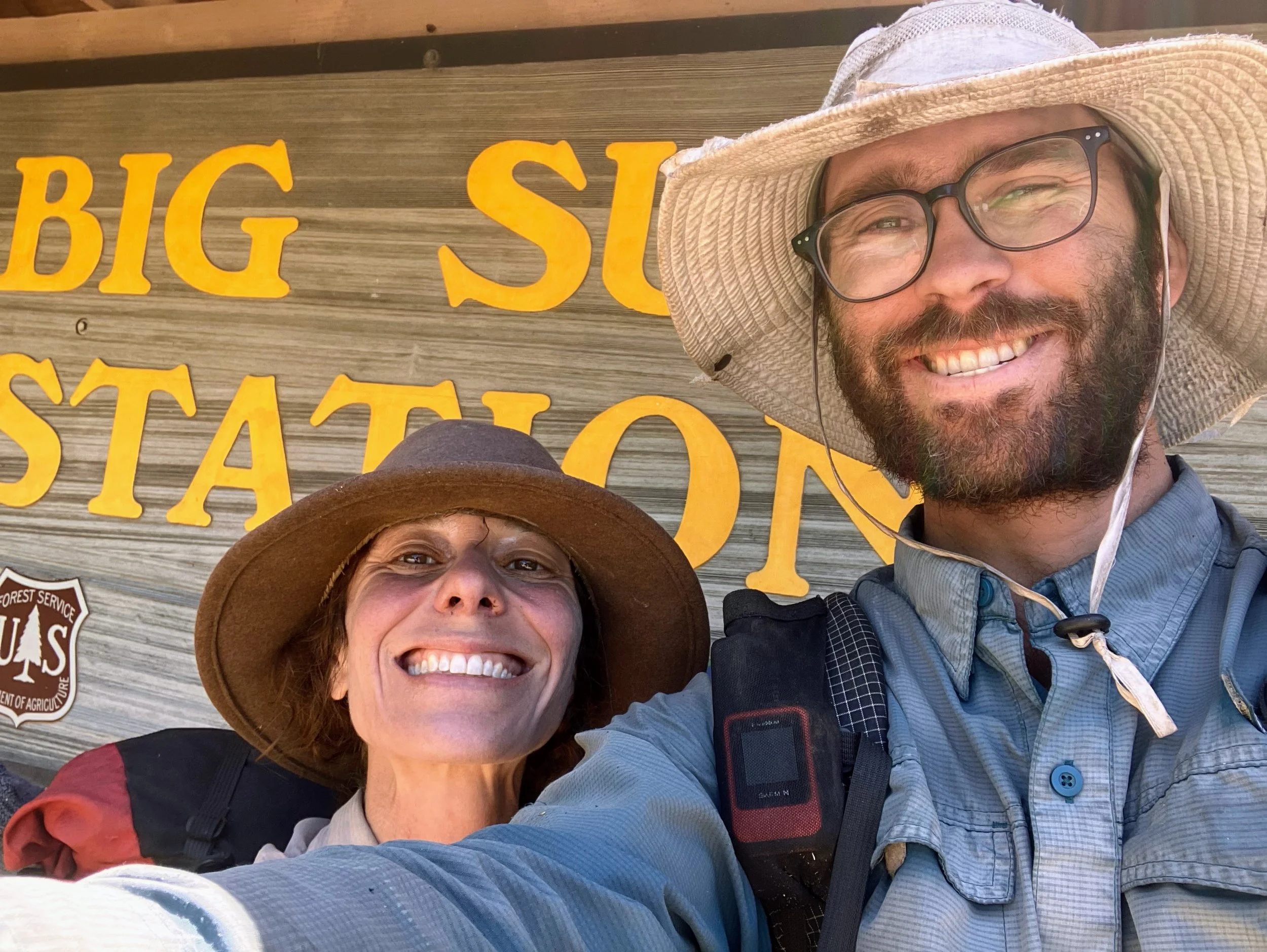
We go out to the patio at the Big Sur Lodge and order lunch. We make a number of attempts to wash our hands appropriately, but it’s going to take more efforts than we currently have time for.
“It feels good to eat when you’re hungry,” Cosmo says, grinning.
We order coffee, soup, cauliflower buffalo wings, and French fries.
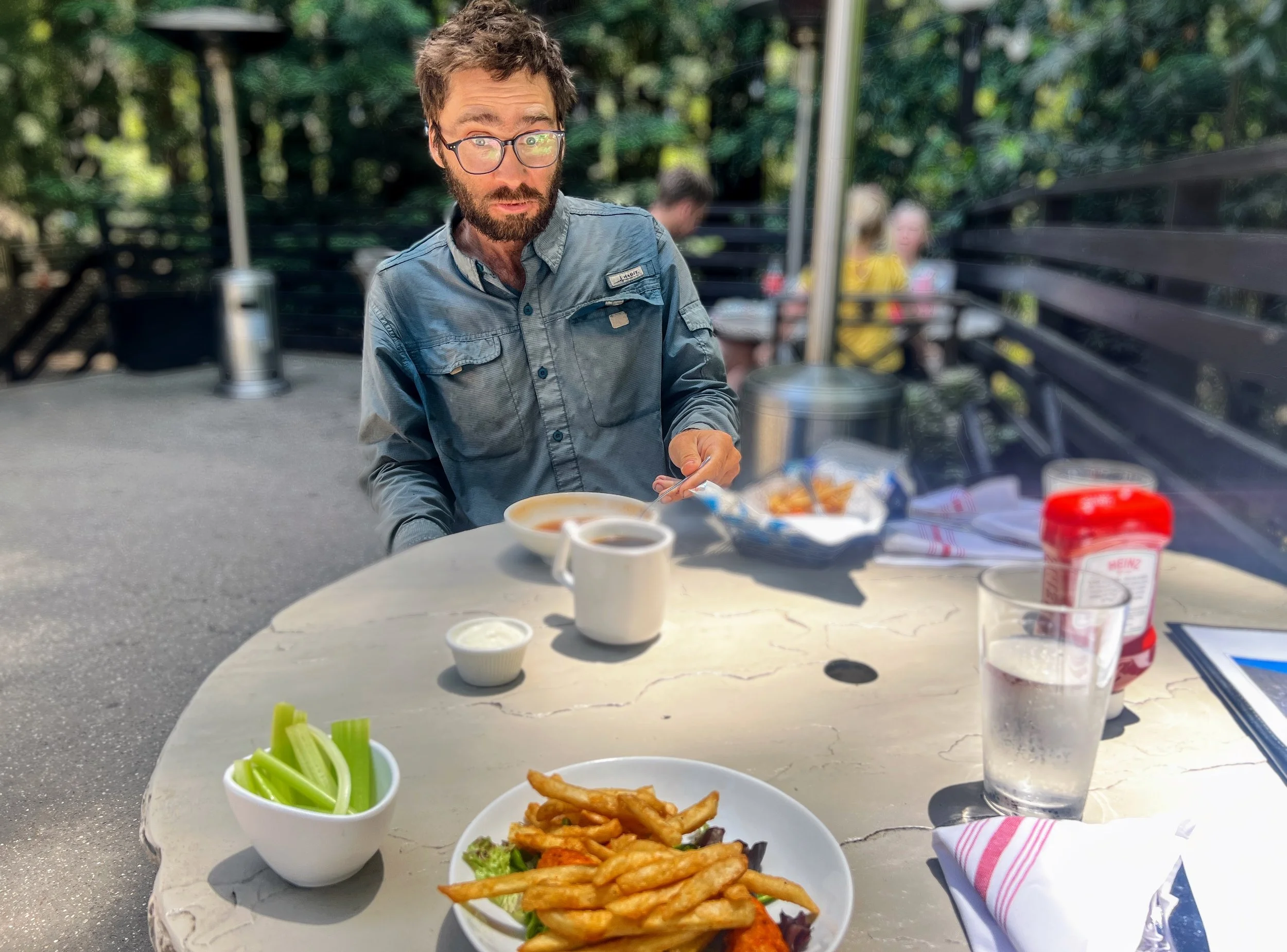
“Let’s pace ourselves,” he adds. “This’ll be one of many food stops on our way out.”
We walk to the car, which has occupied the front of the lot at the Pine Ridge Trailhead and kept watch over by a ranger. The key, which Cosmo carried in a little pouch in his backpack, works. We give a salute and drive off.
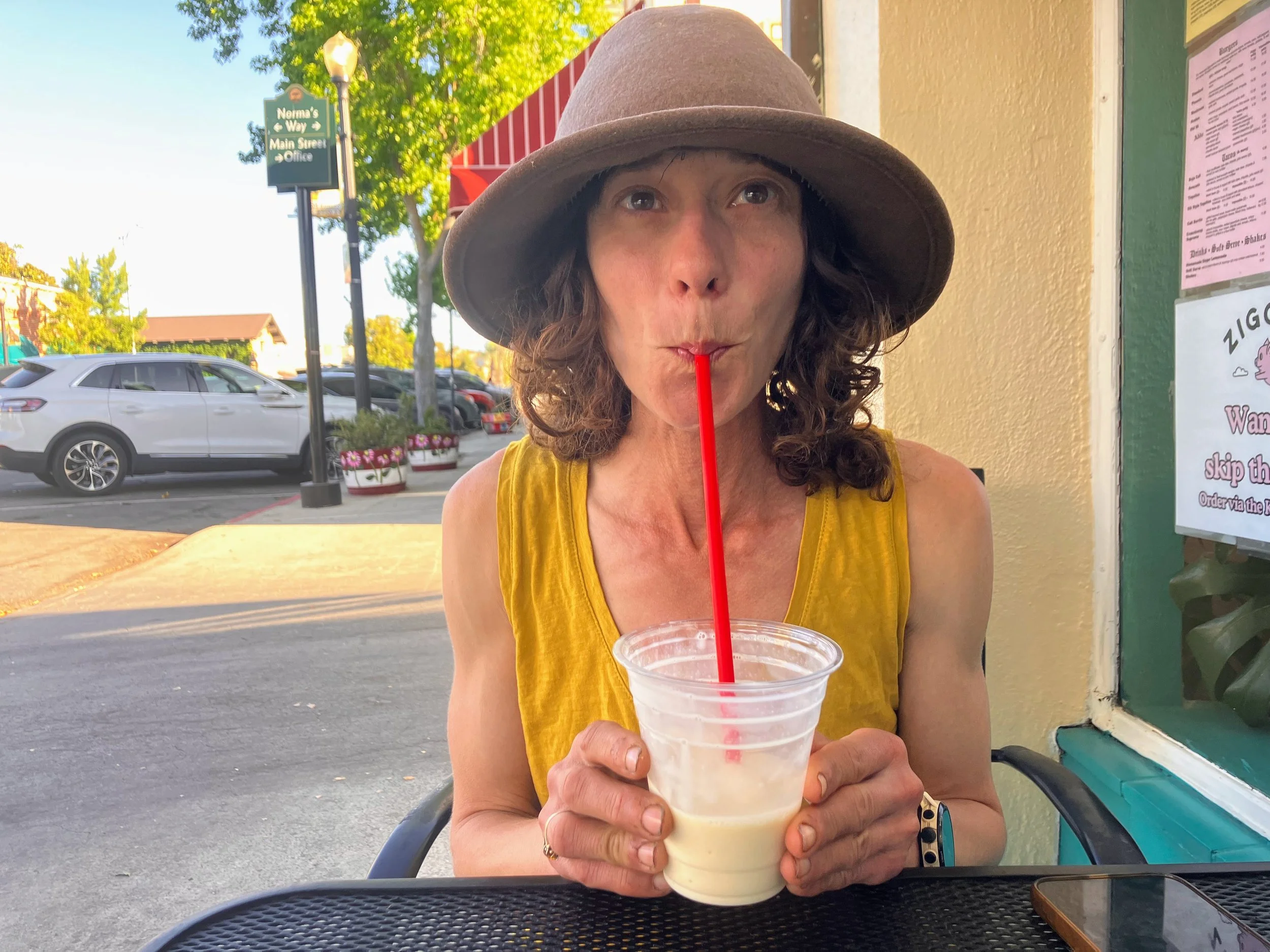
We drive to Paso Robles and stop at a small vegan spot for burgers and milkshakes. Charlie scores free cookies at a store about to throw them out. My stomach feels like it might never get full. We swing by Grocery Outlet for more food, then head back to the Condor Trail, yes, the Condor Trail.
We camp one last night on a dirt turnout off Cuesta Ridge Road, overlooking the ocean. Fog rolls in as the sun sinks behind the hills. There’s nowhere left to hike. Tonight, the car is our shelter.
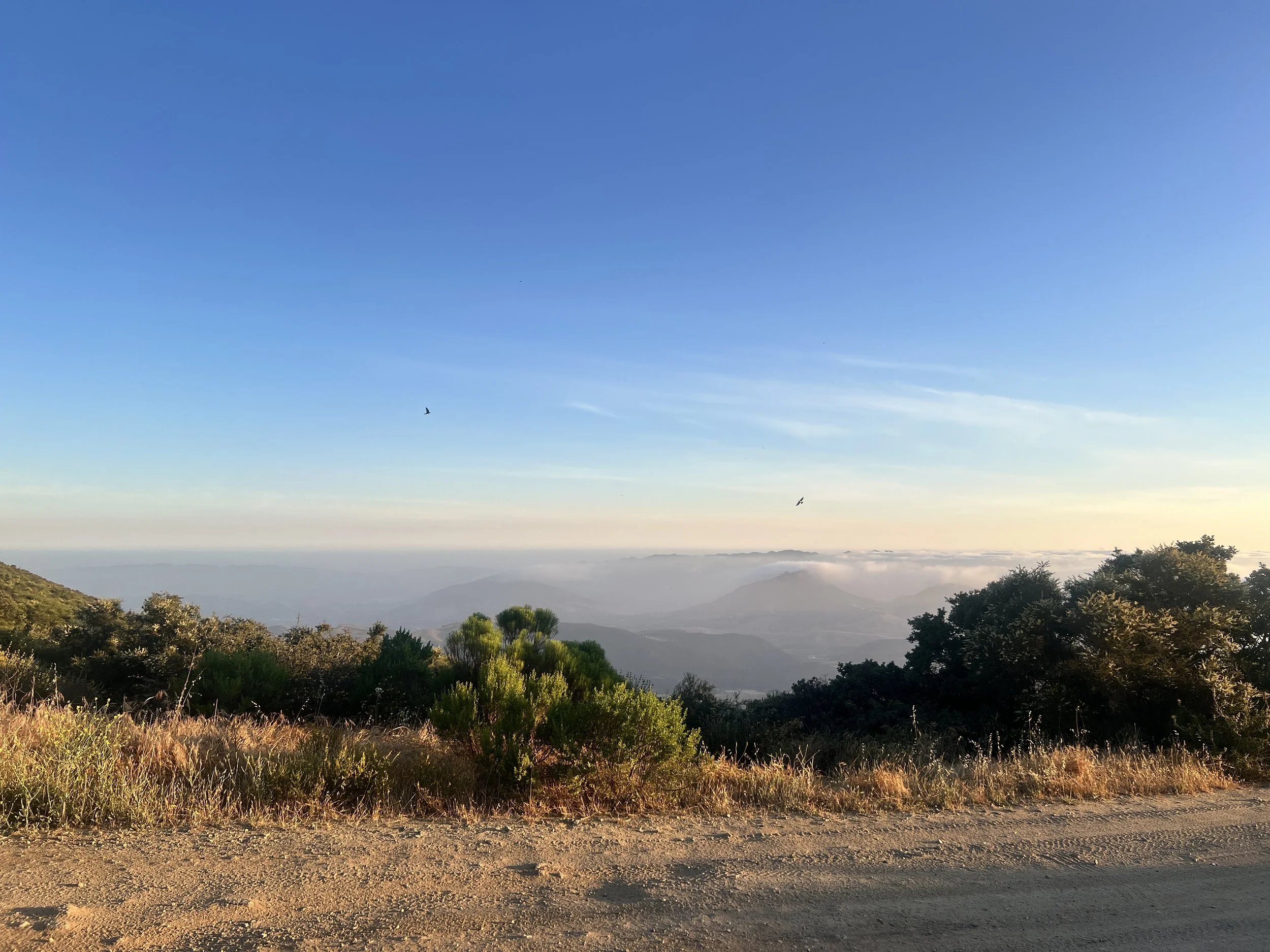
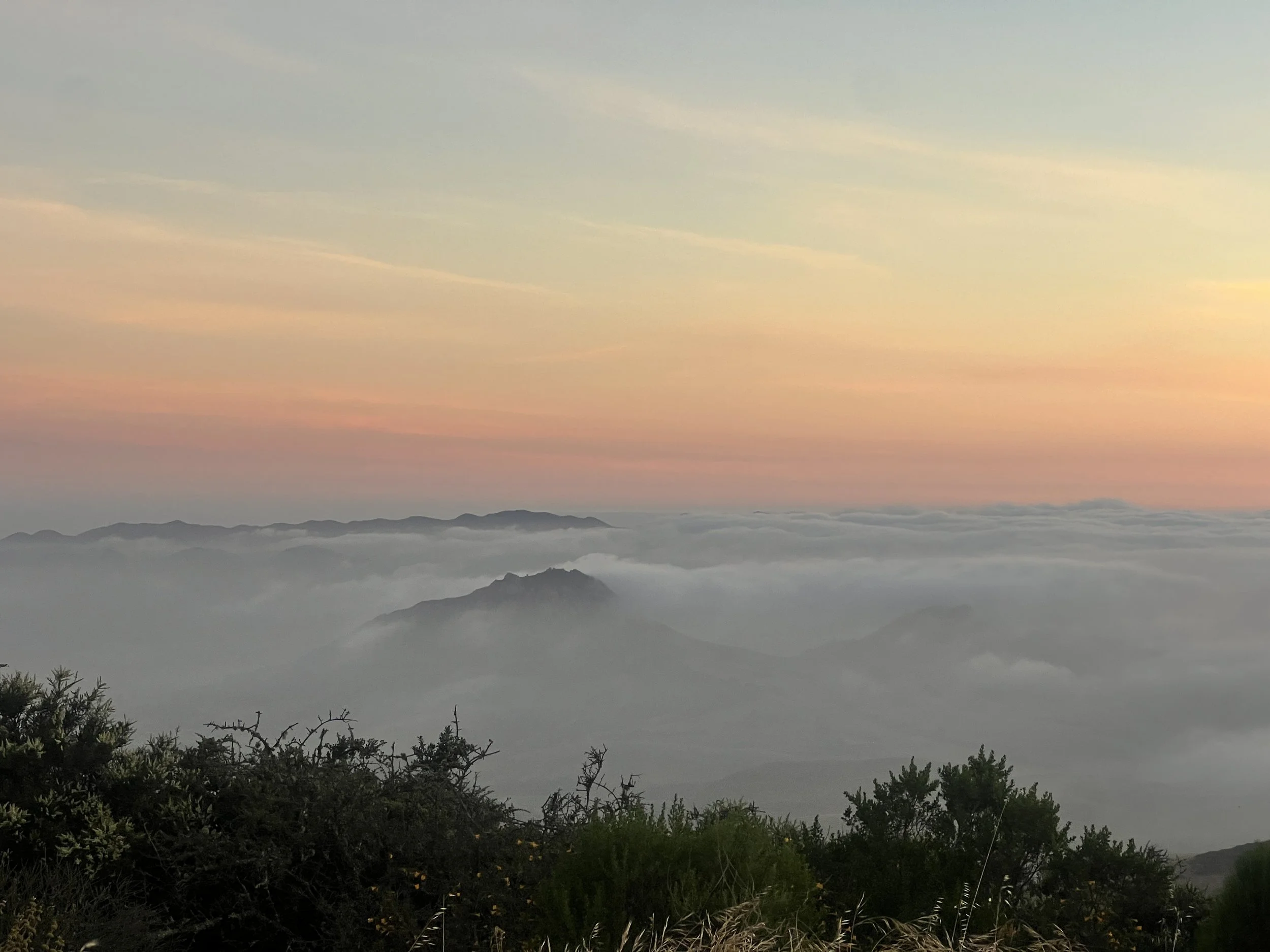
We’re proud of finishing this hike. It was rough, remote, and wildly overgrown in places. I wouldn’t recommend it, unless you’re looking for a serious challenge, or trying to break your addiction to thru-hiking. In that case, it might work.
Still, we did it. And still, I love thru-hiking.
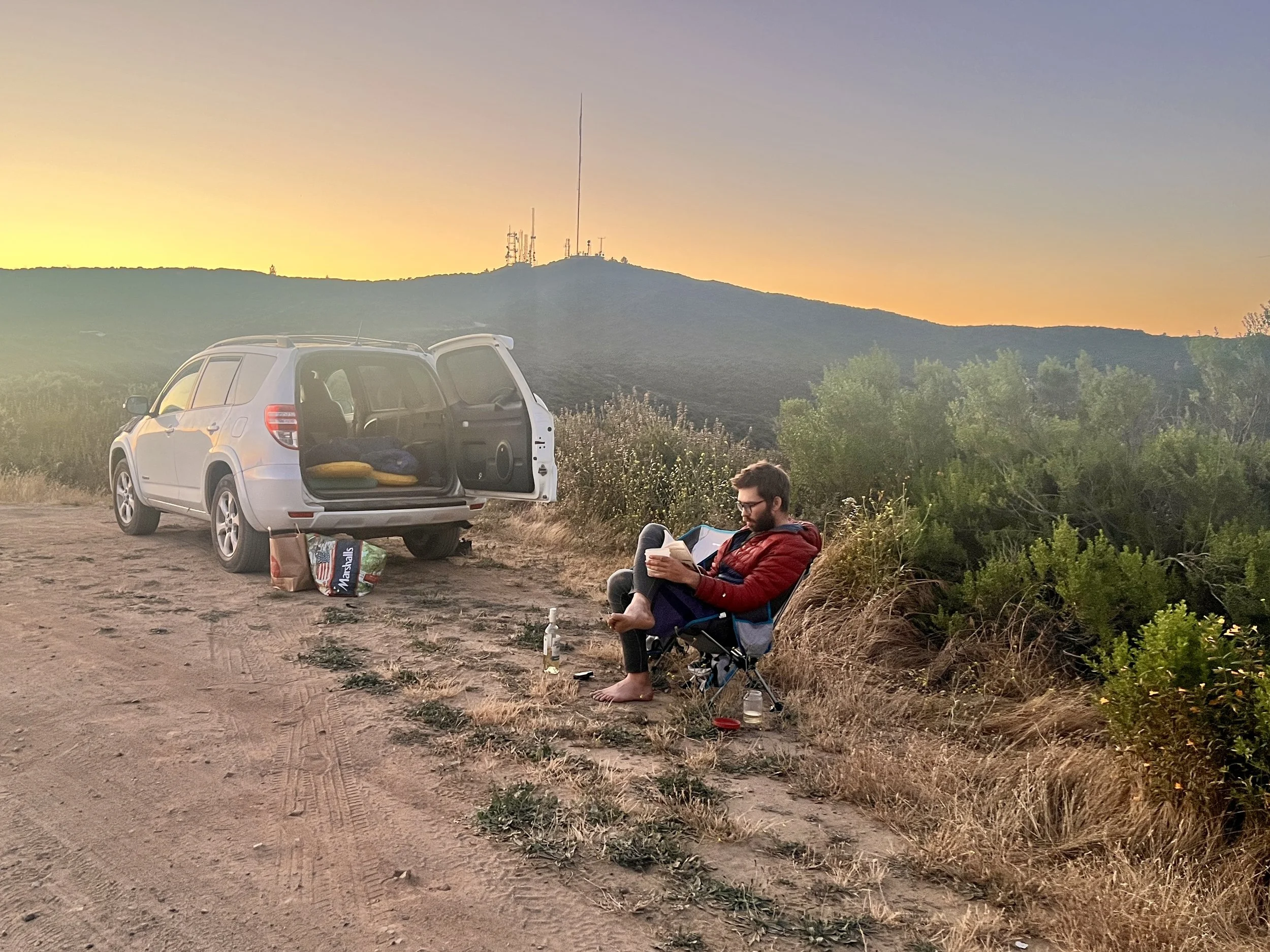
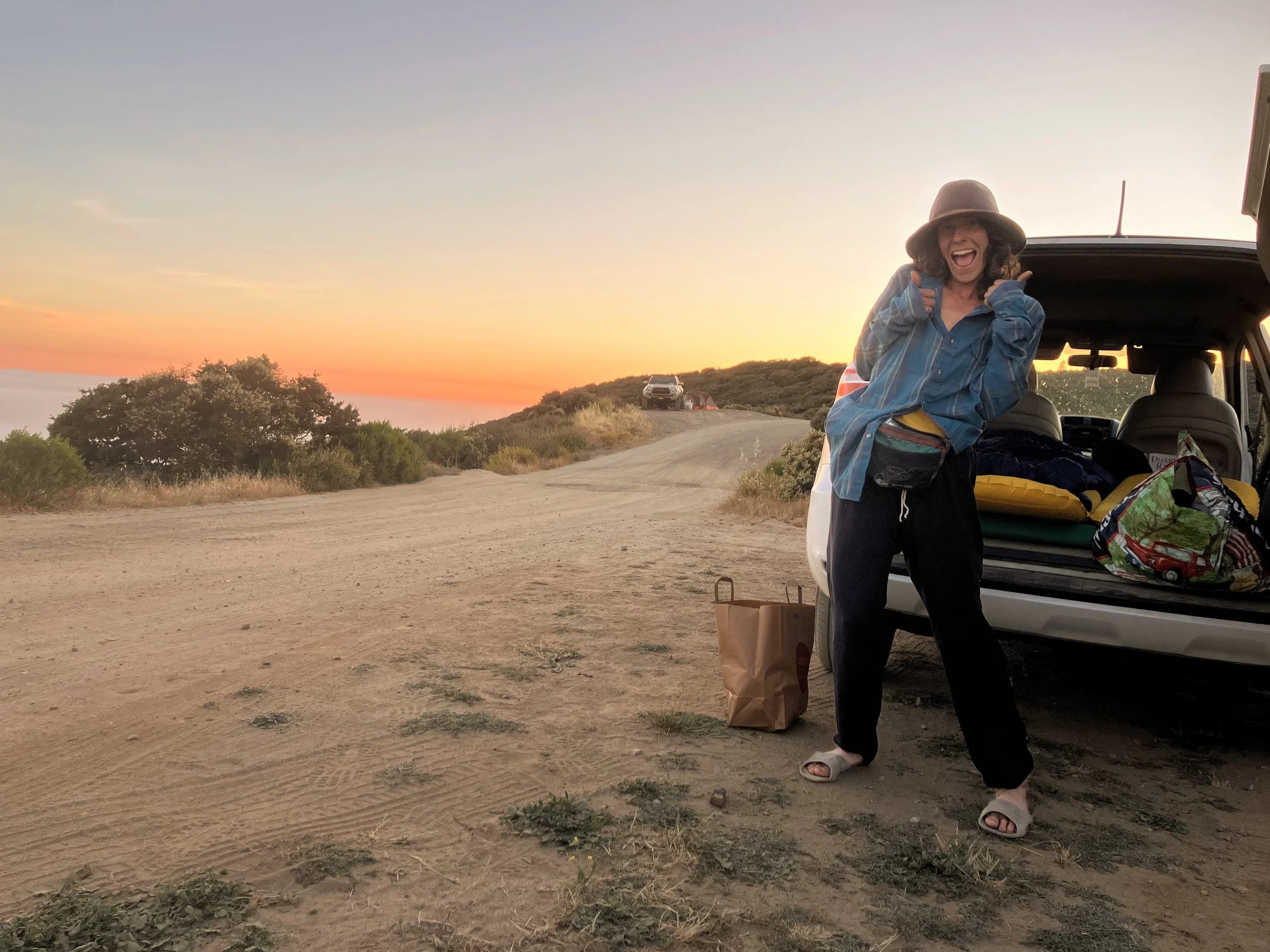
The End
- Cosmo's Sandal
- Cosmo's Sunglasses
- Larry's Sun Glove
- Larry's Hiking Pole
- Larry's Hiking Shirt
- Larry's Rain / Wind Pants
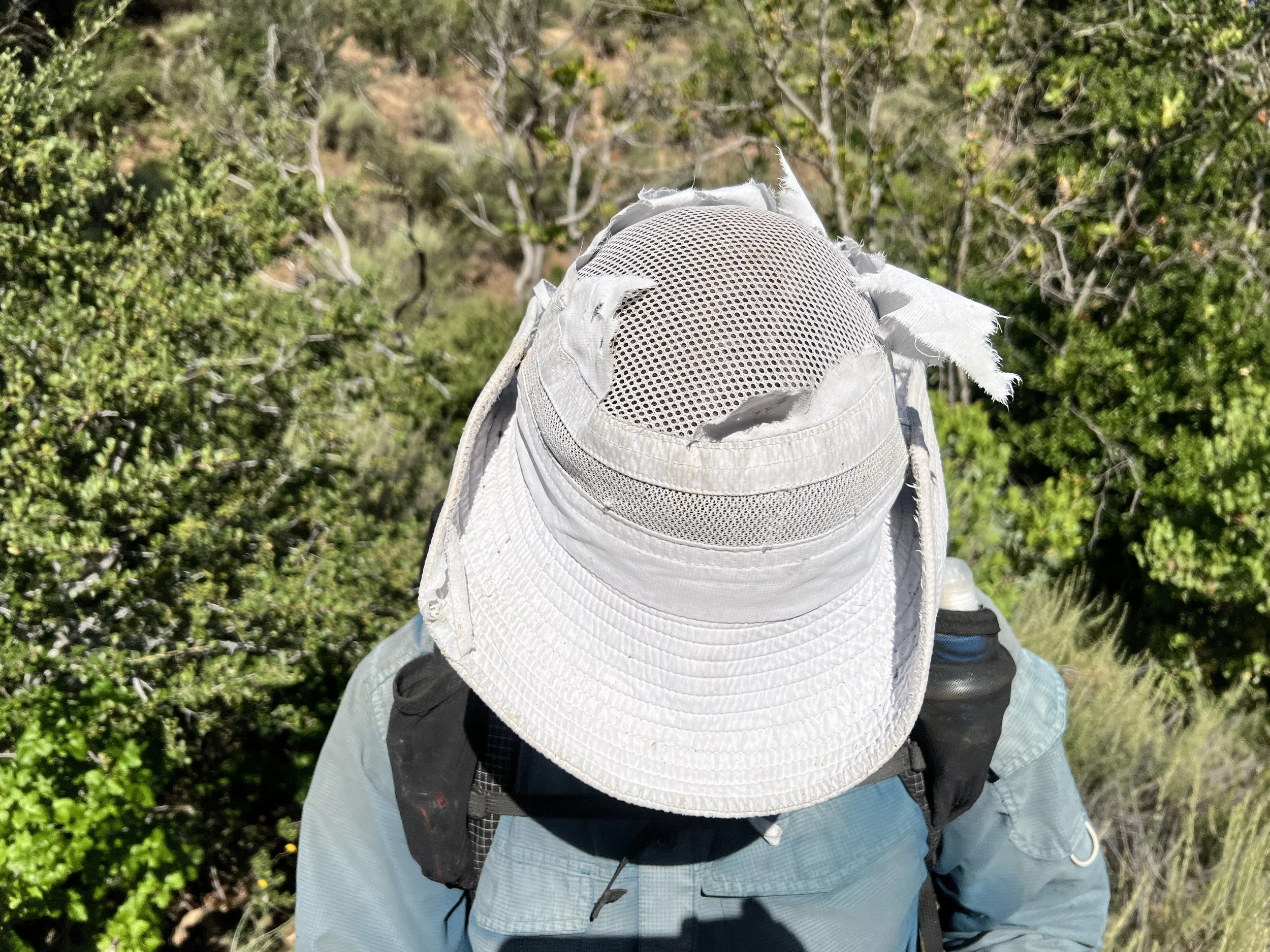
- Cosmo's Sun Hat
- Larry's Altra Olympus Shoes
- Solar Panel
- Hydrapak soft flask
- Hip belt pocket